
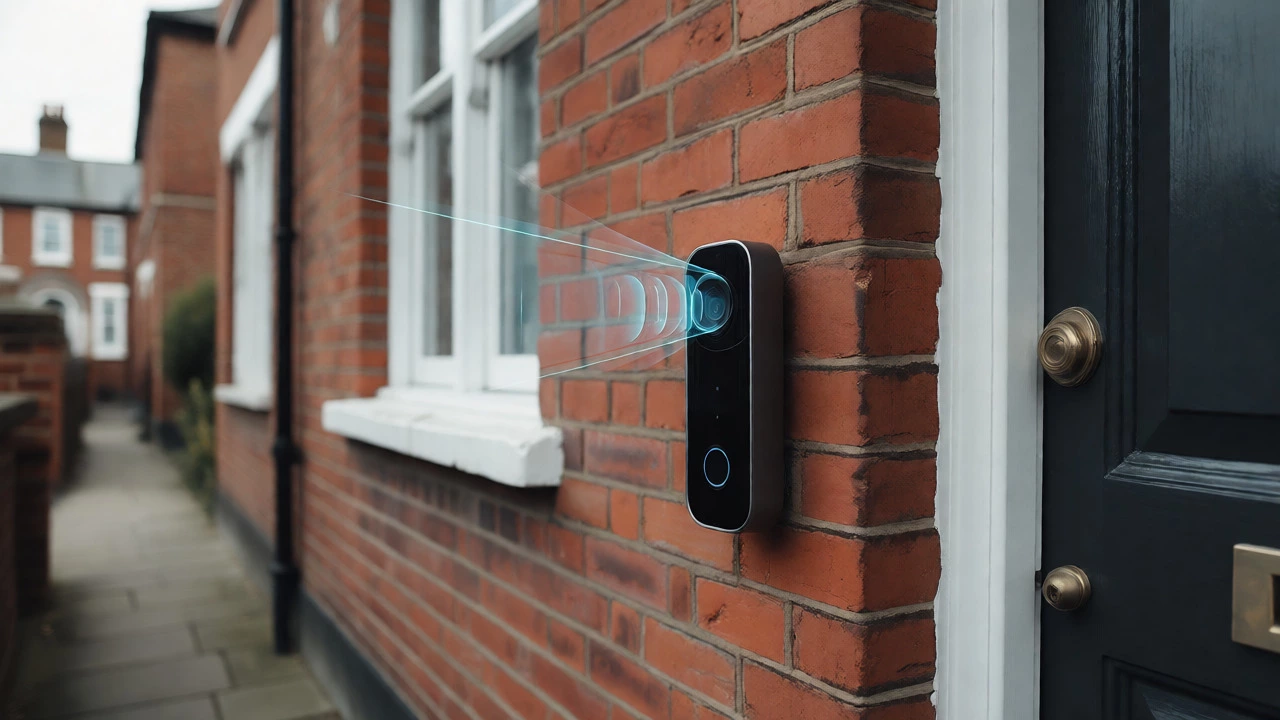
UK Smart Doorbell Legal Compliance Checker
Based on the Fairhurst v Woodard precedent and ICO guidelines, this tool helps you determine if your current doorbell configuration might expose you to legal risks.
Analysis
You just bought a shiny new Ring Video Doorbell, drilled two holes in your brickwork, and hung it up. You feel safer. Your neighbour, however, feels watched. Is that illegal? The short answer is no, smart doorbells are not banned in the UK. But here is the catch: while owning one is perfectly fine, using it incorrectly can land you in court. We aren't talking about small fines; we are talking about significant damages and injunctions if you cross the line into unlawful surveillance.
The confusion stems from how these devices work. Unlike a traditional peephole, a smart doorbell records video and audio, often storing it in the cloud. If that recording captures anything outside your property boundary-like your neighbour’s front door, their garden, or the public pavement-you are no longer just a homeowner. Under UK law, you become a "data controller." This shifts the burden onto you to comply with strict data protection laws. Let's break down exactly what makes a setup legal versus one that could trigger a lawsuit.
Why Your Neighbour Might Sue You Over a Doorbell
It sounds dramatic, but it happened. In 2021, the case of Fairhurst v Woodard set a precedent that every UK homeowner needs to know about. Dr Mary Fairhurst sued her neighbour, Jon Woodard, because his multiple cameras and Ring doorbell captured images and audio of her property and movements on the street.
The Oxford County Court ruled in favour of Fairhurst. Why? Because Woodard’s setup was excessive. His microphones picked up conversations from 12 to 20 metres away, meaning he was recording private chats inside neighbouring homes without consent. The judge found this breached the Data Protection Act 2018 and the Protection from Harassment Act 1997. It wasn't that the doorbell itself was illegal; it was that its configuration invaded privacy disproportionately.
This case taught us three critical lessons:
- Audio is high-risk: Microphones capture more sensitive data than cameras. Recording neighbours' conversations without a clear security need is hard to justify.
- Field of view matters: If your camera looks directly at a neighbour’s window or driveway rather than your own doorstep, you are likely overstepping.
- Proportionality is key: Your right to security does not override your neighbour’s right to privacy if less intrusive options exist.
When Do Data Protection Laws Apply to You?
Most people assume that because they are a regular person, not a business, privacy laws don't apply. That is only half-true. The Information Commissioner’s Office (ICO) explains that there is a "household exemption" under the UK GDPR. This means if your camera only records inside your home or strictly within your own curtilage (your private garden or porch), you generally don't have to worry about complex compliance rules.
However, the moment your lens captures public space or someone else’s property, that exemption vanishes. You are now processing personal data. As a data controller, you have specific duties:
- Transparency: People must know they are being recorded. A simple sticker saying "CCTV in operation" is usually sufficient notice.
- Purpose Limitation: You can only record for legitimate reasons, like preventing crime. You cannot use the footage to spy on who visits your neighbour.
- Data Minimisation: Don’t record more than you need. If you don’t need audio, turn it off.
- Storage Limitation: Delete footage when it’s no longer needed. Keeping clips for six months "just in case" might be excessive.
- Individual Rights: If a neighbour asks to see footage of themselves, you must provide it. If they ask for it to be deleted, you should delete it unless you have a strong reason to keep it (like an ongoing police investigation).
Failing to meet these duties doesn't just annoy neighbours; it exposes you to complaints to the ICO and potential civil claims for harassment or breach of privacy.
How to Configure Your Doorbell Legally
You don't need to be a lawyer to stay compliant. Most modern devices come with built-in features designed to help you respect boundaries. Here is how to set up your device to minimise legal risk.
| Feature | Why It Matters | Available On |
|---|---|---|
| Privacy Zones / Masking | Blocks out neighbours' windows or gardens from the recording area. | Ring, Nest, Eufy, Arlo |
| Audio Toggle | Disables microphone to prevent capturing private conversations. | Ring, Google Nest |
| Motion Detection Zones | Limits recording to your immediate doorstep, ignoring passing cars or pedestrians. | All major brands |
| Local Storage Options | Keeps data on your device, reducing reliance on third-party cloud servers. | Eufy, some Netatmo models |
Use Privacy Zones: This is your best friend. In apps like Ring or Nest, you can draw black boxes over areas you don't want to record. Cover your neighbour’s front door, their car, and any part of the pavement that isn't directly in front of your house. If the camera sees them but doesn't record them, you’re in a much stronger legal position.
Disable Audio Where Possible: Unless you live in a high-crime area where hearing voices helps identify threats, consider turning off the microphone. The Fairhurst judgment highlighted that audio is far more intrusive than video. If you must keep audio on, ensure it’s only active when motion is detected near your door, not continuously.
Adjust the Angle: Physically tilt the camera downward so it focuses on visitors at eye level or below, rather than scanning the entire street. Avoid pointing it directly at a neighbour’s living room window.
What About Commercial Use and Landlords?
If you run a shop, office, or let out properties, the rules are stricter. There is no household exemption for businesses. Every time a customer or tenant walks past your smart doorbell, you are processing personal data under UK GDPR.
Landlords installing doorbells in rental properties must conduct a Data Protection Impact Assessment (DPIA). You need to document why you are recording, how long you keep the data, and who has access to it. Tenants have the right to know they are being monitored. If you fail to inform them or store footage insecurely, you risk enforcement action from the ICO, which can include fines.
For shared entrances in apartment blocks, things get tricky. Who owns the footage? Who controls the camera angle? Ideally, all residents should agree on the placement and settings. If one resident uses the footage to harass another, the liability could fall on the person controlling the device or the building management company.
Common Misconceptions About Smart Doorbell Legality
Let's clear up a few myths that cause unnecessary panic.
Myth 1: "I need my neighbour's permission to install a doorbell."
You don't. You can install a doorbell on your own property without asking. However, if it records their property, you must manage that data responsibly. Permission isn't required for installation, but cooperation helps avoid disputes.
Myth 2: "Cloud storage means Amazon owns my data."
Not exactly. While companies like Amazon (Ring) or Alphabet (Nest) host the data, you remain the data controller. You are responsible for how that data is used and retained. Read the terms of service, but remember that your legal obligations as a user don't disappear just because a tech giant handles the hosting.
Myth 3: "If I put up a sign, I'm covered."
A sign is necessary but not sufficient. It satisfies transparency, but it doesn't excuse excessive recording. If your camera captures everything happening on the street 24/7, a sign won't protect you from a claim that you're collecting too much data unnecessarily.
Talking to Your Neighbours
Technology moves faster than social norms. Many neighbours might not realise how powerful these devices are. Before you install, have a chat. Show them the app. Demonstrate the privacy zones. Explain that you’ve disabled audio or limited the field of view. This simple act of communication can prevent misunderstandings before they escalate into legal battles.
If a neighbour complains, take it seriously. Ask to review the settings together. Can you adjust the angle? Can you shorten the retention period? Often, a small tweak resolves the issue. Ignoring complaints can look like harassment, especially if the recording continues despite objections.
The Future of Smart Doorbell Regulation
As adoption grows, expect more scrutiny. The UK market for smart doorbells is booming, projected to reach billions in value by 2030. With more devices comes more data, and regulators are watching closely. Manufacturers are already responding by adding better privacy controls, such as local storage options that bypass the cloud entirely, appealing to privacy-conscious users.
For now, the law is clear: you can buy it, you can install it, but you must use it wisely. Keep your recordings relevant, your signage visible, and your neighbours informed. Do that, and your smart doorbell will be a security asset, not a legal liability.
Do I need planning permission for a smart doorbell in the UK?
Generally, no. Installing a doorbell on the front of your house is considered a minor alteration and falls under "permitted development rights." However, if you live in a listed building or a conservation area, you may need consent. Always check with your local council if you are unsure.
Can my neighbour force me to turn off my smart doorbell?
They cannot force you to remove it, but they can challenge its use. If they believe it breaches data protection laws or constitutes harassment, they can complain to the ICO or take civil action. A court could order you to change the angle, disable audio, or stop recording certain areas.
Is it illegal to share doorbell footage on social media?
Yes, potentially. If you post footage showing identifiable faces of people who haven't consented to be broadcast publicly, you may be breaching their privacy rights and data protection laws. The purpose limitation principle means you collected the data for security, not for entertainment or sharing online.
What happens if I ignore a request to delete footage?
Under UK GDPR, individuals have the "right to erasure" (right to be forgotten). If a neighbour requests deletion of footage containing their image and you have no valid reason to keep it (like an active police case), you should delete it. Refusing without justification can lead to an ICO complaint and potential enforcement notices.
Does the type of doorbell matter legally?
No, the brand (Ring, Nest, Eufy, etc.) doesn't change the law. What matters is the configuration. A cheap doorbell pointed directly at a neighbour's bedroom window is more likely to cause legal issues than an expensive one with strict privacy zones enabled.