
Wireless CCTV Battery Life Calculator
Estimate Your Camera's Battery Life
Calculate how long your wireless CCTV camera will last based on your usage patterns and features.
Estimated Battery Life
Based on your settings
Usage Tips
Tip: Using a power-saving mode can extend battery life by 20-30%. Solar panels can extend battery life significantly in sunny areas.
Ever looked at a wired CCTV camera and thought, "There has to be a better way"? You're not alone. Running cables through walls, drilling holes, and dealing with messy wires isn't just annoying-it's often impossible if you're renting, living in an old house, or just want to move your camera around. That's where wireless CCTV kits come in. But can they really work? The short answer: yes. And they're more reliable than most people think.
How Wireless CCTV Cameras Actually Transmit Video
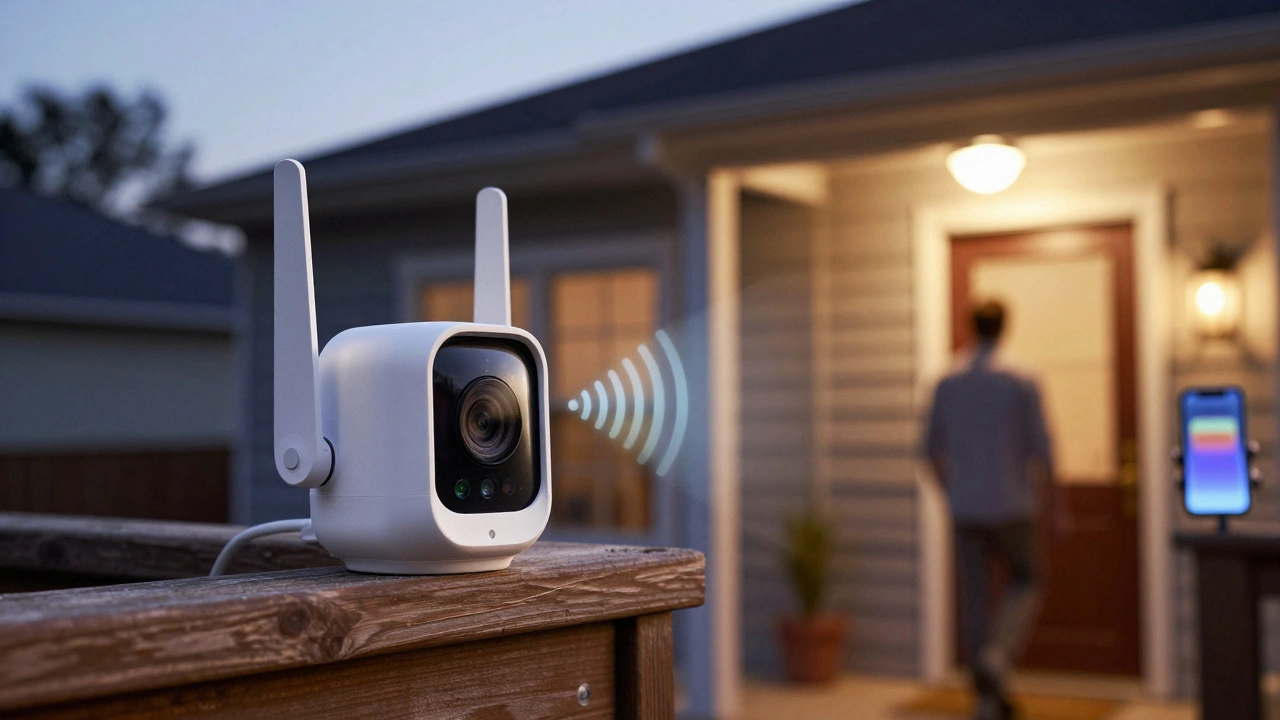
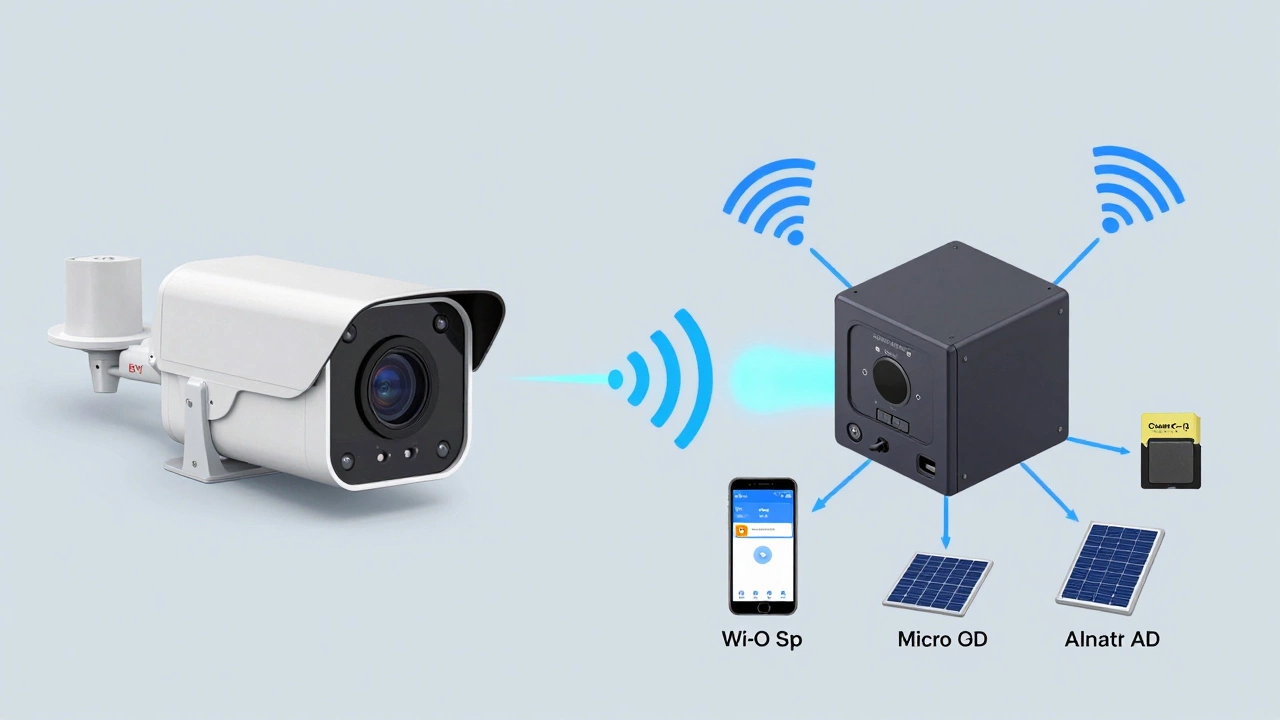
Wireless CCTV cameras don’t magic video into your phone. They use real, measurable technology. At their core, they capture video just like any camera: light hits a lens, lands on a CMOS or CCD sensor, and gets turned into digital data. But instead of sending that data through a cable to a DVR, they send it over the air. Most wireless cameras use Wi-Fi. That’s the same signal your phone and laptop use. The camera connects to your home router, just like a smart speaker or thermostat. Once connected, it streams video to a cloud server or a local storage device like a microSD card. You then access that footage through an app on your phone-no matter where you are. Some systems even let you talk back through the camera’s built-in speaker, like a two-way intercom. But Wi-Fi isn’t the only option. Some cameras use cellular networks (4G or 5G). These are perfect for cabins, farms, or construction sites where Wi-Fi doesn’t reach. They need a data plan, like a phone, but they work anywhere there’s cell service. Then there’s Bluetooth, but it’s mostly used for setup, not live streaming. Bluetooth can’t handle video over distance-it’s meant to pair the camera with a hub, not send footage to your phone across town.What’s Inside a Wireless CCTV Kit?
A typical wireless CCTV kit includes three main parts:- Cameras: These have lenses, image sensors, microphones, and built-in wireless transmitters. Most are weatherproof for outdoor use.
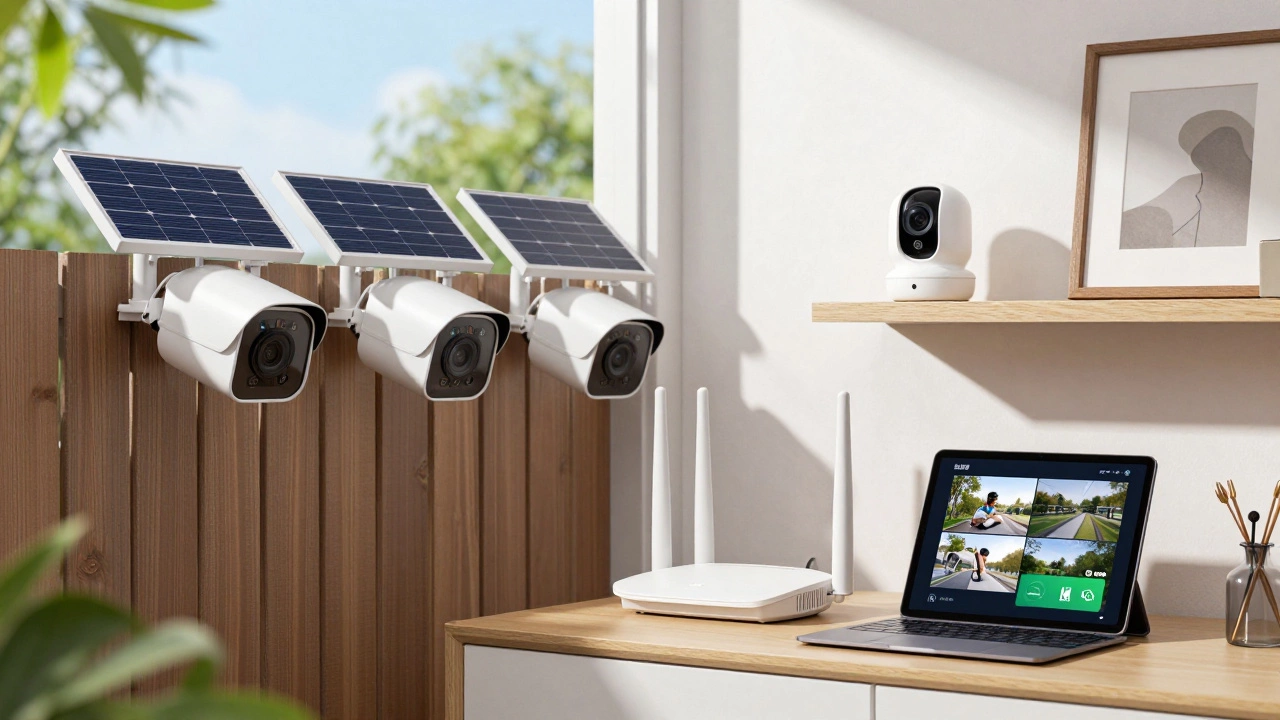
- Power source: No wires doesn’t mean no power. Cameras run on rechargeable batteries, AC adapters, or solar panels. Battery-powered ones can last weeks or months before needing a charge, depending on usage.
- Storage and access: Footage is saved either on a microSD card inside the camera or uploaded to the cloud. Cloud storage usually requires a monthly fee, but it’s more secure and accessible from anywhere.
Why Wireless CCTV Is So Popular Right Now
People aren’t just buying wireless CCTV because it looks cool. They’re buying it because it solves real problems.- No drilling, no wires: Install a camera in 10 minutes. Stick it on a shelf, hang it from a tree, or place it on a window ledge. No electrician needed.
- Move it anytime: Found a blind spot? Just pick up the camera and reposition it. No rewiring. No new holes.
- Remote access: Check in on your home while at work, on vacation, or even halfway across the world. Most apps send instant alerts when motion is detected.
- Smart home integration: Your wireless camera can turn on your porch light when it sees someone, lock your door if it detects an intruder, or even alert your smart speaker to sound an alarm.
- Easy to scale: Start with one camera. Add three more next month. No rewiring. No new DVR. Just plug in and sync.
The Real Limitations (And How to Fix Them)
Wireless doesn’t mean flawless. There are two big issues people run into. 1. Wi-Fi range problems If your camera is too far from your router-or there are thick walls, metal beams, or appliances in the way-the signal drops. You get frozen video, lag, or no connection at all. Fix: Use Wi-Fi extenders. Place your router in a central spot. Or install a mesh network. Some kits even come with signal-boosting antennas. If you’re installing outdoors, look for cameras with external antenna ports. 2. Battery life Battery-powered cameras are great, but they die. Cold weather drains them faster. Heavy motion detection (like a busy driveway) uses more power. Fix: Choose models with solar panels. Use low-power modes. Set motion zones so the camera only records when someone enters a specific area-not every passing car or tree branch. Most modern cameras now last 3-6 months on a single charge with moderate use. 3. Cloud storage costs Free cloud storage usually only saves clips for 24 hours. Want to keep footage longer? You’ll pay $3-$10 per month per camera. Fix: Use local storage. Most cameras have microSD slots. You can get a 128GB card for under $20. That’s enough for weeks of continuous recording. No monthly fees.Wireless vs. Wired: What’s the Real Difference?
| Feature | Wireless CCTV | Wired CCTV |
|---|---|---|
| Installation | DIY, no drilling, under 30 minutes | Professional install, drilling, hours or days |
| Placement Flexibility | Anywhere with power and signal | Only where cable can run |
| Remote Access | Yes, via app from anywhere | Only if connected to network (usually same as Wi-Fi) |
| Scalability | Easy-add cameras anytime | Hard-requires new cables and DVR ports |
| Power Source | Battery, solar, or AC | Must plug into outlet or hardwire |
| Signal Reliability | Depends on Wi-Fi/cellular strength | Always stable |
| Monthly Costs | Possible (cloud storage) | Nearly always zero |
Who Should Use Wireless CCTV?
Not everyone needs wireless. But if any of these sound like you, it’s a perfect fit:- You rent and can’t drill holes
- You want to move cameras seasonally (e.g., front yard in summer, backyard in winter)
- You live in a large home or property with dead Wi-Fi zones
- You travel often and want to check in on your place
- You’re tech-savvy and want your camera to work with Alexa or Google Assistant
- You’re on a budget and don’t want to pay for professional installation
What to Look for When Buying a Wireless CCTV Kit
Not all wireless systems are equal. Here’s what actually matters:- Resolution: 1080p is the minimum. 2K or 4K is better for spotting faces or license plates.
- Field of view: 130° or wider means fewer blind spots.
- Weatherproof rating: Look for IP65 or higher for outdoor use.
- Storage: Prefer models with microSD slots. Avoid systems that force cloud-only storage.
- App quality: Test the app before you buy. Does it load fast? Can you adjust settings easily?
- Two-way audio: Useful for talking to delivery people or scaring off trespassers.
- AI motion detection: Some cameras can tell the difference between a person, car, or animal. This cuts down on false alerts.
Future of Wireless CCTV
The tech is getting smarter. Cameras now use edge computing-processing video right on the device-so they don’t need to send everything to the cloud. That means faster alerts and less data usage. AI is getting better at recognizing faces, even in low light. Solar panels are becoming standard on outdoor models. And 5G will soon make cellular cameras faster and more reliable than ever. One thing’s clear: wireless isn’t just a trend. It’s the new standard. Wired systems still have their place in high-security environments, but for 90% of homes and small businesses, wireless is the smarter, simpler, and more flexible choice.Do wireless CCTV cameras need Wi-Fi to work?
Most do, but not all. Wi-Fi cameras need your home network to stream video to your phone or cloud storage. But cellular cameras use 4G/5G instead, so they work even if you have no Wi-Fi. Bluetooth cameras exist, but they’re only for setup-don’t expect live video over Bluetooth. If you’re in a remote area, look for a cellular model with a data plan.
Can wireless CCTV cameras be hacked?
Any internet-connected device can be hacked, but modern wireless CCTV systems are far more secure than older models. Look for cameras with end-to-end encryption, two-factor authentication, and automatic firmware updates. Avoid using default passwords. Stick with well-known brands like Arlo, Ring, or Reolink-they invest in security. Also, use a separate Wi-Fi network for your cameras if your router supports it.
How long do battery-powered wireless cameras last?
It depends on usage. With moderate motion detection and no live streaming, most last 3-6 months on a single charge. Heavy use (like constant recording or frequent live viewing) can drain them in 2-3 weeks. Solar panels help extend battery life significantly. Some models even have power-saving modes that only activate recording when motion is detected in a specific zone.
Can I use wireless CCTV without an internet connection?
You can record locally without internet, but you won’t be able to view footage remotely. If your camera has a microSD card slot, it will keep recording even if your Wi-Fi goes down. But to see the footage on your phone, you need internet. Some systems let you connect directly to the camera via Wi-Fi when you’re at home-no router needed-for local viewing.
Are wireless CCTV systems weatherproof?
Many are, but not all. Check the IP rating. IP65 means it’s protected against dust and water jets-good for outdoor use. IP66 or IP67 is better for heavy rain or snow. Indoor cameras are usually not weatherproof. Always verify the manufacturer’s specs before installing outside.