

Pet-Friendly Security System Finder
Enter your dog's details below to determine which sensor tier you need and get specific installation advice.
Enter your dog's information to get personalized recommendations.
Picture this: you’re at work, and your phone buzzes. Your home security system says someone is in your living room. You rush home, heart pounding, only to find your Golden Retriever chasing a squirrel through the curtains. Sound familiar? If you’ve ever worried that your four-legged friend would turn your home security into a nuisance machine, you aren’t alone. Over 20% of residential false alarms are triggered by pets. But here’s the good news: yes, you can have a house alarm with a dog. Modern technology has evolved from simple motion detectors that couldn’t tell a human from a hound to smart systems designed specifically to ignore your furry family members.
The question isn’t whether it’s possible anymore-it’s how to set it up so you get real security without the midnight sirens. Whether you have a Chihuahua or a Great Dane, there is a configuration that works. This guide breaks down exactly how pet-immune sensors work, what weight limits actually mean, and the specific steps to keep your dog happy and your home secure.
Key Takeaways
- Pet-immune sensors exist: Modern Passive Infrared (PIR) sensors use algorithms to ignore animals under specific weight thresholds, typically ranging from 35 lbs to 100 lbs.
- Weight matters more than breed: Sensors detect heat signatures and mass. A 90-lb Labrador triggers different settings than a 10-lb Pug. Always check the manufacturer’s weight rating before buying.
- Placement is critical: Even the best sensor fails if mounted too low. Install PIR sensors 6-8 feet high, angled downward, away from furniture where dogs jump.
- Cameras offer AI backup: Smart cameras with person-detection algorithms can distinguish between a dog walking by and a human intruder, reducing false alerts significantly.
- Test before trusting: Arm your system while you are home and let your dog roam for 48 hours to identify any "blind spots" or recurring false triggers.
How Pet-Immune Motion Detectors Actually Work
You might think a motion detector just sees movement. It doesn’t. Most standard Passive Infrared (PIR) sensors detect changes in infrared energy (heat) within their field of view. When a warm body moves across cooler background temperatures, the sensor trips. The problem? To a basic PIR sensor, a running dog looks a lot like a crouching burglar. Both emit heat; both move.
Pet-immune sensors solve this by using advanced signal processing. They don’t just look for heat; they analyze the size and shape of the heat signature. These devices are calibrated to ignore objects below a certain weight threshold. For example, a sensor rated for "pets up to 50 lbs" will register a 150-lb human as an intrusion but treat a 40-lb Beagle as background noise. Some high-end models, like those from Bosch or ADT, use dual-technology detection-combining PIR with microwave radar-to confirm that the object has the density and speed profile of a human, not a pet.
| Sensor Tier | Typical Weight Limit | Best For | Example Brands/Tech |
|---|---|---|---|
| Standard Pet-Immune | Up to 35-40 lbs (16 kg) | Cats, small dogs (Pugs, Yorkies) | Honeywell, Basic DIY kits |
| Enhanced Pet-Immune | Up to 55-85 lbs (25-38 kg) | Medium dogs (Beagles, Corgis) | ADT, SimpliSafe, Vivint |
| High-Capacity / Pro Grade | Up to 100+ lbs (45+ kg) | Large breeds (Shepherds, Labs) | Bosch Blue Line Gen2, Commercial grade |
Choosing the Right System for Your Dog’s Size
Don’t guess. Measure. Before you buy a security package, weigh your dog. Not their ideal weight, but their current actual weight. If you have two medium-sized dogs, remember that some sensors sum up the infrared signature. Two 30-lb dogs moving together might trigger a sensor rated for 50 lbs because the total heat mass exceeds the threshold. Always leave a safety margin. If your dog weighs 45 lbs, do not buy a sensor rated for exactly 45 lbs. Buy one rated for 55 lbs or higher.
For households with large breeds, look for systems advertising immunity up to 85 or 100 lbs. Companies like ADT and SimpliSafe have updated their hardware in recent years to accommodate larger pets. If you have a giant breed like a Mastiff, you might need to rely less on interior motion sensors and more on entry points and cameras. There is no shame in skipping motion detectors in the main living area if your dog is too heavy for consumer-grade sensors. Perimeter security (doors and windows) remains fully effective regardless of your dog’s size.
Installation Secrets: Height and Angle Matter
Even a perfect pet-immune sensor will fail if installed incorrectly. Here is the golden rule of pet-friendly installation: Mount high, angle down.
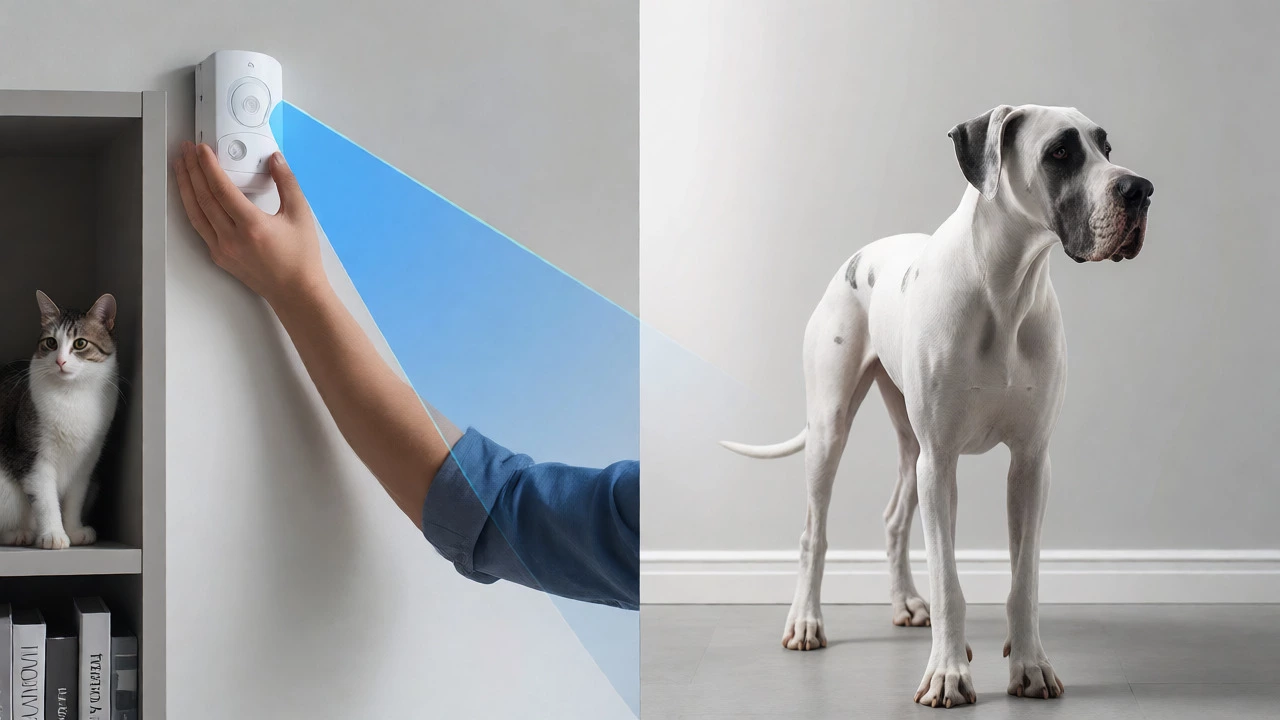
Most manufacturers recommend installing PIR sensors between 6 and 8 feet above the floor. Why? Because most dogs move near the ground. By mounting the sensor high and tilting it slightly downward, you create a detection zone that captures the upper torso and head of a standing human but misses the lower body of a dog. However, be careful with furniture. If your dog loves jumping onto the back of the sofa or climbing bookshelves, they might enter the "human zone" of the sensor. Map out your dog’s favorite spots. If they routinely climb high, aim the sensor away from that specific piece of furniture or block access to it when the alarm is armed.
Also, keep sensors away from heat sources. HVAC vents, direct sunlight through windows, and even hot ovens can cause temperature fluctuations that confuse older PIR sensors. Keep at least 6 feet of clearance between your motion detector and these heat traps to prevent ghost alarms.
The Role of Smart Cameras and AI
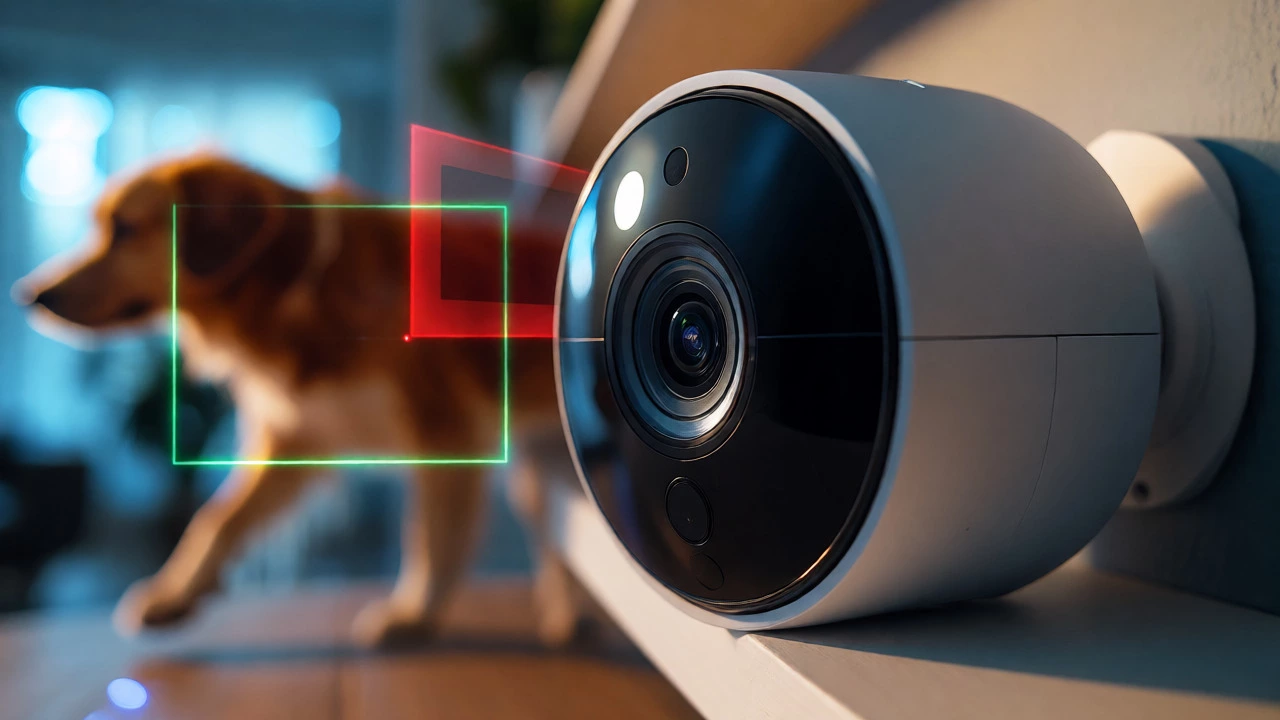
If motion sensors still give you trouble, let artificial intelligence handle the job. Modern security cameras, such as those from Ring, Arlo, or SimpliSafe, use AI-driven person detection. Unlike simple motion alerts that ping every time pixels change, these cameras analyze the shape of the moving object. They are trained to recognize human silhouettes. A dog trotting across the frame usually gets ignored, while a human entering the frame triggers a notification.
This is particularly useful for indoor monitoring. You can arm your perimeter sensors (doors/windows) to catch break-ins, while relying on AI cameras for interior oversight. This hybrid approach eliminates the risk of your dog triggering the siren while still giving you visual confirmation of who-or what-is inside. Plus, many apps allow you to review clips instantly, so you can verify if the alert was a real threat or just Fido chasing a fly.
Behavioral Hacks to Reduce False Alarms
Technology handles the hardware, but you need to manage the software: your dog’s behavior. Even with pet-immune sensors, erratic behavior can cause issues. Does your dog pace along a specific hallway at night? Do they bark at shadows? While barking itself rarely triggers motion sensors (which detect heat/motion, not sound), glass-break sensors might react to loud, sharp noises if not properly tuned.
Consider physical barriers. Baby gates are excellent tools for security zoning. Close off rooms with sensitive sensors when you leave. If your dog sleeps in the bedroom, you can often exclude that room from the "Away" mode arming list, or use a dedicated pet-safe mode that disables interior motion but keeps door contacts active. This ensures that if someone forces the front door, the alarm sounds, but your dog sleeping in the master suite doesn’t wake the neighborhood.
Another common issue involves door contacts. Large dogs leaning against a poorly secured sliding door can shift the magnet enough to trigger the contact. Ensure all doors close tightly and magnets are firmly attached. If your dog tends to push doors open, consider secondary locks or reinforced strikes.
Testing Your Setup: The 48-Hour Rule
Never trust a new system immediately. After installation, perform a stress test. Arm your system while you are home. Let your dog go about its normal routine for at least 48 hours. Watch for patterns. Did the alarm trip at 7 PM every day? That’s likely your dog’s dinner time or evening walk prep. Identify the exact moment and location of the trigger.
If you see consistent false alarms, adjust. Move the sensor. Change the sensitivity pin (many sensors have internal jumpers for "Low," "Medium," and "High" sensitivity). Try flipping the sensor upside down if it’s mounted high; sometimes this alters the fresnel lens pattern to better ignore floor-level activity. Document these tests. Once you have two consecutive nights with zero false alarms from your dog, you can confidently arm the system when you leave.
Frequently Asked Questions
Will my dog’s barking set off the alarm?
Generally, no. Standard motion sensors detect infrared heat and movement, not sound. However, if you have glass-break sensors, loud barking combined with other vibrations *could* theoretically trigger them, though modern acoustic sensors are quite sophisticated. Glass-break sensors listen for the specific frequency of shattering glass, not general noise. If you are concerned, opt for dual-technology glass-break sensors that require both sound and vibration to trigger.
What if I have multiple dogs?
This is tricky. Many pet-immune sensors calculate the total infrared signature in the detection zone. If you have three 20-lb dogs, the combined heat signature might exceed the limit of a sensor rated for 50 lbs. In multi-dog households, it is safer to choose sensors with higher weight ratings (e.g., 85+ lbs) or rely primarily on entry sensors and cameras rather than interior motion detectors.
Do cats trigger alarms?
Cats are smaller than most dogs, so they are easier to ignore. Most pet-immune sensors rated for 35 lbs or higher will easily ignore cats. However, cats are climbers. If a cat jumps onto a high shelf or counter within the sensor's line of sight, it might trigger the alarm even if its weight is low. Aim sensors away from vertical surfaces where cats like to perch.
Can I use pet-friendly alarms with DIY systems like SimpliSafe or Ring?
Yes. Most major DIY brands now include pet-immune motion sensors as part of their standard packages. SimpliSafe, for instance, advertises sensors that ignore pets under 50-60 lbs. Ring offers similar capabilities with their Motion Detector II. Just ensure you select the correct sensor model during checkout, as some budget bundles may still use non-pet-immune versions.
What happens if my dog grows heavier?
If your puppy grows past the weight threshold of your current sensors, you may start seeing false alarms. You don’t necessarily need to replace the whole system. First, try lowering the sensitivity setting on the existing sensors. If that fails, you may need to upgrade specific motion detectors to a higher-capacity model. This is a common maintenance step for owners of rapidly growing large-breed puppies.