
Low-Light Vision Simulator
Vision Settings
The Truth About Absolute Darkness
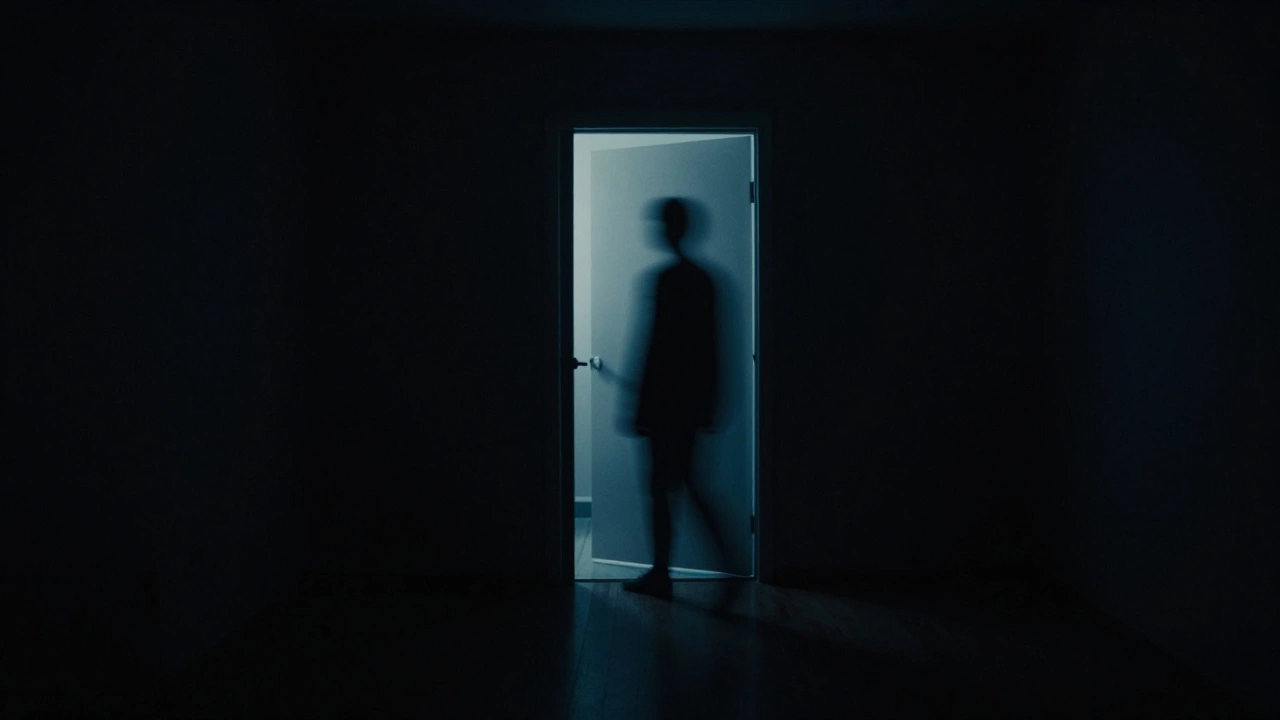
First, we need to clear up a major scientific point: there is a massive difference between "near-total darkness" and "absolute darkness." If you are in a space with zero photons-meaning not a single particle of light is hitting your eye-you cannot see a shadow. Why? Because a shadow isn't a "thing" that exists on its own; it's simply the absence of light. If there is no light to begin with, there is nothing to be absent. You can't subtract light from zero.
However, most places we call "dark" aren't actually absolute. Starlight, the glow from a distant streetlamp, or even the faint bleed of light under a door provides a baseline of photons. In these conditions, your eyes do something incredible. They don't just look for light; they actively look for the loss of light.
The Secret Weapon: OFF Ganglion Cells
Your eyes have two different "modes" for handling light in the dark. For a long time, we mostly focused on how we see faint glimmers of light, but researchers from Aalto University and the University of Helsinki discovered something more interesting. They found that mammals have a specialized neural circuit designed specifically to spot shadows.
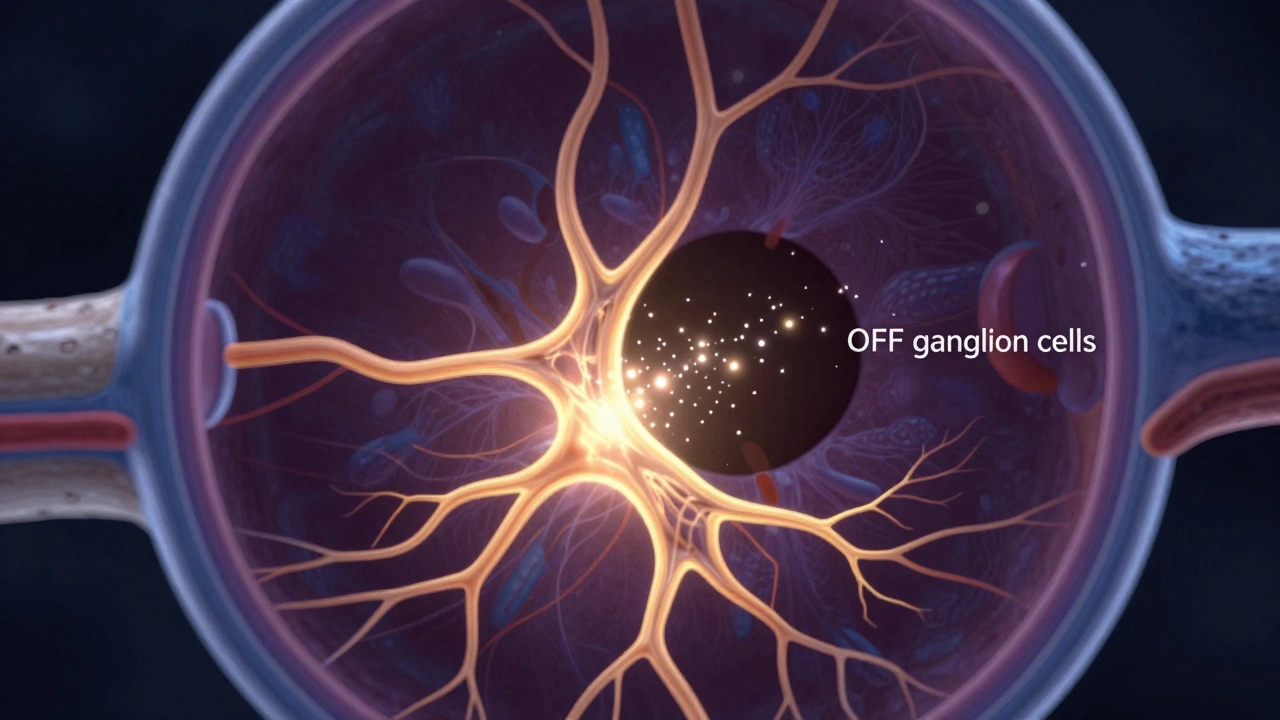
Inside your retina, you have OFF ganglion cells. Think of these as the opposites of ON cells. While ON cells fire when they detect a spark of light, OFF ganglion cells are specialized neurons that trigger a response when light levels drop. They are essentially "darkness detectors."
This is a biological survival mechanism. Think about a mouse in the wild. If a hawk flies overhead during a dim twilight, the mouse doesn't need to see the hawk's colors or fine details. It just needs to detect a sudden, tiny dip in the ambient light-a shadow-and bolt for cover. This system is so sensitive that it operates at the very edge of what is physically possible according to quantum physics.
How it Works: The Photon Game
The precision here is mind-blowing. In a 2022 study published in Current Biology, researchers found that mice could detect shadows caused by the absence of just a few photons. To put that in perspective, your eye is processing thousands of signals from rod receptors (the cells responsible for low-light vision), and the OFF ganglion cells can spot a tiny "hole" in that light stream.
| Cell Type | Trigger | Primary Function | Sensitivity |
|---|---|---|---|
| ON Ganglion Cells | Increase in light | Detecting faint light sources | High (Quantal level) |
| OFF Ganglion Cells | Decrease in light | Detecting shadows/predators | Extreme (Near-theoretical limit) |
| Cone Cells | High light levels | Color and detail perception | Low (Shut down in dark) |
Human Vision vs. Animal Instinct
You might be wondering, "Do I have this too, or is this just for mice?" The good news is that humans possess the exact same neural circuitry. We have the same OFF ganglion cells that allow us to perceive these "quantal shadows." However, our brains process this information differently than a mouse's brain does. We aren't usually in a state of high-alert predator avoidance, so we might not consciously notice a shadow that a rodent would find terrifying.
It's also worth noting that when you enter a dark room, your color vision basically shuts down. The cones in your eyes need a lot of light to work. Once they stop firing, you move into a monochromatic world where only rods and those specialized ganglion cells are doing the heavy lifting. This is why everything looks grey or blue-tinted in the dark-you're no longer seeing colors; you're seeing patterns of photon density.
Bridging the Gap with Night Vision Technology
Since our biological eyes have a hard ceiling on what they can see, we've built tools to push that limit. This is where night vision cameras come in. While our eyes rely on a few stray photons and a specialized neural circuit, technology uses two main methods to "see" the shadows we can't.
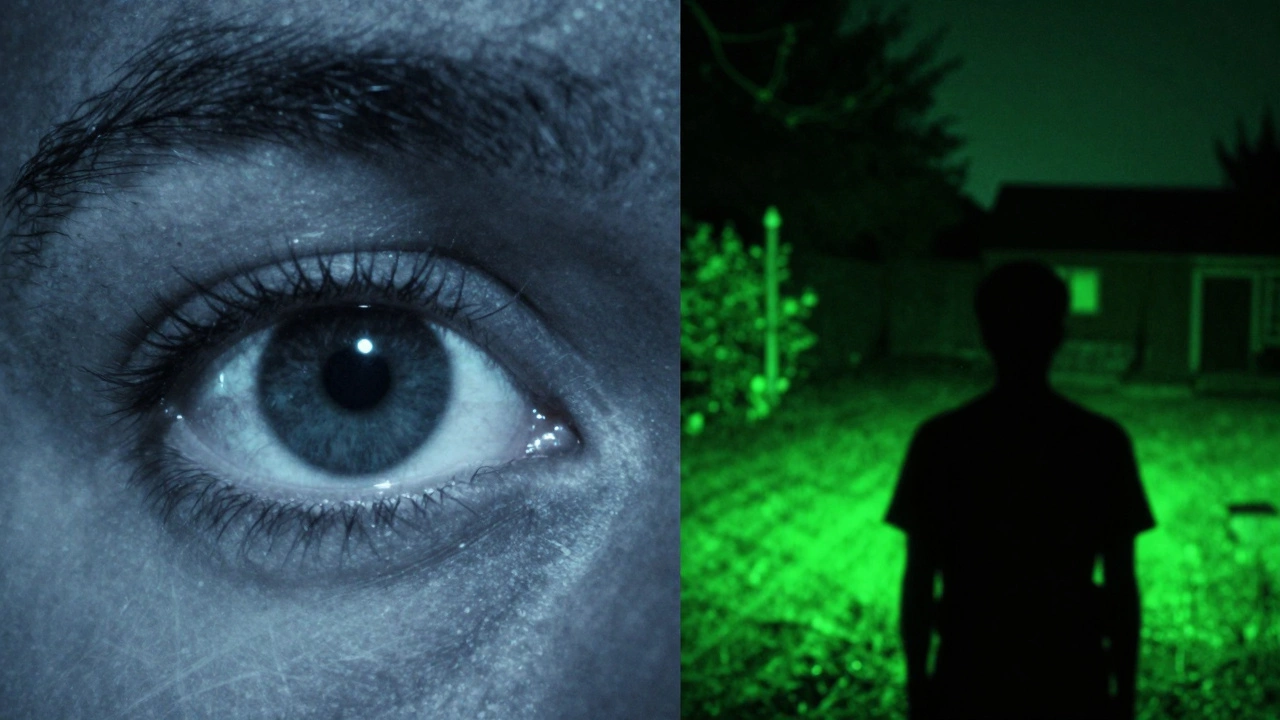
First, there is Image Enhancement. These cameras act like super-powered versions of our OFF ganglion cells. They gather every single available photon from the environment and amplify it, turning a nearly invisible shadow into a clear, green-tinted image. If there is even a tiny bit of starlight, these cameras can map the contrast between light and shadow far better than a human eye ever could.
Then, there is Active Infrared (IR). This is the "cheat code" for absolute darkness. Since we know shadows are impossible without light, these cameras simply bring their own. They flood the area with infrared light-which is invisible to humans-and then capture the reflection. When an object blocks that IR light, it creates a shadow that the camera can see perfectly, even in a room with zero visible light.
Why This Matters for Your Security
Understanding the difference between biological shadow detection and electronic sensing is key when setting up home monitoring. If you rely on a camera that only "enhances" light, it will struggle in a truly dark alley. You'll get a grainy image where shadows bleed into each other, much like how our own eyes struggle when the photon count is too low.
If you want to catch a "shadow" moving across your yard at 3 AM, you need a system that doesn't just wait for light to happen. By using IR illuminators, you're essentially creating a light environment that the camera can use to generate high-contrast shadows, giving you a clear picture of exactly who or what is moving in the dark.
Can I see a shadow if there is absolutely zero light?
No. A shadow is the absence of light. If there is no light source to begin with, there is nothing to block, and therefore no shadow can be created or perceived. You need at least a few photons of background light for a shadow to exist.
How do OFF ganglion cells help us see in the dark?
These specialized neurons in the retina trigger a signal when light levels drop. Instead of looking for light, they detect the "dip" in illumination, allowing mammals to spot silhouettes or shadows even in near-total darkness, such as under starlight.
Why do things look grey or blue in low light?
This happens because your cone cells, which detect color, require a high threshold of light to function. In the dark, they shut down, and your vision shifts to rod cells, which only detect brightness and darkness (monochromatic vision).
Do night vision cameras actually see in absolute darkness?
Only if they use active infrared (IR) lighting. Cameras that only amplify existing light still need some photons to work. IR cameras create their own invisible light source, allowing them to detect shadows and shapes in total darkness.
Is human shadow detection as good as a mouse's?
Biologically, we have the same OFF ganglion cell circuitry, meaning the hardware is the same. However, mice have a higher evolutionary drive to detect these shadows for survival, making them more attuned to those signals than the average human.
Next Steps for Better Low-Light Visibility
If you've realized that your eyes (or your current cameras) aren't cutting it in the dark, here are a few ways to fix it depending on your situation:
- For Home Security: Swap out standard cameras for those with "Full-Color Night Vision" or high-power IR arrays. This ensures you aren't relying on the tiny amount of ambient light available.
- For Better Natural Vision: Give your eyes time to adapt. It takes about 20 to 30 minutes for your rods to fully reach their maximum sensitivity (dark adaptation). Avoid looking at your phone screen during this time, as the bright light will "reset" your adaptation.
- For Outdoor Lighting: Use motion-activated low-wattage LEDs. This provides enough photon density for your biological OFF ganglion cells to work perfectly while still keeping the area dim enough to avoid attracting unwanted attention.