
Home Security Risk & Deterrence Calculator
Select the security measures currently installed at your home to calculate your protection level against burglars.
Security Assessment
Recommended Next Steps:
- ⚠️ Install deadbolts on all exterior doors.
- ⚠️ Add motion-sensor lighting to dark areas.
It’s a question that keeps many homeowners up at night: if you install a wireless alarm system is a modern electronic security setup designed to detect unauthorized entry without complex wiring, will it actually stop a burglar, or will it just make your house look like a treasure chest waiting to be picked?
The short answer is yes, burglars do target homes with alarms. But the reality is far more nuanced than a simple yes or no. Research shows that while visible, well-maintained alarms deter the majority of opportunistic criminals, a significant minority still take the risk-especially if they believe the system is disarmed, outdated, or unlikely to trigger a fast police response.
How Burglars Choose Their Targets
To understand why some burglars ignore alarms, you first need to understand how they think. Most residential burglaries are crimes of opportunity, not calculated heists. Offenders look for easy targets: unlit streets, obscured windows, and unlocked doors. They want in and out quickly, minimizing their time exposed to neighbors or cameras.
A study conducted by the University of North Carolina at Charlotte surveyed 422 incarcerated burglars about their habits. The results were telling. Approximately 83% said they would try to determine if a home had a security alarm before breaking in. When they found one, around 60% chose a different target entirely. This suggests that for the majority of offenders, an alarm acts as a strong deterrent, shifting them toward softer, unprotected houses.
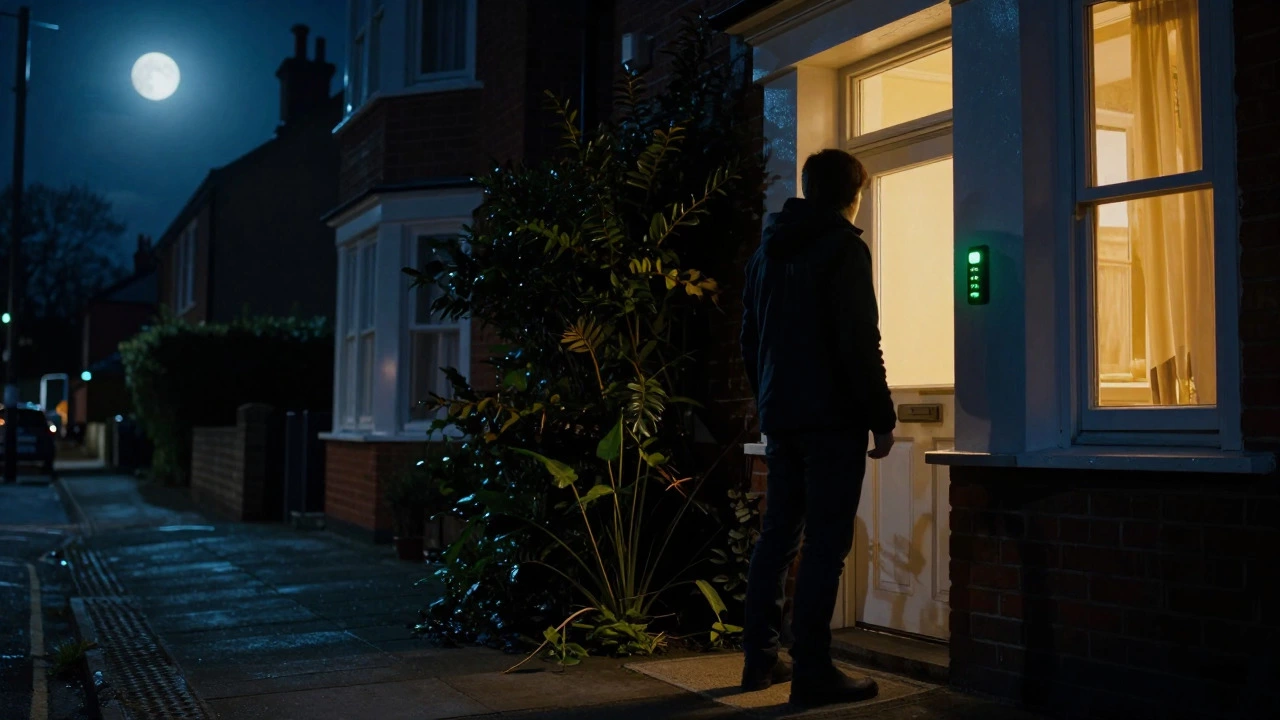
However, that 40% who remain undeterred are the ones you need to worry about. These offenders often have specific reasons for targeting an alarmed home. They might spot a keypad through a window indicating the system is off. They might see overgrown bushes hiding a sensor. Or they might simply be willing to risk it because they expect high-value goods inside.
The Counter-Intuitive Risk of Stand-Alone Alarms
Here is where things get tricky. You might assume that having an alarm automatically makes your home safer than having nothing. Surprisingly, data from England and Wales suggests otherwise in certain contexts.
Professor Andromachi Tseloni from Nottingham Trent University analyzed two decades of burglary data from the Crime Survey for England and Wales. Her findings, highlighted in a 2019 Office for National Statistics report, revealed a counter-intuitive trend. Homes with only a burglar alarm-and no other security measures-actually faced a slightly higher risk of burglary than homes with no security at all.
Why does this happen? Researchers point to "selection effects." People living in higher-value homes, or those who have been burgled before, are more likely to install alarms. To a professional burglar, an alarm sign can signal that there is something worth stealing inside. If the alarm is the only defense, and the physical locks are weak, the burglar calculates that the reward outweighs the risk of noise.
In contrast, homes with a combination of devices-such as double door locks, window locks, external lighting on sensors, and indoor lights on timers-showed up to 49 times more protection than homes with no security. The alarm alone didn’t cut it; it needed support.
| Security Setup | Relative Protection Level | Burglar Perception |
|---|---|---|
| No Security | Baseline (Low) | Easy target, low risk of detection |
| Stand-Alone Alarm Only | Slightly Higher Risk than No Security | Signal of high value; potential for bypass |
| Physical Locks + Lighting | High (3x better than none) | Slows entry, increases effort |
| Comprehensive Layered Security | Very High (up to 52x better) | High risk, low reward, likely to flee |
Why Some Burglars Ignore the Siren
Even when an alarm goes off, it doesn’t always mean the burglar runs. In the UNC survey, when offenders triggered an alarm during a break-in, about half retreated immediately. Thirty-one percent sometimes discontinued depending on the situation. But 13% said they would always continue regardless of the noise.
This small percentage represents hardened criminals who plan for the worst. They might wear gloves to avoid fingerprints, carry tools to disable sensors, or simply move fast enough to escape before police arrive. Community discussions on platforms like Reddit often highlight this issue. Users share stories of thieves smashing windows and grabbing valuables while the alarm blared, counting on neighbor indifference or slow emergency response times.
This phenomenon, known as "alarm fatigue," is real. In dense urban areas, sirens can become background noise. If neighbors don’t check on a sounding alarm, and if the system isn’t professionally monitored, the burglar gains confidence that they can finish the job unnoticed.
The Power of Visible Deterrence
If the goal is to stop the burglar before they even touch your door handle, visibility is key. A hidden alarm offers zero deterrence. Burglars need to know you’re protected before they commit to the crime.
Professional monitoring plays a huge role here. Signs from reputable monitoring companies tell a potential intruder that someone is watching. According to industry data summarized by groups like the National Council for Home Safety and Security, households with a security system are roughly 50% less likely to be burglary victims than those without. More importantly, visible signs combined with proof of monitoring can cause up to 90% of offenders to avoid the property altogether.
Ex-burglar turned security consultant Michael Fraser noted in a 2019 interview that visible alarms and doorbell cameras are valuable deterrents. He emphasized that burglars prefer properties that look unprotected or have obvious weaknesses. Obscured windows, dark driveways, and missing signage scream "easy pickings."

Building a Layered Defense Strategy
So, how do you protect your home effectively? The research is clear: rely on layers. An alarm is just one piece of the puzzle. Here is what a robust strategy looks like:
- Physical Reinforcement: Install deadbolts on all exterior doors and locks on every window. These are the first line of defense, slowing down entry significantly.
- Lighting: Use motion-activated external lights and keep indoor lights on timers. Darkness helps burglars hide; light exposes them.
- Surveillance: Add CCTV cameras or video doorbells. Visual evidence deters crime and aids prosecution if a theft occurs.
- Visible Alarm Signage: Place stickers in windows and signs in the yard. Make sure they indicate professional monitoring if applicable.
- Maintenance: Test your system regularly. A broken alarm that hasn’t been serviced is worse than no alarm-it gives false confidence to the homeowner and signals neglect to the burglar.
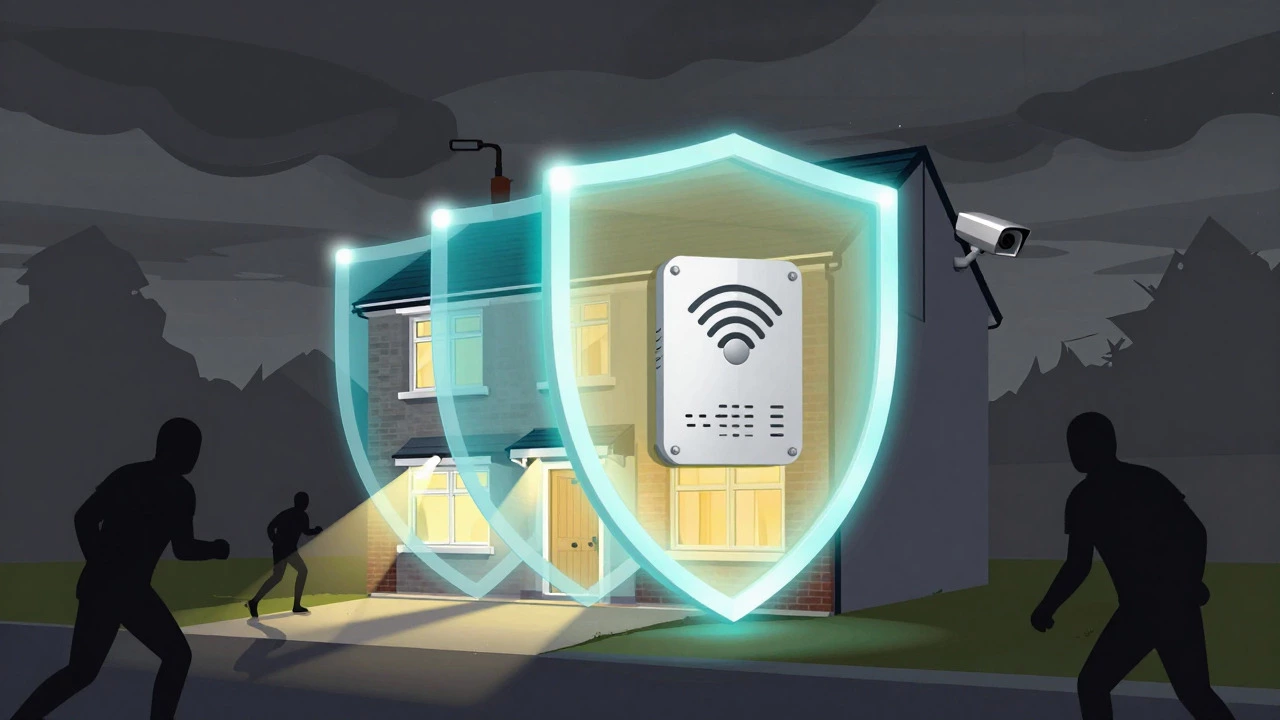
When you combine these elements, you create a hostile environment for criminals. They want speed and secrecy. Your goal is to force slowness and visibility. By integrating a wireless alarm system with strong locks and smart lighting, you address both the psychological deterrent and the physical barrier.
Common Mistakes That Compromise Your System
Even the best technology fails if used incorrectly. Many homeowners undermine their own security with simple errors.
First, leaving the alarm disarmed for long periods sends a clear message. If a burglar sees your car in the driveway but knows you’re away, they might watch to see if you arm the system before leaving. If you forget, they’ve learned your routine.
Second, poor sensor placement reduces effectiveness. Motion detectors blocked by furniture or door sensors installed on rarely used exits leave gaps. Burglars are observant; they will exploit these blind spots.
Third, ignoring software updates for smart systems can leave vulnerabilities. Modern wireless alarm systems connect to apps and cloud services. Keeping firmware updated ensures that hackers or tech-savvy thieves can’t easily spoof signals or disable the system remotely.
Do burglars fear alarm systems?
Most burglars respect alarm systems as a deterrent. Studies show that about 60% of offenders will choose a different target if they detect a visible alarm. However, a minority of determined criminals are willing to risk triggering an alarm, especially if they believe the response will be slow or the system is poorly maintained.
Is a stand-alone alarm enough to protect my home?
Research suggests that relying solely on a burglar alarm without other security measures may not reduce risk significantly and could even increase it in some cases. Alarms work best when combined with physical barriers like strong locks, motion-activated lighting, and surveillance cameras to create a layered defense.
What percentage of burglars run away when an alarm sounds?
According to offender surveys, approximately 50% of burglars retreat immediately when an alarm activates during a break-in. Another 31% may stop depending on the circumstances, while about 13% continue regardless of the noise. This highlights the importance of rapid police response and visible monitoring.
Should I use professional monitoring for my wireless alarm system?
Yes, professional monitoring adds a critical layer of credibility. Visible signs indicating professional monitoring can deter up to 90% of potential intruders. It also ensures that help is dispatched even if you are unable to respond personally, reducing the window of opportunity for thieves.
Can burglars easily disable modern alarm systems?
While skilled thieves can sometimes bypass older or poorly configured systems, modern wireless alarm systems with encrypted signals and cellular backups are difficult to defeat. Regular maintenance and proper installation are key to preventing technical vulnerabilities that criminals might exploit.