
Dog Bark Alarm Effectiveness Calculator
Calculating effectiveness of an Electronic Watchdog.
When you hear the phrase dog bark alarms, what comes to mind? A fake dog keeping burglars away? Or a gadget trying to stop your actual pet from yelling at the mailman? It’s easy to get confused because these two very different tools share the same name but serve completely opposite purposes. One is designed to create noise to scare people off; the other is designed to stop noise to keep neighbors happy.
The short answer is: yes, they work, but only if you pick the right one for your specific problem. Using an anti-bark collar as a security system will leave you vulnerable. Using a motion-activated burglar alarm to train your Golden Retriever will just annoy everyone in the house. Let’s break down exactly how each type functions, where they fall short, and which one actually solves your issue.
Motion-Activated Burglar Deterrents: The Electronic Watchdog
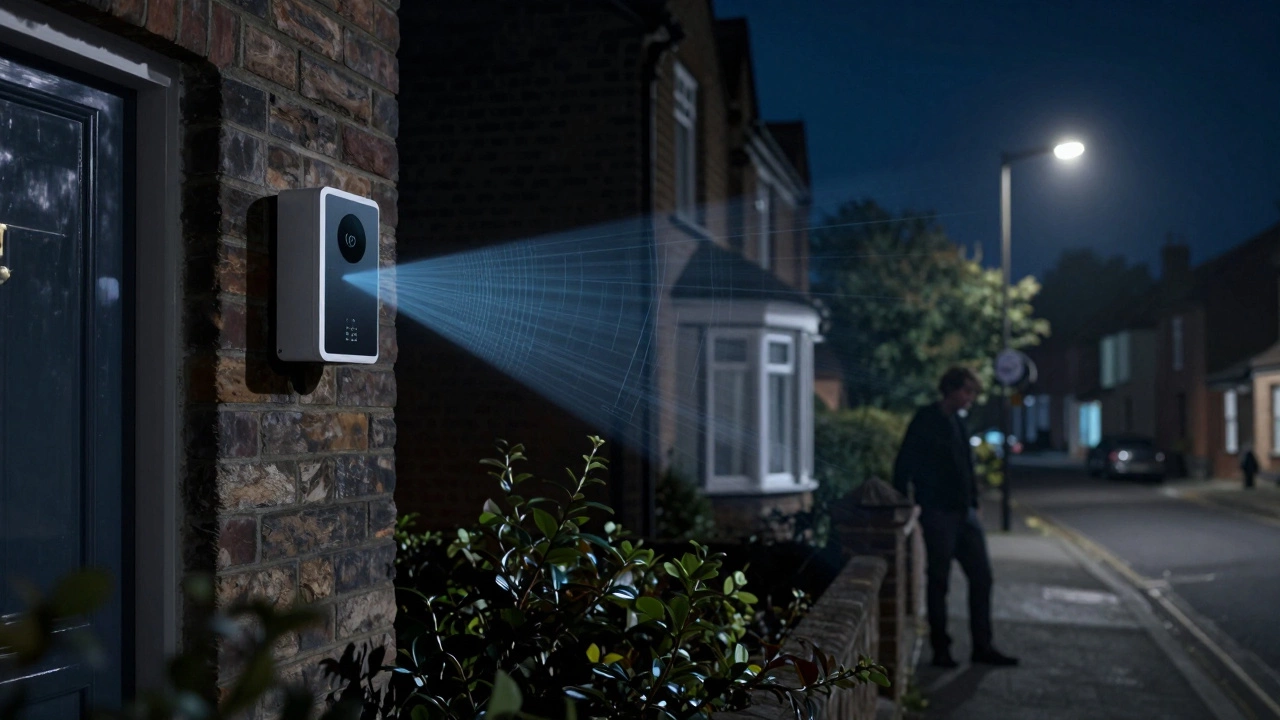
This category of device is often called an "electronic watchdog." Its job is simple: mimic the sound of a real dog barking when it senses movement near your property. These aren’t toys; they are serious security deterrents used by homeowners who want the protective benefits of a guard dog without the food bills, vet visits, or shedding.
Electronic Watchdogs are security devices that use motion sensors to trigger realistic dog barking sounds, deterring intruders by creating the illusion of a guarded property. They plug into standard electrical outlets and require zero installation beyond plugging them in and setting the sensitivity dial.
Why do criminals care about a barking dog? It’s not because they’re afraid of being bitten. It’s because they hate attention. Break-ins rely on speed and silence. A sudden, loud bark shatters that silence, signaling to the intruder that someone might be awake or that there is a threat inside. According to security experts, this disruption is often enough to make a criminal abandon their attempt and move to an easier target.
You might worry that the repetitive loop of a recording gives it away. In theory, that makes sense. In practice, however, a person trying to break into your home isn’t sitting on your porch analyzing audio frequencies. They are stressed, moving fast, and looking for escape routes. At that moment, the distinction between a real dog and a high-quality speaker is lost on them. The noise alone creates enough doubt to deter entry.
These devices also work surprisingly well against wildlife. If you’ve ever dealt with raccoons tearing open trash bins or bears raiding garbage cans, you know how frustrating it can be. The Bear League has noted that fake barking alarms effectively prevent black bears from approaching residential areas. Animals respond to the threat signal-the bark-regardless of whether the source is biological or electronic.
Key Features of Modern Motion-Activated Alarms
Not all electronic watchdogs are created equal. Older models used simple infrared sensors that could be fooled by heat signatures or blocked by walls. Newer technology has changed the game significantly.
- Radar Technology: Advanced systems like the Rex Plus use radar waves instead of basic infrared. This allows the sensor to detect motion through thick walls, dense foliage, and even multiple panes of glass. It doesn’t need a direct line of sight to work.
- Detection Arc: Look for a wide detection arc. The Rex Plus offers a 150-degree arc, which is roughly 50% larger than many competitors. This covers more ground with fewer blind spots.
- Adjustable Range: You can calibrate the sensitivity to detect movement up to 30 feet away. This helps reduce false alarms triggered by passing cars or swaying trees.
- Audio Variety: High-end units offer multiple sound options-not just one looping bark, but combinations of dogs, sirens, chimes, and background noise. This variety prevents desensitization for both humans and animals.
User feedback supports the effectiveness of these devices. Over 68% of reviewers for top-tier models award them 4 or 5 stars, citing peace of mind and successful deterrence of suspicious activity. For anyone renting an apartment where pets aren’t allowed, or living in a rural area where a real dog might wander off, this is a powerful tool.
Anti-Barking Devices: Stopping Your Pet’s Noise
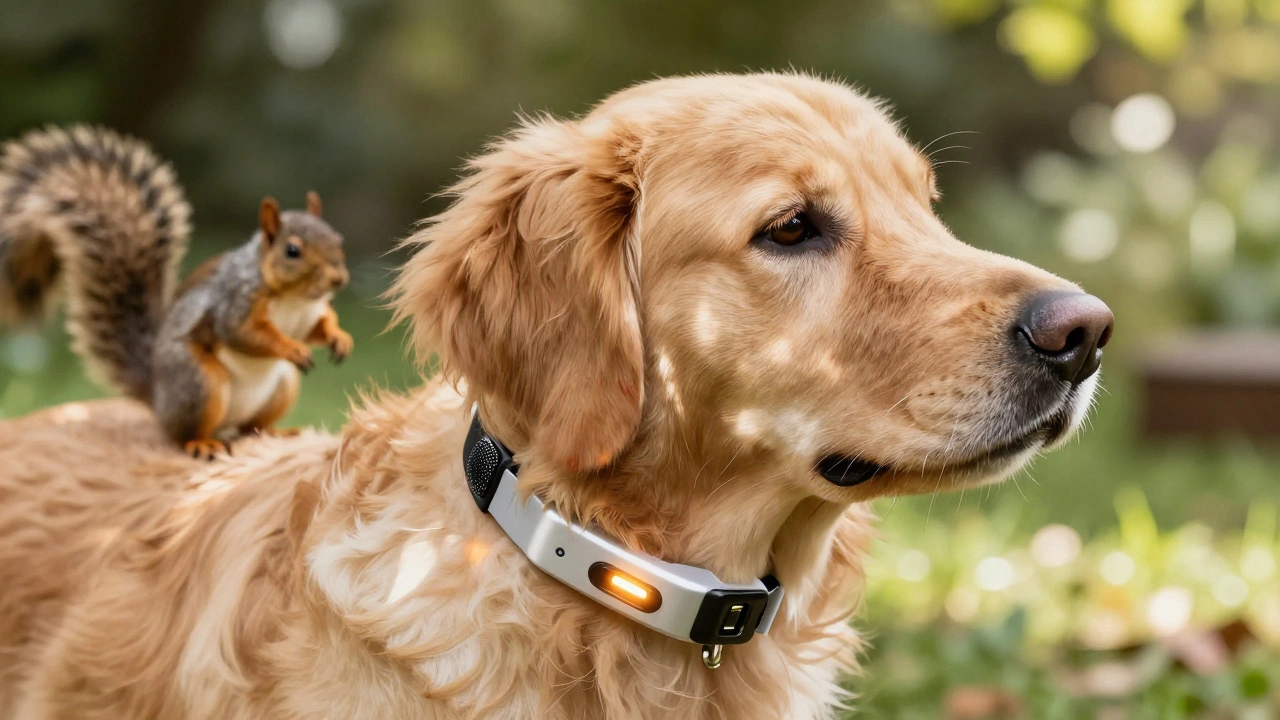
Now let’s flip the script. What if the problem isn’t a burglar, but your own dog barking at leaves, squirrels, or nothing at all? This is where Anti-Bark Devices come in. These are designed to interrupt excessive barking in domestic dogs using aversive stimuli.
Veterinarians generally advise against relying solely on these devices. Why? Because barking is a symptom, not the disease itself. Dogs bark out of boredom, anxiety, fear, separation distress, or a desire for attention. If you don’t address the root cause, suppressing the bark with a machine is like putting tape over a warning light on your car dashboard. The engine is still overheating; you just can’t hear it anymore.
That said, these devices do exist and can be effective in specific scenarios when used correctly. Here is how the three main types work:
- Ultrasonic Emitters: These stationary devices listen for barking and emit a high-pitched sound that is inaudible to humans but unpleasant to dogs. The idea is classical conditioning: bark equals annoying noise, silence equals quiet. Outdoor models can cover yards and may even stop neighboring dogs from joining in a "barking competition." However, they lack precision. If you have two dogs and only one is barking, both will hear the correction.
- Vibration Collars: These attach directly to the dog. They use microphones and vibration sensors to detect throat movement associated with barking. When triggered, the collar delivers a gentle vibration to distract the dog. The advantage here is targeting: only the barking dog feels the stimulus. It’s less intrusive than shock collars and focuses on interruption rather than pain.
- Spray Collars: These release a burst of compressed air or citronella spray when barking is detected. The combination of a hissing sound, a physical puff of air, and a strong odor provides a multi-sensory deterrent. Like vibration collars, they target the individual dog, ensuring no bystander pets are punished.
The Problem with Desensitization
The biggest weakness of anti-bark devices is habituation, or desensitization. Dogs are resilient creatures. Over time, they learn that the vibration or the spray is harmless. Once the novelty wears off, the barking returns, often louder and more frequent. Furthermore, these devices teach negative association ("if I bark, bad things happen") but fail to teach positive replacement behaviors ("if I see a squirrel, I should sit quietly"). Without training, you haven’t solved the behavioral issue; you’ve just temporarily muted it.
| Feature | Motion-Activated Burglar Alarm | Anti-Bark Device (Collar/Ultrasound) |
|---|---|---|
| Primary Purpose | Deter intruders/wildlife | Reduce excessive pet barking |
| Mechanism | Motion sensor triggers audio playback | Bark detection triggers vibration/sound/spray |
| Target Audience | Homeowners, renters, business owners | Pet owners with nuisance barking issues |
| Effectiveness Against Humans | High (psychological deterrent) | N/A |
| Long-Term Viability | High (no habituation for intruders) | Low to Moderate (dogs desensitize over time) |
| Installation | Plug-and-play, wall-mounted | Fitting collar or positioning emitter |
Practical Implementation: Getting the Most Out of Your Device
Whether you choose a security alarm or a behavior modifier, placement is everything. Many users fail because they treat these devices as "set it and forget it" gadgets.
For motion-activated burglar alarms, position the unit where it has a clear view of potential entry points-front doors, back patios, or side windows. Avoid placing it too close to busy streets where car headlights might trigger false alarms. Use the adjustable sensitivity settings to fine-tune the range. You want it to catch someone walking up your driveway, not every leaf blowing across the lawn.
For anti-bark devices, orientation matters. Ultrasonic emitters must face the area where the dog spends most of its time. Mounting them arbitrarily on a wall behind a sofa renders them useless. For collars, ensure a snug fit. If it’s too loose, the microphone won’t detect the bark accurately, and the vibration or spray won’t register properly. Regularly check the battery life and clean the sensors to maintain performance.
Which Solution Is Right for You?
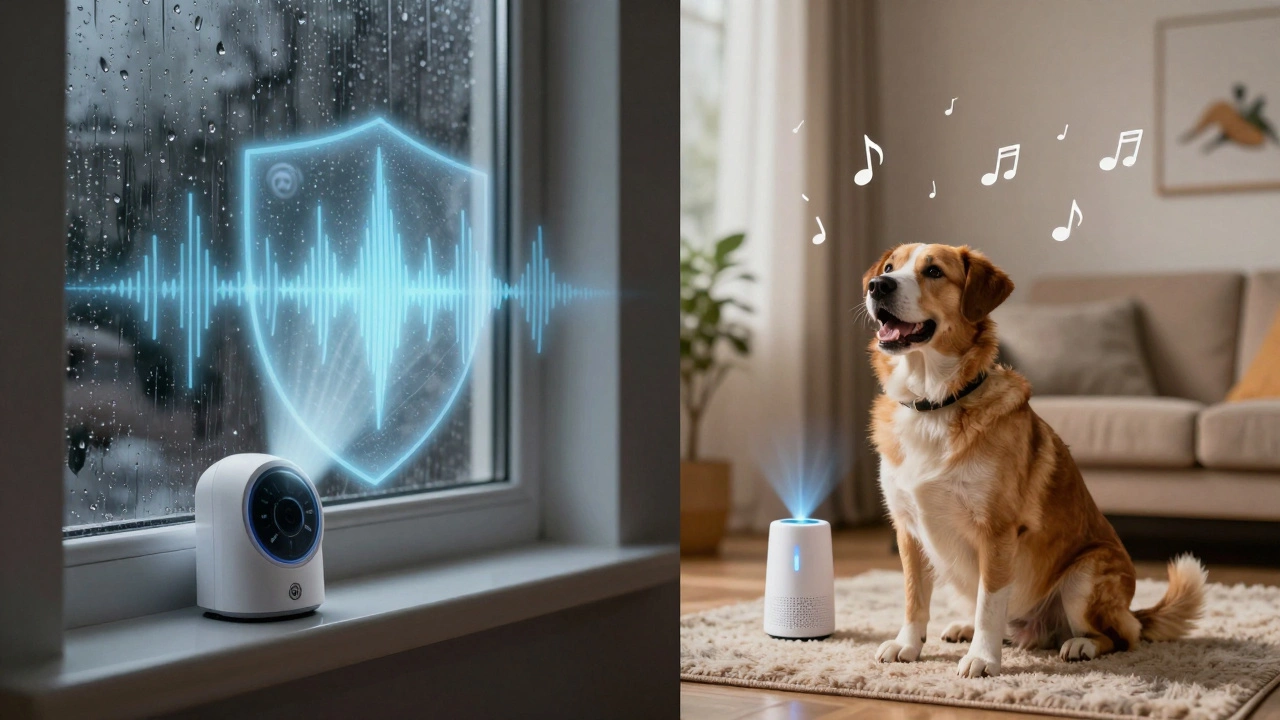
If you are worried about break-ins, trespassers, or wildlife destroying your yard, invest in a high-quality motion-activated electronic watchdog. Look for radar-based sensors, adjustable volume, and varied sound profiles. It’s a cost-effective way to add a layer of security without the responsibilities of pet ownership.
If your neighbor has complained about your dog’s constant barking, an anti-bark device might offer temporary relief. But approach it with caution. Pair the device with professional obedience training or behavior modification techniques. Identify why your dog is barking-is it loneliness? Fear? Lack of exercise? Addressing the root cause is the only way to achieve long-term silence.
Don’t mix them up. A burglar alarm won’t train your dog, and a vibration collar won’t stop a thief. Know your goal, choose the right tool, and place it strategically. That’s how you get results.
Can a fake dog bark alarm really stop a burglar?
Yes, it can be highly effective. Burglars prioritize stealth and speed. A sudden, loud bark disrupts their operation and signals that the property is guarded. While they might eventually realize it's fake, the initial surprise is often enough to cause them to flee and find an easier target.
Do anti-bark collars hurt dogs?
Modern anti-bark collars typically use vibration, ultrasonic sound, or citronella spray, which are designed to be uncomfortable but not painful. However, any aversive stimulus can cause stress or anxiety if used incorrectly. Vibration collars are generally considered the least invasive option.
Will a motion-activated barking alarm wake me up?
It depends on the volume settings and your location relative to the device. Most modern units allow you to adjust the decibel level. You can set it loud enough to deter intruders but quiet enough to sleep through, or use it as a nightlight-style alert if you prefer to be woken by suspicious activity.
How long does it take for a dog to get used to an anti-bark device?
Desensitization varies by dog, but many become accustomed to the stimulus within a few weeks. This is why these devices are not recommended as standalone solutions. Without addressing the underlying behavioral cause, the barking will likely return once the dog ignores the correction.
Can electronic watchdogs detect bears or raccoons?
Yes. Wildlife such as black bears and raccoons are sensitive to the sound of predators or territorial dogs. Fake barking alarms have been documented to successfully deter these animals from raiding trash cans or approaching homes, as they cannot distinguish between real and artificial barks.
Is it better to buy a radar or infrared motion sensor for a barking alarm?
Radar sensors are generally superior for outdoor security. They can detect motion through walls, windows, and foliage, providing broader coverage and fewer blind spots compared to infrared sensors, which require a direct line of sight and can be triggered by heat sources like sunlight.