
Motion Sensor Light Configuration Tool
Configuration Settings
Recommended Configuration
Enter your details and click calculate to see recommendations.
You get up in the middle of the night for a glass of water. The hallway is pitch black. You reach out, hoping to find the switch, but you trip over a shoe instead. This is exactly why motion sensor lights exist. But here is the big question: do they actually work when it is dark outside? Or do they fail because there is no sunlight?
The short answer is yes. In fact, motion sensor lights are specifically designed to work best at night. They do not rely on visible light to detect movement. Instead, they use technology that sees heat or sound waves. This means darkness does not blind them. It helps them.
How do motion sensors detect movement without light?
Most sensors use Passive Infrared (PIR) technology. They detect changes in infrared radiation, which is body heat. Since humans and animals emit heat regardless of whether it is day or night, the sensor works perfectly in total darkness.
How Motion Sensors See in the Dark
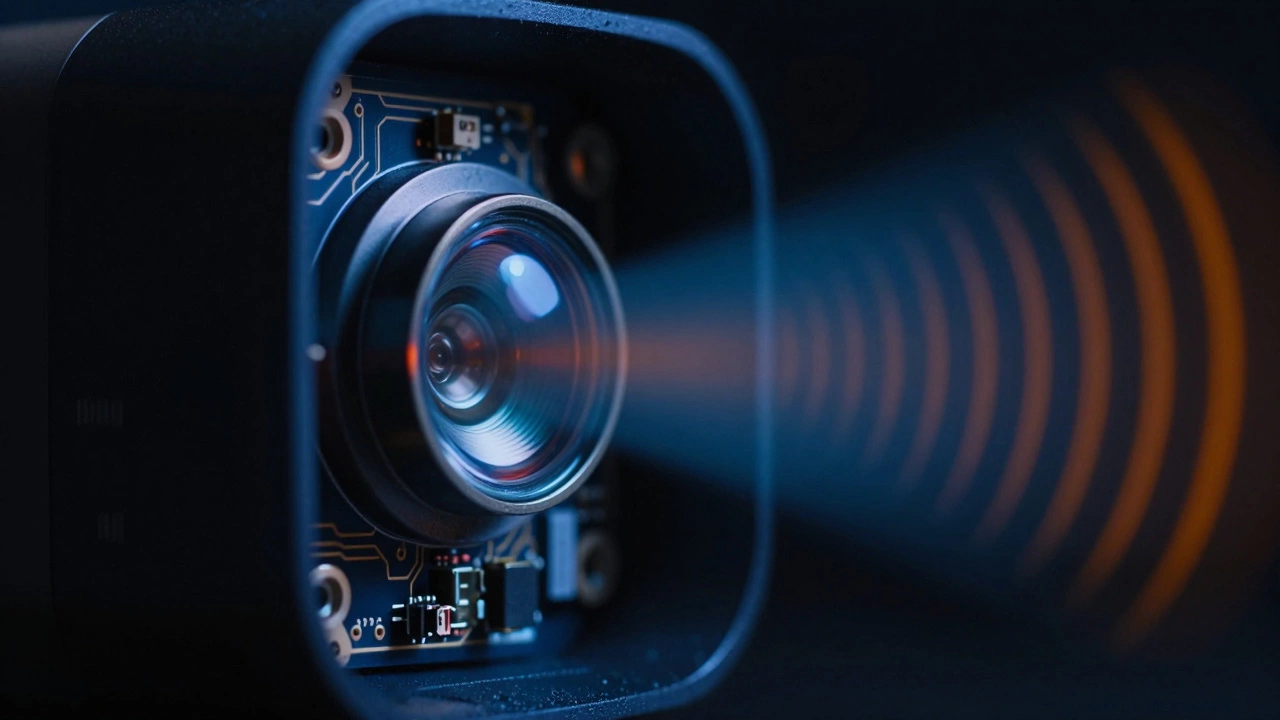
To understand why these lights work at night, you need to know what is inside the fixture. Most modern motion sensor lights use a component called a Passive Infrared (PIR) sensor. This device does not "see" images like your eyes or a camera do. Instead, it detects infrared energy. Every living thing with a warm body emits this energy. When you walk into a room, your body heat creates a change in the infrared pattern around you. The sensor picks up this shift instantly.
This process happens independently of visible light. A PIR sensor cannot tell if the sun is shining or if it is midnight. It only cares about heat sources moving across its field of view. Some high-end models use microwave or ultrasonic sensors. These send out radio waves or sound pulses and measure how they bounce back. Like PIR sensors, these methods work equally well in bright daylight or total darkness.
Because the detection mechanism relies on physics rather than optics, night time poses no technical challenge. If anything, the lack of background noise from sunlight makes some sensors more sensitive. You might wonder if extreme cold affects them. While very low temperatures can slightly reduce range, standard home environments keep the sensor functioning normally throughout the winter nights.
The Role of the Photocell (Dusk-to-Dawn)
If the motion sensor works fine at night, why do some people say their lights don't turn on during the day? That is where a second component comes in: the photocell. Many outdoor motion sensor lights have a built-in light sensor. This little piece of hardware checks how bright the ambient light is.
Think of the photocell as a gatekeeper. Its job is to save energy. If it is broad daylight, the photocell tells the light bulb, "Stay off. We don't need you." Even if the motion sensor detects a person walking by, the photocell blocks the signal. This feature is often called "dusk-to-dawn" mode. It ensures the light only activates when it is actually dark enough to be useful.
This setup explains a common confusion. People sometimes think the motion sensor itself fails at night. In reality, the system is working exactly as designed. It waits for darkness before allowing the motion trigger to fire. For indoor lights, this photocell might be absent. Indoor units usually just turn on whenever they sense movement, regardless of whether the blinds are open or closed. Outdoor units almost always include this daylight inhibition to prevent unnecessary battery drain or electricity usage.
Indoor vs. Outdoor Night Performance
How well a motion light works at night depends heavily on where you put it. Indoor and outdoor scenarios have different challenges.
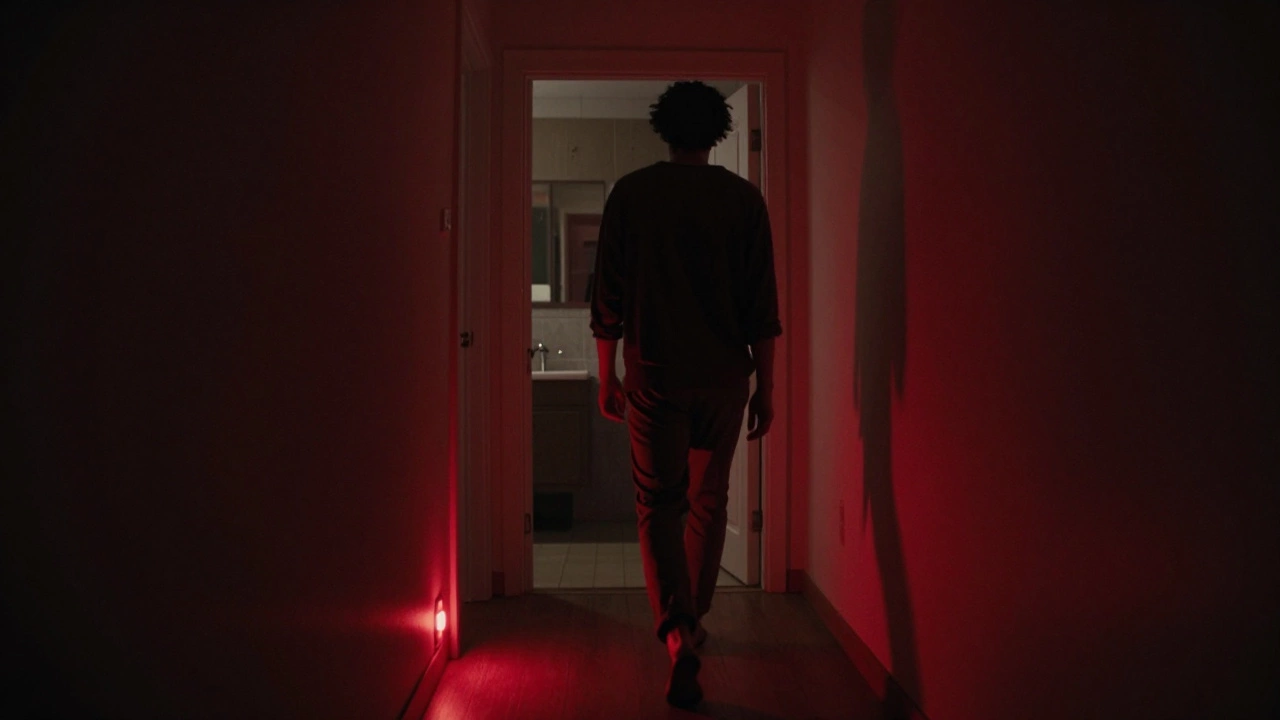
Indoor Night Lights: These are great for bedrooms and hallways. Products like the UBlockout Motion Sensor Night Light are designed specifically for sleep hygiene. They use red LED lights. Red light has a longer wavelength that does not suppress melatonin production as much as blue or white light. This allows you to see your path to the bathroom without waking up fully. These units typically have a detection angle of 120 degrees and can sense motion up to 16 feet away. They activate only in darkness, ensuring they don't bother you while you are watching TV in the evening.
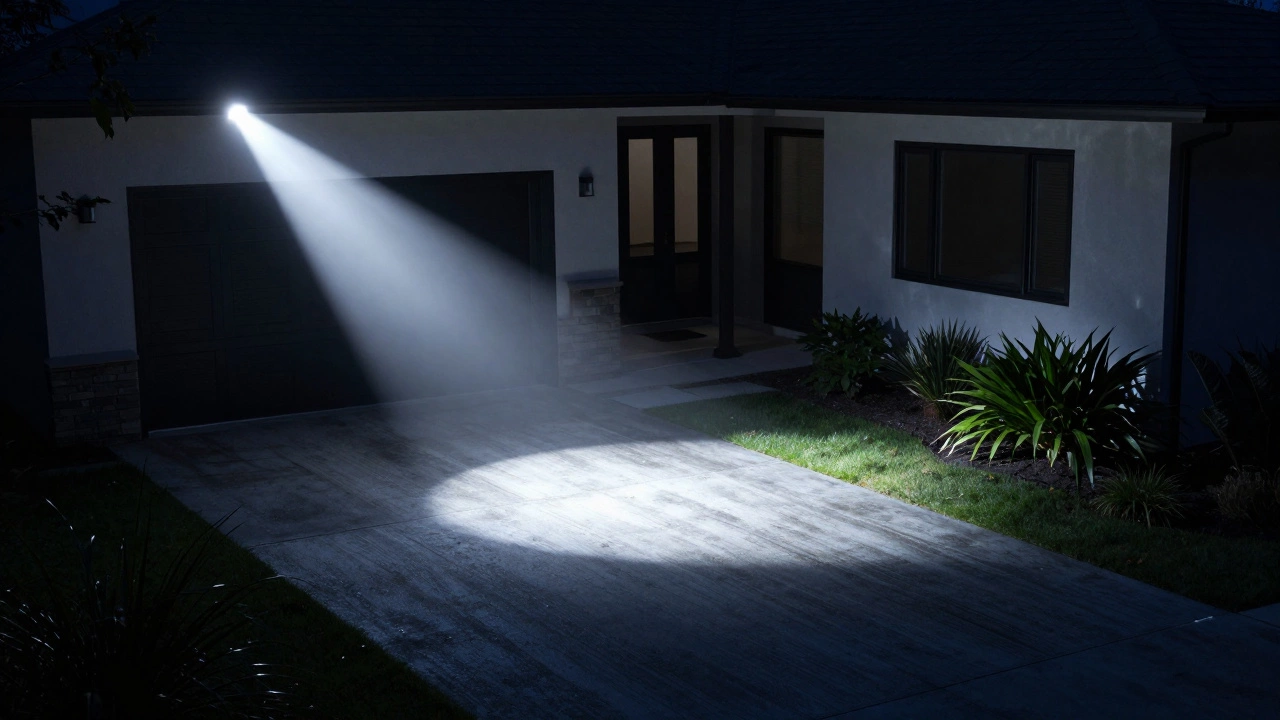
Outdoor Security Lights: Outside, the goal is safety and deterrence. A well-placed outdoor light should cover entry points like porches, garages, and driveways. Experts recommend mounting these fixtures between 8 and 10 feet high. This height provides a wide coverage area while reducing false triggers from small animals like cats or squirrels running along the ground. At night, shadows move differently. Trees swaying in the wind can trigger PIR sensors if the light is aimed directly at them. Proper placement avoids these false alarms.
| Feature | Indoor Units | Outdoor Units |
|---|---|---|
| Primary Goal | Safety & Sleep Comfort | Security & Deterrence |
| Light Color | Red or Warm White | Bright White or Cool White |
| Detection Range | Up to 16-20 feet | Up to 30-70 feet |
| Daylight Inhibition | Optional / Rare | Standard (Photocell) |
| Power Source | Plug-in or Battery | Hardwired or Solar |
Smart Home Automation and Night Modes
Modern smart home systems take control even further. With platforms like SmartThings or apps for Govee lights, you can create custom rules. You are not limited to the physical settings on the light fixture itself. You can program your lights to respond to motion only between specific hours. For example, you might set a rule: "Turn on porch light at 100% brightness if motion is detected after sunset."
This level of control solves the problem of daytime false triggers completely. You can also adjust the behavior based on the time of night. Between 8 PM and 10 PM, you might want full brightness for guests arriving. After 11 PM, you might prefer a dimmer setting so the light doesn't shine through your bedroom windows. Advanced users even use tools like Node-RED to check the exact time of day before triggering a scene. This flexibility ensures your home lighting adapts to your lifestyle, not just the presence of movement.
Some users link their motion sensors to cameras. When motion is detected at night, the light turns on to illuminate the scene, and the camera records video. This combination provides clear footage. Without the light, night vision cameras produce grainy black-and-white images. Adding motion-activated lighting improves identification accuracy significantly.
Troubleshooting Common Night Issues
Even though the technology is mature, things can go wrong. If your motion sensor light isn't turning on at night, check these common culprits:
- Dirty Lens: Dust, spider webs, or bird droppings on the sensor lens can block infrared rays. Wipe the lens gently with a soft cloth.
- Wrong Sensitivity Setting: If the sensitivity is turned down too low, the sensor might miss slow movements. Increase the sensitivity dial.
- Timing Too Short: If the light turns off before you reach it, extend the delay timer. Settings usually range from 30 seconds to several minutes.
- Heat Sources Nearby: Do not mount PIR sensors near HVAC vents or radiators. Hot air rising can confuse the sensor, causing it to think movement is happening when it is just temperature fluctuation.
- Battery Failure: For wireless units, cold weather drains batteries faster. Replace them in autumn to ensure reliable performance through winter nights.
If you live in an area with frequent storms, consider using surge protectors for hardwired outdoor lights. Power spikes can damage the internal circuitry, leaving you in the dark when you need light most.
For those looking for additional security measures beyond lighting, checking local resources can provide peace of mind. For instance, if you travel frequently, knowing who to contact for discreet assistance in cities like Almaty can be part of a broader safety plan, such as browsing verified profiles on this directory.
Solar-Powered Options for Night Use
Solar motion sensor lights are popular because they require no wiring. They charge during the day and store energy in a battery. At night, they release that stored power. The key here is installation location. The solar panel must receive direct sunlight for several hours each day. If you install them under a dense tree canopy, they will not charge sufficiently. Consequently, they will fail to turn on at night.
Look for units with high-capacity lithium-ion batteries. Cheaper models often use nickel-metal hydride batteries that degrade quickly. A good solar light should last all night on a single charge, even if triggered multiple times. Check the lumens rating. Higher lumens mean brighter light, but they also consume more power. Balance brightness with battery life for optimal night performance.
Final Thoughts on Nighttime Lighting
Motion sensor lights are not just functional at night; they are essential for it. By combining heat-detecting sensors with smart controls, they provide safety without waste. Whether you need a gentle red glow in the hallway or a bright floodlight on the driveway, understanding how these devices work helps you set them up correctly. Adjust the angles, clean the lenses, and use smart scheduling to get the best results. Your home will be safer, and your sleep will be less interrupted.
Can I force my motion light to stay on all night?
Yes. Most units have a manual override switch or a test button that locks the light in the 'on' position. Smart lights can be controlled via app to remain on continuously, bypassing the motion sensor entirely.
Why does my outdoor light flicker at night?
Flickering is often caused by loose wiring, incompatible LED bulbs, or the sensor re-triggering rapidly due to passing cars or wind-blown debris. Tighten connections and adjust the timing delay to stop rapid cycling.
Do pets trigger motion sensors at night?
Small pets like cats usually do not trigger standard PIR sensors if mounted high enough. Larger dogs may trigger them. Look for sensors with adjustable sensitivity or pet-immune features that ignore heat signatures below a certain weight threshold.
Is red light better for night use?
Yes. Red light preserves your circadian rhythm. It allows your pupils to adjust to the dark slowly, helping you fall back asleep easier compared to bright white or blue light.
How far can a motion sensor detect movement?
Typical indoor sensors detect up to 20 feet. Outdoor security lights can detect motion from 30 to 70 feet away, depending on the model and mounting height.