
Pet-Friendly Alarm False Trigger Risk Calculator
Sensor Environment & Pet Profile
Estimated False Alarm Risk
Enter your details and click Analyze.
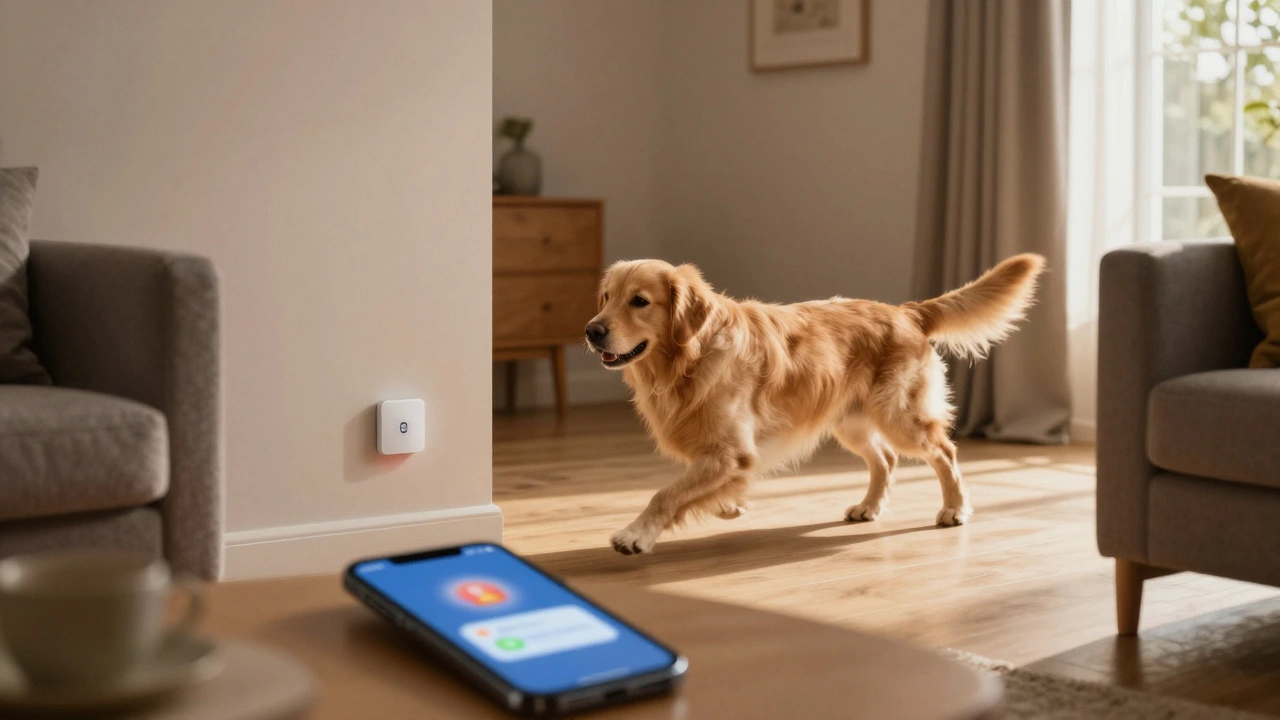
Imagine this: You’re away on vacation, your dog is roaming the living room, and suddenly your phone buzzes. The siren blares. Emergency services are dispatched. It was just Fido chasing a shadow. This nightmare scenario is exactly why pet-friendly alarms are home security systems designed to distinguish between household pets and human intruders using calibrated motion detection. But here is the hard truth that most marketing brochures skip: they do not work perfectly out of the box. They work *if* you understand their limits.
Pet-friendly alarm systems are not magic. They are sophisticated pieces of technology that rely on physics-specifically heat signatures and movement patterns-to tell the difference between a 40-pound Golden Retriever and a burglar. If you have ever wondered if these systems are worth the investment or if they will just add another source of stress to your life, you need to look beyond the weight claims. Let’s break down how they actually function, where they fail, and how to make them work for you.
How Pet-Friendly Sensors Actually Detect Intruders
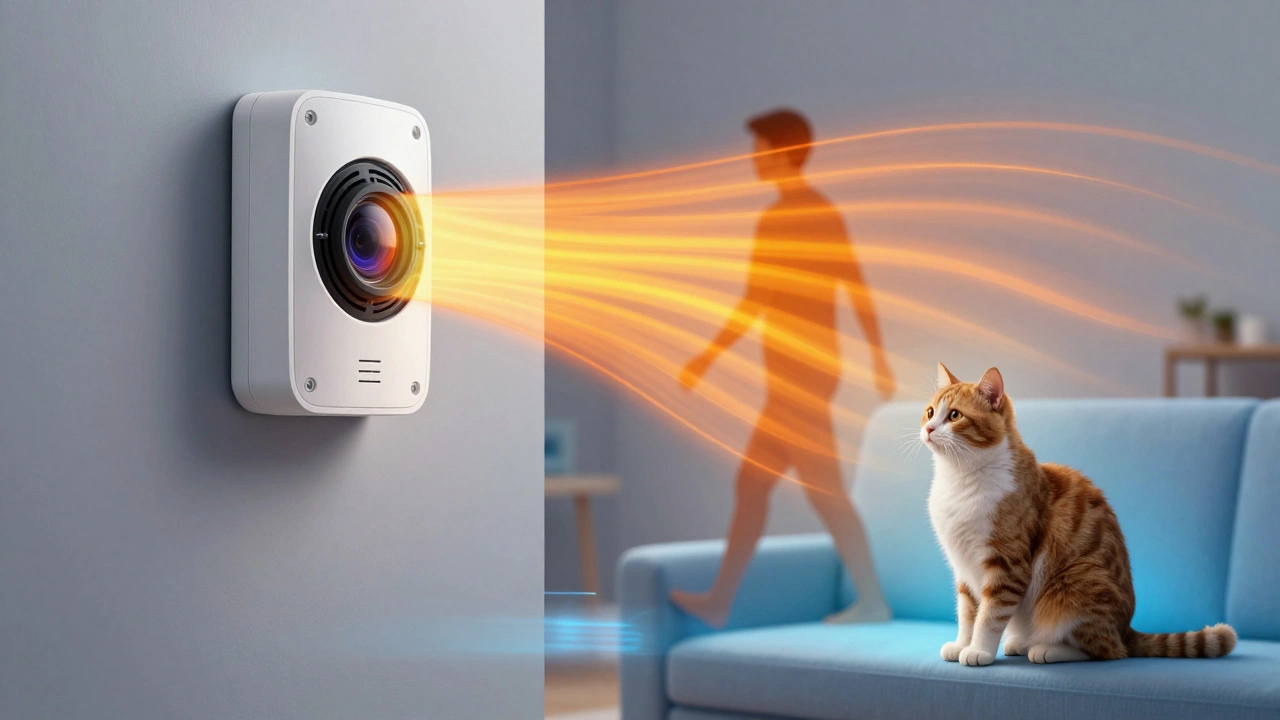
To understand if these alarms work, you first need to know what they are looking at. Most modern home security systems use Passive Infrared (PIR) sensors are motion detectors that sense changes in infrared radiation emitted by warm bodies within their field of view. These sensors don’t “see” your pet like a camera does; they feel the heat.
When a human walks through a room, we emit a specific thermal signature and move with a distinct stride length. A cat or small dog has a different heat profile and moves differently. Pet-friendly alarms use several tricks to ignore your furry friends:
- Look-down zones: Many sensors have removable masks or adjustable lenses that block the bottom part of the viewing area. Since cats often walk low to the ground or under furniture, masking this zone prevents them from triggering the sensor.
- Pulse counting: Instead of triggering on a single movement, the system waits for multiple signals in a specific pattern. A human walking creates a steady rhythm of heat changes; a twitching tail or a jumping cat might create erratic pulses that the system ignores.
- Heat signature analysis: Advanced dual-technology sensors combine infrared with microwave detection. This helps differentiate between the small mass of a pet and the larger mass of a human.
The key takeaway? Your alarm isn’t ignoring your pet because it recognizes him as “Buddy.” It’s ignoring him because his movement doesn’t match the mathematical model of a threat. This distinction matters when you consider behavior.
The Weight Limit Myth: What Really Matters
You will see brands claiming their sensors are “pet-immune” up to 80 pounds, 99 pounds, or even more. For example, SimpliSafe is a popular DIY home security provider known for its user-friendly app and pet-friendly motion sensors. often cites immunity for pets under 40-50 pounds. Other providers like Ring Alarm is Amazon's home security system offering customizable pet-friendly settings and integration with smart devices. offer similar ranges. But weight is only half the equation.
A 30-pound dog sitting calmly won’t trigger an alarm. That same 30-pound dog leaping onto the kitchen counter to steal a sandwich? That’s a problem. Why? Because when a pet jumps high, they enter the upper detection zones of the sensor, mimicking the height and energy of a human standing up or walking quickly. Similarly, a large Great Dane (80+ pounds) moving slowly across the floor might be ignored, but if he runs up the stairs with vigor, the rapid succession of heat signatures can fool the pulse-counting logic.
| Provider/System | Claimed Pet Weight Limit | Best For |
|---|---|---|
| SimpliSafe | Up to 40-50 lbs | Cats and small-to-medium dogs |
| Ring Alarm | Up to 40-50 lbs | Active households with smaller pets |
| Frontpoint | Up to 60 lbs | Medium-sized breeds |
| ADT Professional | Up to 80-99 lbs (varies by sensor) | Larger dogs, when professionally calibrated |
Note that these limits assume normal behavior. If your pet is exceptionally agile or aggressive in their movements, even a small animal can cause issues.
Why Your Alarm Might Still Be Triggering
If you install a pet-friendly alarm and still get false alerts, don’t blame the hardware immediately. Blame the environment. False alarms are unwanted security activations caused by non-threatening events like pet activity, environmental changes, or poor sensor placement. are rarely caused by the pet alone. They are usually triggered by a combination of factors.
Consider these common culprits:
- Direct Sunlight: If a sunbeam hits the sensor lens and then moves as clouds pass or trees sway, the sudden change in temperature can mimic a warm body entering the room.
- Heating and Cooling Vents: Hot air rising from a radiator or cold air dropping from an AC vent creates shifting heat patterns. PIR sensors hate this.
- Electronics: Large TVs, refrigerators, or space heaters that cycle on and off can emit enough heat to confuse the sensor’s baseline reading.
- Fans: Standing fans don’t emit heat, but they move air around objects that do. This can distort the thermal image the sensor is trying to read.
In one documented case, a homeowner’s 60-pound dog never triggered the alarm until winter. When the fireplace was lit, the rising heat currents near the sensor caused frequent false triggers. The solution wasn’t to remove the dog; it was to adjust the sensor angle.
The Critical Role of Professional Installation
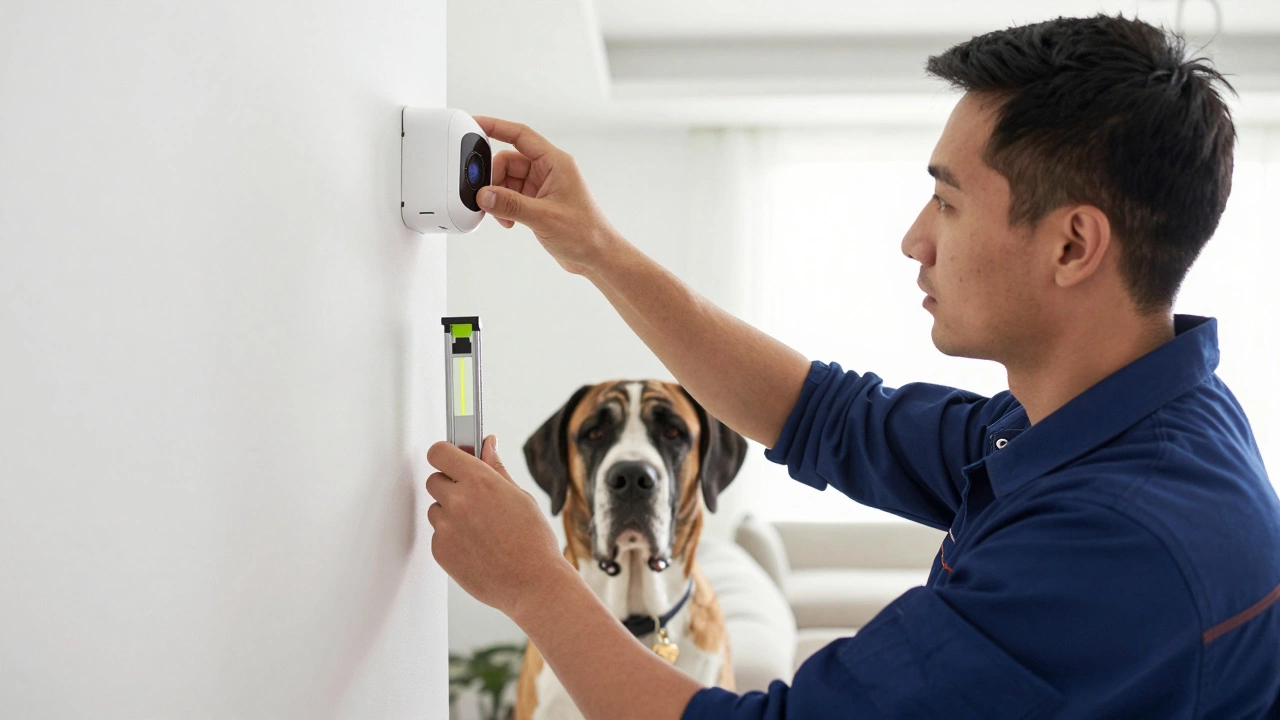
This is where most people go wrong. Buying a pet-friendly sensor is easy. Configuring it correctly is hard. According to security experts, Professional installation is the process of having certified technicians set up and calibrate security equipment to ensure optimal performance and minimal false alarms. is not just about drilling holes in walls. It’s about validation.
A good technician will perform a “walk test.” They will walk through the room at various speeds and angles to ensure the sensor detects humans. Then, they will observe your pet’s routine. Does your cat jump on the fridge? Does your dog sleep under the table? Based on this, they will:
- Adjust the tilt of the sensor to avoid high-traffic pet zones.
- Apply masking tape or internal masks to block specific areas of the lens.
- Lower the sensitivity setting to the lowest effective level.
- Repeat tests during different times of day, including when HVAC systems are running.
If you are doing a DIY setup with systems like Ring or SimpliSafe, you must take the time to watch your pet interact with the sensor’s field of view. Use the app’s live feed to see what the sensor sees. If you see your dog triggering alerts in the app, move the sensor. There is no substitute for observation.
Better Alternatives for High-Energy Pets
What if you have a large, active dog or a cat that climbs everything? Motion sensors might not be the best tool for the job. Fortunately, there are other ways to secure your home without worrying about your pet’s antics.
Glass break sensors are audio-based detectors that listen for the specific frequency of shattering glass, providing security without relying on motion detection. are excellent alternatives. They don’t care if your dog is jumping on the couch; they only care if a window breaks. Pair these with Door and window sensors are contact-based switches that alert you when entry points are opened, regardless of indoor activity., and you have a perimeter defense that is completely immune to indoor pet movement.
For those who want visual confirmation, Video cameras are security devices that record footage and allow remote monitoring, often featuring AI-powered person detection to reduce pet-related alerts. with AI person detection are becoming increasingly reliable. While they aren’t “alarms” in the traditional sense, many modern cameras can send you a notification specifically when a human is detected, ignoring animals entirely. This gives you peace of mind without the risk of a false siren.
The Cost of Getting It Wrong
It’s tempting to think, “I’ll just turn the sensitivity up so I catch everything.” Don’t. The consequences of false alarms are real. Beyond the embarrassment of emergency responders showing up for a false positive, many cities impose fines for repeated false alarms. After three or four false reports, police departments may stop responding to your calls entirely until you pay a fee or retrain your system.
Worse yet is “alarm fatigue.” If your phone buzzes every time your cat walks past the hallway, you will eventually start ignoring the notifications. When a real intruder enters, you might dismiss the alert as another false trigger. This desensitization undermines the entire purpose of your security system.
Can a pet-friendly alarm detect a human hiding behind a pet?
Generally, yes. If a human is present, their larger heat signature and different movement patterns will likely trigger the sensor, even if a pet is nearby. However, if the human is completely stationary and hidden behind a large object or thick curtain, passive infrared sensors may miss them. This is why combining motion sensors with door/window contacts is recommended.
Do pet-friendly alarms work for birds or reptiles?
Do pet-friendly alarms work for birds or reptiles?
Birds and reptiles are cold-blooded or have different heat signatures than mammals. Cold-blooded pets like snakes or lizards are less likely to trigger infrared sensors because they don’t emit significant body heat. Birds, however, can sometimes trigger sensors if they fly rapidly through the detection zone, as their movement can mimic the speed and trajectory of a human intrusion.
What should I do if my large dog keeps triggering the alarm?
First, lower the sensitivity setting on the sensor. Second, reposition the sensor to avoid areas where your dog jumps or runs vigorously. Third, consider using masking tape to cover parts of the lens that overlook your dog’s favorite spots. If these steps fail, switch to glass break sensors or video cameras with person detection for those specific rooms.
Is professional installation necessary for pet-friendly alarms?
While not strictly mandatory for DIY systems, professional installation significantly reduces the risk of false alarms. Technicians can calibrate the sensor’s tilt, apply precise masking, and perform validation tests with your specific pet. For homes with large or active pets, professional setup is highly recommended to ensure reliability.
Can sunlight cause false alarms in pet-friendly systems?
Yes. Direct sunlight hitting the sensor lens and then moving due to cloud cover or tree shadows can create rapid temperature changes that mimic human movement. Always install motion sensors away from direct sunbeams, windows, and heat sources like radiators or vents.