
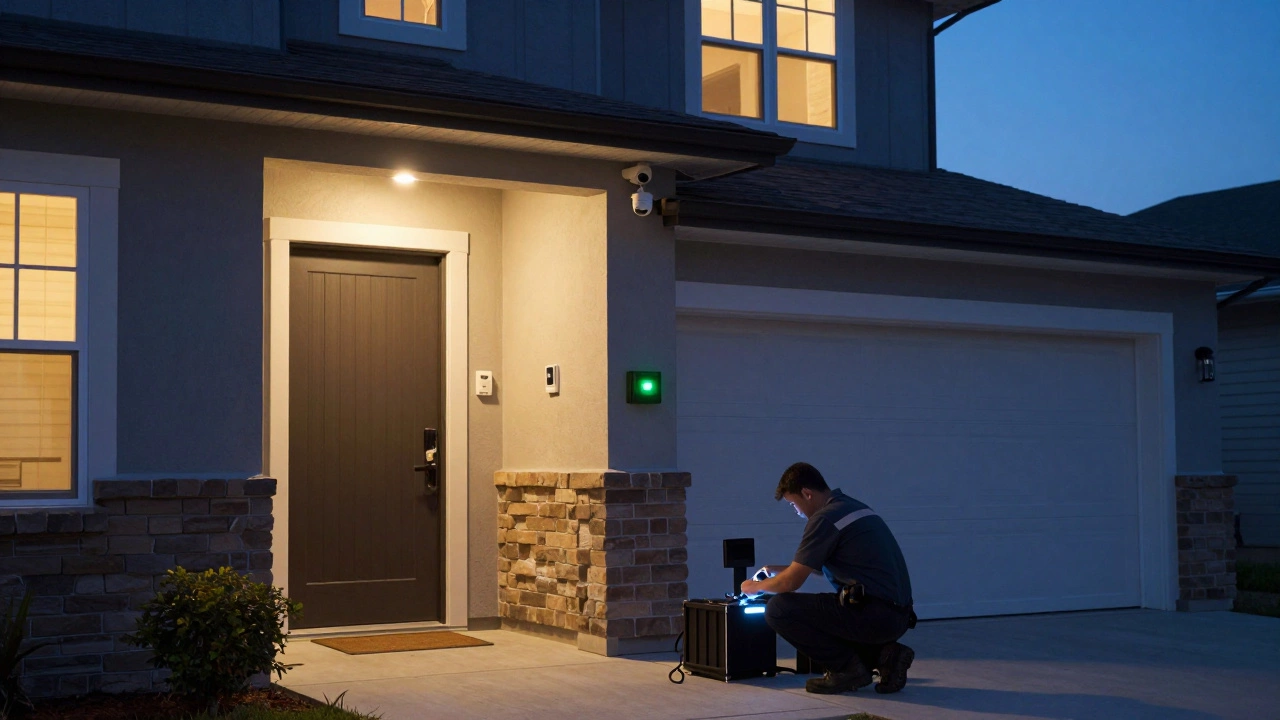
Insurance Discount Calculator
How Much Can You Save?
Estimate your potential home insurance savings based on your alarm system type and location
If you're thinking about installing a home alarm system, you've probably wondered: does an alarm system reduce home insurance? The short answer is yes-but not always, and not by as much as you might think. It’s not a magic button that cuts your bill in half. It’s a calculated risk reduction that insurers reward… if you meet their rules.
How Much Can You Actually Save?
Most insurers offer discounts between 5% and 25% on your annual premium if you have a monitored alarm system. That’s not just a nice perk-it’s real money. In 2024, the average U.S. homeowner paid $2,285 per year for home insurance. A 15% discount on that? That’s $343 saved annually. That’s more than the cost of a basic alarm system in many cases. But here’s the catch: not every alarm system qualifies. A simple door sensor you bought on Amazon and installed yourself? Probably not enough. Most insurers require professional monitoring and certification. Systems that are UL-listed (Underwriters Laboratories certified) and connected to a 24/7 monitoring center are the ones that get the biggest breaks.What Kind of Alarm System Gets the Best Discount?
It’s not just about the alarm. Insurers look at the whole package. Here’s what gets you the highest savings:- Professionally monitored systems - These are the gold standard. Companies like ADT, Vivint, or Frontpoint connect your system to a central station that calls emergency services if triggered. These typically earn 15-20% off.
- Fire and water detection added - If your alarm system also includes smoke detectors linked to monitoring and water leak sensors, you can hit the 25% max discount. That’s because insurers see this as reducing multiple types of claims-not just burglary.
- Video verification - Some insurers, like Progressive, now offer bigger discounts if your system can send live video footage to the monitoring center before dispatching police. This cuts down on false alarms and confirms real threats.
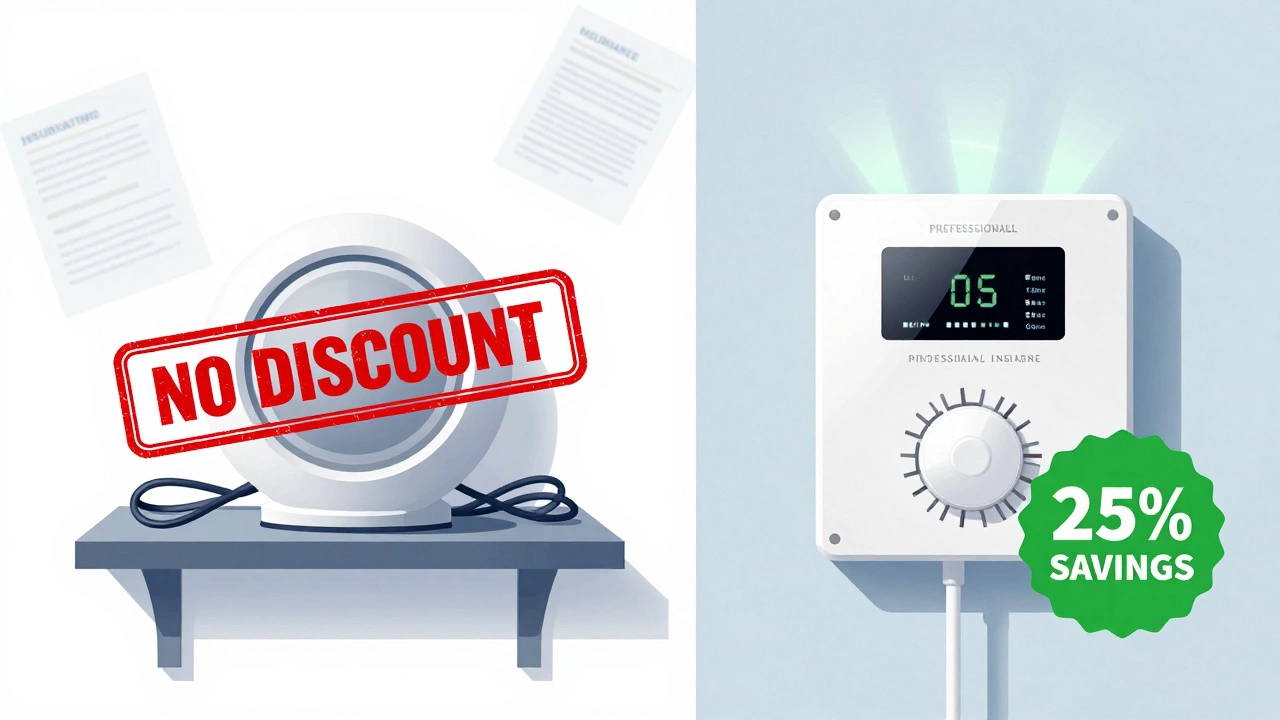
On the flip side, a DIY Ring or Eufy system with no professional monitoring? You might get a 3-5% discount, if any. Some insurers don’t give discounts at all for unmonitored setups.
Not All Insurers Are the Same
This is where things get messy. One company might give you 18% off. Another might say no discount at all. It all depends on your provider.Here’s what the data shows for 2024:
| Insurer | Typical Discount Range | Key Requirements |
|---|---|---|
| MetLife | 14-15% | Professional monitoring, UL certification |
| Allstate | 8-12% | 24/7 monitoring, certified equipment |
| State Farm | 5-10% | Cellular backup required since August 2024 |
| Farmers Insurance | 5-7% | Must be professionally installed |
| Progressive | 12-15% | Video verification preferred |
Some insurers, like State Farm, tightened their rules in 2024. If your system doesn’t have cellular backup (so it still works during a power outage), they cut the discount from 15% to 10%. Others, like Progressive, raised their discount for video-capable systems because it reduces false alarms.
Location Matters Too
Where you live changes everything. In high-crime areas like Los Angeles or Miami, insurers see alarm systems as critical risk reducers-and they reward you accordingly. Homeowners in those areas often get 15-20% off.In low-crime rural towns, the discount might be only 5-8%. Why? Because the baseline risk is already low. The insurer doesn’t see the alarm as making that much of a difference.
And in states like Florida, where hurricanes are the main concern, insurers care more about wind-resistant windows and roof ties than burglar alarms. You might get a bigger discount for installing storm shutters than for an alarm system.
Installation Method: DIY vs. Professional
This is a big one-and a common mistake. About 78% of major insurers require professional installation to qualify for any discount. Why? Because they trust certified installers to set up the system correctly. If wires are loose, sensors are misaligned, or the connection to the monitoring center fails, the system doesn’t work.Homeowners who install their own systems-like a Ring Alarm or SimpliSafe-often find out too late that their insurer won’t give them a discount. One Reddit user spent $1,200 on a Ring Alarm Pro, only to get a 3% discount from State Farm because it wasn’t UL-certified or professionally monitored.
Professional installation usually costs between $500 and $1,500, depending on the system. But that upfront cost pays for itself in savings over time. A $1,500 system with a 15% discount on a $2,285 premium? You break even in about 4 years. After that? Pure savings.
What You Need to Get the Discount
You can’t just call your agent and ask for a discount. You need proof. Here’s what most insurers ask for:- A certificate of installation from the security company
- Proof of 24/7 professional monitoring (often a contract or invoice)
- UL certification number for the equipment
- Confirmation that the system is connected to a central monitoring station
According to Batten Home Security’s 2024 data, 92% of successful discount applications included all of these documents. The rest? They got denied or had to resubmit.
Some insurers also require you to keep the system active for at least 12 months. If you cancel monitoring after six months, they may claw back the discount.
Real Stories: What Actually Happened
Real people, real results:- u/HomeownerSavings (Reddit, Oct 2024): Installed an ADT monitored system, called Allstate, got 12% off. Saved $174 on a $1,450 premium.
- Case Study (Batten Home Security, Nov 2024): A homeowner in Texas added fire and water sensors to their existing alarm. Discount jumped from 10% to 25%. Saved $288 per year on a $1,920 premium.
- u/SecurityDisappointed (Trustpilot, Nov 2024): Bought a Ring Alarm Pro, expected big savings. Got 3% from State Farm. Felt misled.
These stories show the same pattern: professional, certified, monitored systems = big savings. DIY, unmonitored, uncertified = little to no discount.
What’s Changing in 2025 and Beyond
The rules aren’t static. Insurers are getting smarter-and more specific.- By 2026, 65% of insurers expect to require IoT integration-meaning your alarm must connect to your smart home hub and send usage data.
- Some companies are testing usage-based discounts: if your system detects no break-in attempts for a year, you get an extra 2% off.
- Water leak sensors are now officially recognized as a qualifying feature by the Insurance Services Office (ISO), thanks to their January 2024 update.
What this means: the alarm system of 2025 isn’t just a siren and motion sensors. It’s part of a broader home safety network. The more it does, the more you save.
Is It Worth It?
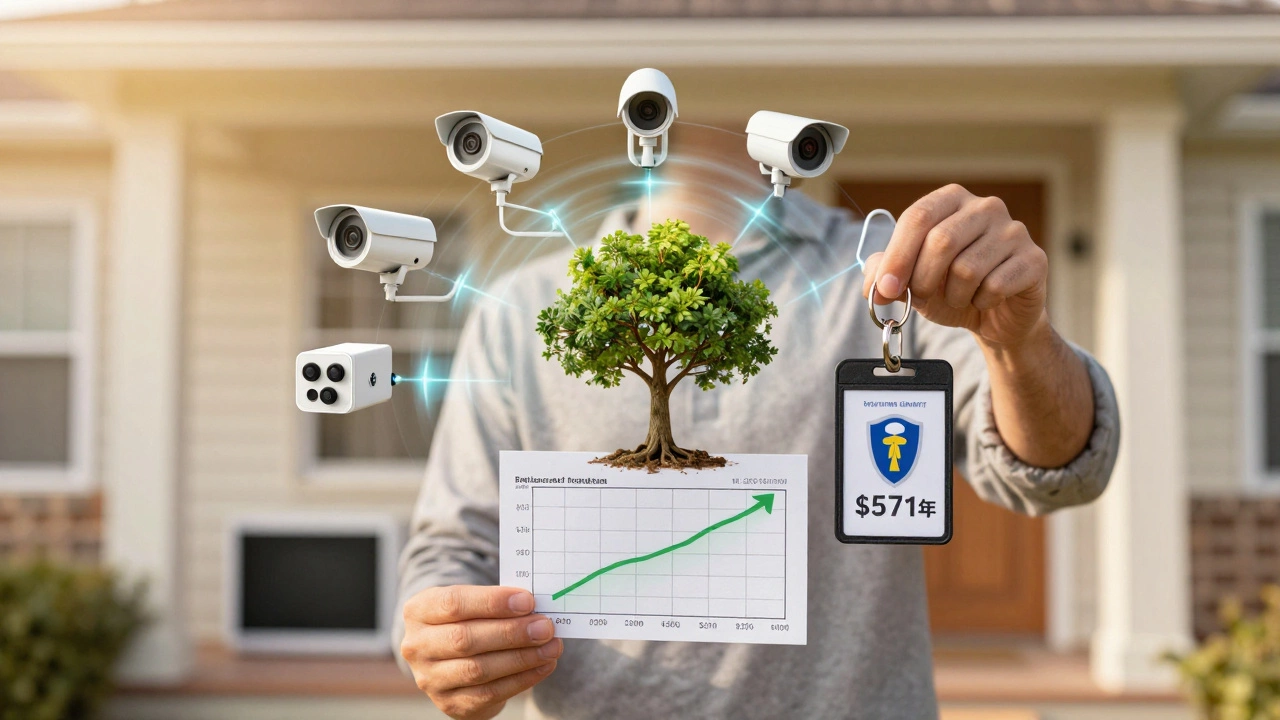
Let’s say you pay $2,285 a year for insurance. You install a professionally monitored, UL-certified alarm with fire and water detection. You get a 25% discount: $571 saved per year.The system costs $1,200 to install. That means you break even in just over 2 years. After that? You’re saving $571 every year, for life. And if you move? You can take the system with you-most policies transfer to your new home.
Compare that to other home upgrades. A new roof might save you 10% on insurance-but it costs $10,000. A security system? Less than half the price, with faster payback and better protection.
And let’s not forget the peace of mind. Knowing your home is protected when you’re away, asleep, or on vacation? That’s priceless.
What to Do Next
Don’t guess. Don’t assume. Here’s your step-by-step:- Call your insurance provider. Ask: "Do you offer a discount for monitored alarm systems? What are the exact requirements?"
- Ask for their list of approved equipment (UL certification is usually mandatory).
- Get quotes from 2-3 professional installers. Look for companies that offer monitoring and certification.
- Before you sign anything, confirm with your insurer that the exact system you’re buying qualifies.
- Keep all documentation: installation receipt, monitoring contract, UL certificate.
- Submit it to your insurer in writing. Follow up if you don’t see the discount on your next bill.
If you skip step one, you’re gambling. Many people spend thousands on systems only to find out their insurer won’t give them a discount. Don’t be one of them.