
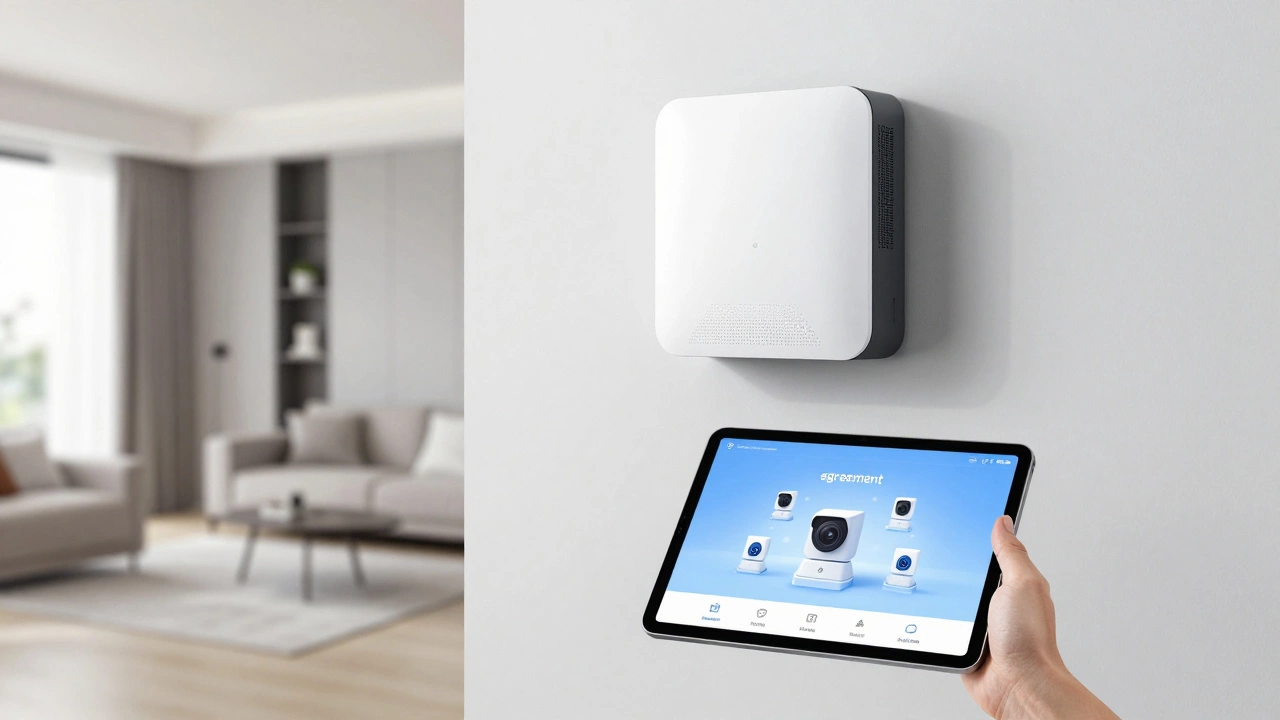
Vivint Exit Cost Estimator
Estimated Exit Cost
Signing up for a home security system often feels like signing a lease-you're not just buying a few cameras, you're committing to a relationship. If you're looking at Vivint is a high-end smart home security provider that integrates professional installation with advanced automation , you've probably noticed their contracts aren't as straightforward as a simple monthly subscription. Depending on how you pay for your gear, you could be locked in for a few months or half a decade.
The Short Answer: How Long is the Commitment?
For most people, a Vivint contract length ranges from 42 to 60 months. In plain English, that's between 3.5 and 5 years. Why such a wide gap? It all comes down to how you handle the equipment costs. Vivint essentially treats their security setup like a car loan; the length of your contract is tied directly to your financing plan.
If you choose to finance your equipment, you'll be signing a contract that covers that specific repayment period. If you pick the shortest financing route, you're looking at 42 months. If you want to keep monthly payments as low as possible, you might end up with a 60-month agreement. This is significantly longer than the industry standard, where many competitors like ADT usually stick to 36-month terms.
But here is the loophole: if you have the cash and pay for all your equipment upfront, you aren't required to sign a long-term contract at all. In that scenario, you can opt for a month-to-month arrangement, giving you the freedom to leave whenever you want.
| Payment Path | Contract Length | Upfront Cost | Monthly Fee | Flexibility |
|---|---|---|---|---|
| Equipment Financing | 42 to 60 Months | Low/None | $30 - $50+ | Low (Locked in) |
| Paid Upfront | Month-to-Month | High ($349.99+) | ~$29.99 | High (Cancel anytime) |
| Discount Plan | 36 Months | $199.99 | $24.99 | Medium |
The Financial Trap: Financing vs. Ownership
When you finance your smart home security hardware, you aren't just paying for the sensors and cameras; you're paying for the convenience of not dropping $1,000+ on day one. However, this convenience comes with a string attached: you must maintain professional monitoring services for the entire duration of the financing period.
Vivint doesn't offer a "self-monitoring" mode where you just watch your own cameras. Everyone has to be on a monitoring plan. This means your monthly bill is a hybrid of a hardware loan and a service subscription. If you try to cancel the service, you still owe the money for the hardware. You can't just stop the monitoring and keep paying for the equipment in isolation.
What Happens if You Need to Leave Early?
Life happens. Maybe you hate the service, or maybe you're moving to a place where you can't use the system. Before you panic, check your calendar. Under the Federal Trade Commission (FTC) cooling-off rule, you have a three-day window from your installation date to cancel without paying a dime in penalties. This is your "buyer's remorse" period.
Once those three days are gone, exiting becomes expensive. Vivint charges early termination fees that change based on how long you've been with them. If you cancel during the first year, you're typically looking at a $300 fee. After the first year, that fee drops to $150. But remember: these fees are just for the contract breach. You still have to pay off the remaining balance of your equipment financing in full.
Exceptions and the "Extenuating Circumstances" Clause
Vivint isn't completely heartless. They recognize that some situations are beyond your control. They have a list of qualifying circumstances that might allow you to cancel without the usual brutal penalties. These include:
- Death of the account holder
- Bankruptcy
- Moving into an assisted living facility
- Military deployment for six months or more
- Military medical discharge or retirement
If you're active military, you can even defer your payments for up to 12 months if you're on a temporary assignment away from home. It's worth calling their dedicated military support line if you fall into these categories, as they can often waive fees that would otherwise bankrupt a regular customer.
Moving House and Automatic Renewals
If you're moving, you don't necessarily have to kill the contract. You can take your system with you. You'll need to coordinate with Vivint to get the equipment moved and reinstalled at the new address. You can do the heavy lifting yourself or pay them to handle the removal and setup.
One thing that catches people off guard is the autorenewal policy. Once your initial 42 or 60-month term ends, the contract doesn't always just vanish. Depending on your specific paperwork, it might automatically renew for another year or slide into a month-to-month agreement. If you don't want to be locked in for another cycle, you need to be proactive and contact them before the contract expiration date.

Is the Long Contract Worth the Perks?
Despite the long commitment, there are some genuine benefits to staying in the ecosystem. Contract holders often get price lock guarantees, which means your monthly monitoring rate won't spike suddenly. You also get access to discounted equipment upgrades and in-home warranty services.
Speaking of warranties, be careful here. Vivint's limited warranty only covers equipment for 120 days after installation. This is quite short compared to brands like SimpliSafe , which typically offers a full year of coverage. While every service call comes with a 60-day guarantee, the overall hardware protection window is narrow.
Can I cancel my Vivint contract if I move?
Yes, but you don't have to cancel. You can take the equipment with you to your new home. If you choose to cancel instead, you will still be responsible for the remaining balance of your equipment financing and any applicable early termination fees.
What is the shortest possible Vivint contract?
The shortest option is a month-to-month agreement, but this is only available to customers who pay the full cost of their equipment upfront. For those financing their gear, the minimum term is typically 42 months.
How much are the early termination fees?
Generally, the fee is $300 if you cancel within the first year of your contract. After the first year, the fee is reduced to $150. Note that this is in addition to the full remaining balance of your equipment loan.
Does Vivint offer self-monitoring?
No, Vivint does not provide a self-monitoring option. All users are required to pay for a professional monitoring plan as part of their service agreement.
What happens when my contract expires?
Depending on your specific agreement, your contract may automatically renew for another year or transition to a month-to-month plan. You should review your contract terms or contact Vivint directly to avoid an unintended renewal.
Next Steps for Current and Future Customers
If you're shopping around, decide first if you value low monthly payments or long-term flexibility. If you hate the idea of being tied down, save up and pay for the equipment upfront. It's the only way to avoid the 42-60 month trap.
If you're already in a contract and struggling with payments, don't just stop paying-that will wreck your credit. Check if you meet any of the "extenuating circumstances" criteria, such as military deployment or medical discharge, and reach out to Vivint's support team to negotiate a way out or a payment deferment.