
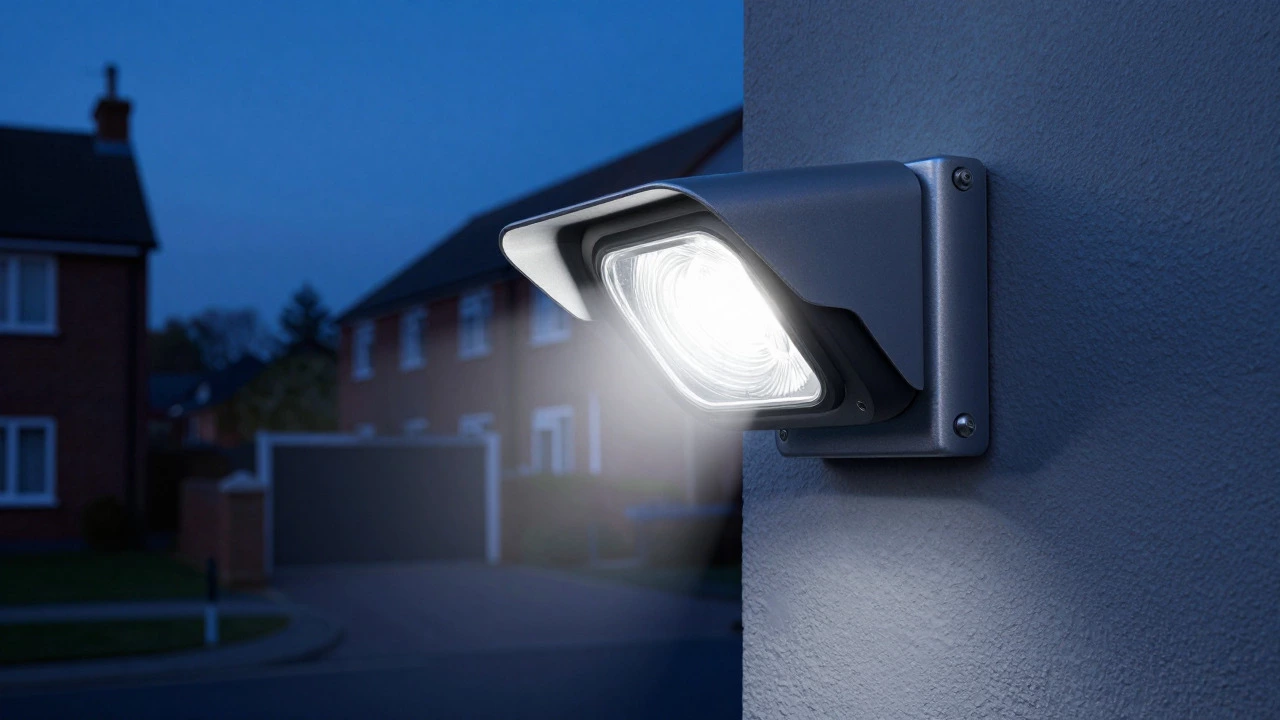
LED Security Light Lifespan Estimator
Enter your specific setup details below to estimate how long your light will last before needing replacement.
Key Failure Points & Recommendations
It’s frustrating when your new LED security light dies after just two winters. You bought it because the box promised "50,000 hours of use," which sounds like decades. So why did it stop working before you could even remember the installation date? The answer usually isn't the light bulb itself-it's the electronics inside.
If you're planning to upgrade your home or business perimeter, knowing what to expect saves you money and headaches. This guide breaks down the actual numbers behind LED longevity, separating marketing hype from real-world performance in Australian conditions.
The Real Numbers: Hours vs. Years
When manufacturers talk about lifespan, they refer to L70 rating. This is the point at which an LED loses 30% of its initial brightness, meaning it still works but looks dimmer. For most quality outdoor fixtures, this threshold hits between 30,000 and 50,000 hours. But how does that translate to years?
- Motion-Activated Use (3-4 hours/day): Expect 15-20+ years. Since the light only turns on briefly, the LEDs barely age.
- Dusk-to-Dawn Use (8-10 hours/day): Expect 8-12 years. This is the standard for most residential driveways and entryways.
- 24/7 Continuous Use: Expect 3-6 years. Constant heat generation accelerates component wear significantly.
Notice the huge gap? It comes down to thermal stress. The more the light runs, the hotter the internal components get, and heat is the enemy of electronics.
Why Your Light Dies Before the LEDs Do
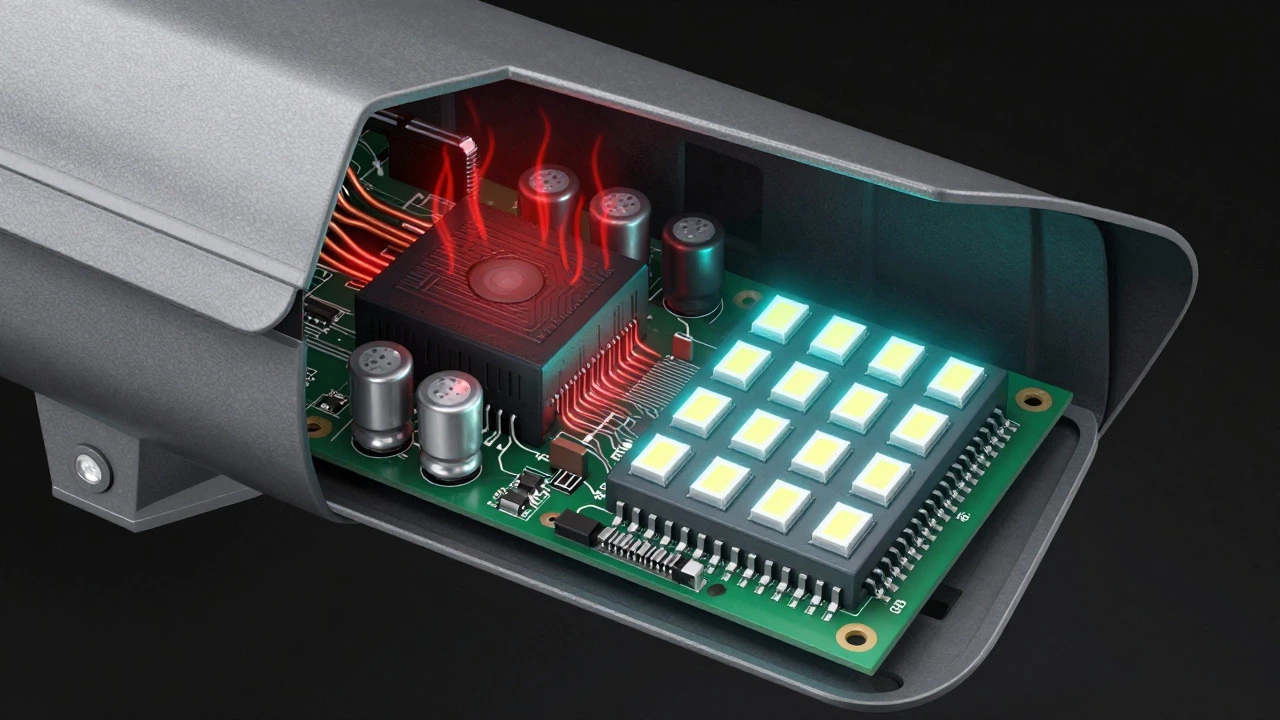
Here’s the secret nobody tells you: the LED chips themselves are incredibly durable. High-quality chips can last 50,000 to 100,000 hours. However, the LED driver. The power supply unit that converts mains electricity into the low-voltage current LEDs need. is the weak link. Drivers typically fail after 5-7 years. Other electronic parts, like capacitors and motion sensors, also have a lifespan of around 5-10 years.
This explains why so many users report their lights flickering or dying completely while the visible LEDs still look bright. The brain of the operation fails, not the eyes. If you buy a cheap fixture, you’re likely getting a low-grade driver that might only last 1-3 years, regardless of what the packaging claims about the LED chips.
Quality Tiers: What to Expect From Different Price Points
Not all LED security lights are created equal. The price tag often reflects the build quality of the housing, the driver, and the thermal management system. Here’s how different tiers perform in practice:
| Tier | Rated Lifespan (Hours) | Realistic Service Life | Common Failure Point |
|---|---|---|---|
| Budget / Entry-Level | 25,000 - 30,000 | 1 - 3 years | Driver burnout, poor sealing |
| Standard Commercial | 40,000 - 50,000 | 5 - 10 years | Sensor malfunction, capacitor aging |
| Premium / Industrial | 60,000 - 100,000+ | 10 - 20+ years | Physical damage, extreme weather exposure |
If you live in a coastal area like Adelaide, pay extra attention to the IP rating. An IP65 rating means protection against dust and water jets, which is crucial for withstanding salt air and heavy rain. Poor sealing leads to moisture ingress, corroding the circuit board long before the LEDs give up.
Environmental Factors That Shorten Lifespan
Your local climate plays a bigger role than you might think. In Australia, we deal with intense UV radiation and temperature swings. These factors impact specific components differently:
- Heat Dissipation: If the light is mounted under a roof overhang where air doesn't circulate, the heat builds up. This cooks the driver faster.
- Humidity and Salt Air: Coastal locations accelerate corrosion. Ensure the housing has robust gaskets and seals.
- Voltage Fluctuations: Frequent power surges can fry sensitive electronics. A surge protector or high-quality internal suppression helps here.
Proper installation matters too. Mounting the light too close to a wall or in a confined space traps heat. Give the fixture some breathing room to dissipate warmth naturally.
Comparing LED to Legacy Lighting Technologies
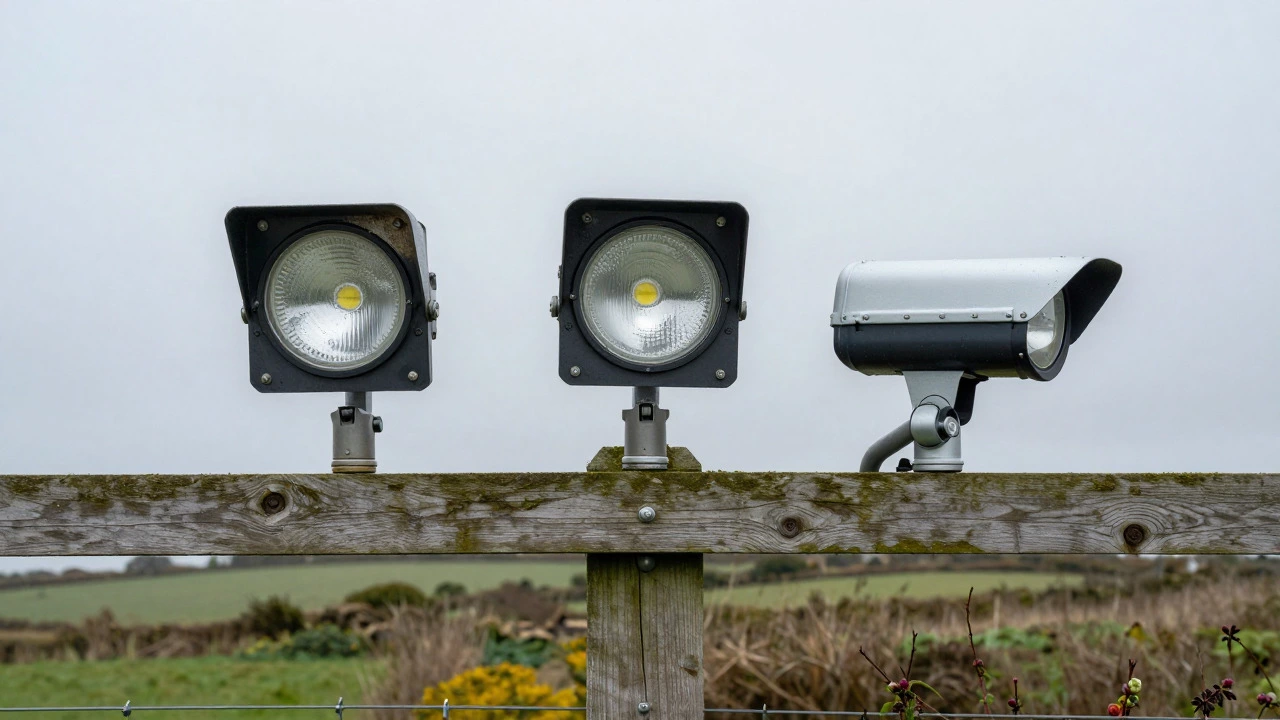
To put these numbers in perspective, let's compare them to older technologies you might still see in rural areas or older properties:
- Incandescent Bulbs: Lasted about 1,000 hours. You'd replace them every few months if used nightly.
- Halogen Floodlights: Lasted 2,000-4,000 hours. Better, but still required frequent swapping and generated massive heat.
- Fluorescent Tubes: Lasted 7,000-10,000 hours. Good life, but fragile glass tubes and slow warm-up times made them less ideal for instant security lighting.
- LEDs: 30,000-50,000+ hours. Roughly 10-15 times longer than halogens and 50 times longer than incandescents.
The math is simple: switching to LED reduces replacement frequency from yearly to every decade or more. Over a 10-year period, you might never need to touch the light again, aside from maybe cleaning the lens.
How to Maximize Your Investment
You can extend the life of your security lights by following a few simple practices. First, check the warranty. Reputable brands offer 5-year warranties on drivers, which signals confidence in their components. Second, avoid using extension cords or daisy-chaining multiple lights on one circuit unless specified, as voltage drop can stress the drivers.
Finally, monitor for early signs of trouble. Flickering, dimming during peak hours, or a complete loss of function while the LEDs still glow faintly are all signs that the driver or sensor board is failing. At that point, replacing the entire fixture is often cheaper and easier than trying to repair the internal electronics.
By understanding that the driver, not the LED, is the limiting factor, you can make smarter purchasing decisions. Look for brands that specify driver quality and IP ratings, not just lumen output. Your peace of mind-and your wallet-will thank you in five years.
Why do cheap LED security lights fail so quickly?
Cheap lights usually use low-grade drivers and poor thermal management. While the LED chips might be decent, the power supply units often lack robust capacitors and heat sinks, causing them to fail within 1-3 years due to heat stress and component degradation.
Does running a security light 24/7 reduce its lifespan?
Yes, significantly. Continuous operation generates constant heat, which accelerates the aging of electronic components like the driver and capacitors. Motion-activated use extends life because the light is off for most of the day, allowing components to cool down.
What is the L70 rating and why does it matter?
L70 refers to the time it takes for an LED to lose 30% of its original brightness. It's the industry standard for defining 'end of life' for LEDs. Even though the light still works at L70, it may no longer provide sufficient illumination for security purposes, signaling it's time for replacement.
Can I replace just the LED chip if my light stops working?
Rarely. Most modern LED security lights have integrated circuits where the driver and LEDs are on the same board or tightly coupled. If the light fails, it's almost always the driver or sensor electronics, making whole-fixture replacement the practical solution rather than part replacement.
How does coastal weather affect LED security lights in Australia?
Salt air and humidity accelerate corrosion on internal circuit boards and contacts. To combat this, choose fixtures with high IP ratings (IP65 or higher) and ensure the housing seals are intact. Regular cleaning of the lens also helps prevent salt buildup that can diffuse light.