
Outdoor Security Light Lumen Estimator
Find the sweet spot between deterrence and glare. Enter your setup details below to get a tailored recommendation.
You’re standing in your driveway at night, squinting at a dark corner of the yard. You want to install a light that actually works-not one that blinds you or leaves shadows where an intruder could hide. The question on everyone’s mind is simple: how many lumens is good for an outdoor security light? It’s not just about picking the brightest bulb in the store. Too dim, and it’s useless. Too bright, and you’ll annoy your neighbors while washing out your own security camera footage. Let’s break down exactly what you need based on real-world scenarios.
The Short Answer: What Actually Works
If you want a quick rule of thumb before diving into the details, here it is. For most standard residential setups, aim for 700 to 1,500 lumens. This range hits the sweet spot for deterrence and visibility without being obnoxious. If you have a long driveway or are trying to feed a high-resolution security camera, you might push up to 2,000-3,000 lumens. Anything below 700 lumens usually fails as a serious security deterrent, acting more like ambient porch lighting than a safety tool.
| Location | Recommended Lumens | Why This Range? |
|---|---|---|
| Front Door / Porch | 300-700 lm | Bright enough to see faces, soft enough not to blind guests. |
| Driveway (Single Car) | 700-1,500 lm | Covers typical 20-30 ft length; deters casual trespassers. |
| Large Yard / Garden | 1,500-3,000 lm | Eliminates deep shadows over wider areas. |
| Long Driveway / Camera View | 2,000-4,000+ lm | Ensures license plates and faces are visible to cameras. |
| High Mount (2nd Story) | 2,000-3,900 lm | Compensates for distance loss from roofline height. |
Understanding Lumens vs. Lux: Why Brightness Isn’t Everything
People often confuse lumens with lux, but they measure different things. Think of lumens as the total amount of light coming out of the bulb-like water flowing from a hose. Lux measures how much of that light actually lands on a specific surface, like how wet the grass gets. A 1,000-lumen light focused tightly through a narrow beam will create a brighter spot (higher lux) than a 1,000-lumen light spread out in a wide flood pattern.
This distinction matters because a "good" security light isn't just about raw power; it's about delivery. Professional guidelines from the Illuminating Engineering Society (IES) suggest that for reliable facial recognition at a distance of about 9 meters (30 feet), you need vertical illuminance of 5-8 lux. If you mount a 700-lumen light too high or point it the wrong way, you might only get 2 lux on the ground, rendering it ineffective for identifying who is walking up your path. Always consider the beam angle and mounting height when choosing your lumen count.
Matching Lumens to Your Specific Zones
Your house isn't a single zone, so don't treat it like one. Different areas require different brightness levels to function properly without causing glare or waste.
Front Doors and Entryways
For your front door, you want clarity, not a spotlight interrogation. Stick to 300-700 lumens. This level lets you see if a visitor is familiar or threatening without forcing them to squint. If you go higher, say 1,500 lumens, you risk creating harsh shadows behind people standing close to the door, which can actually make identification harder. A warm color temperature (around 3000K) also helps here, making the area feel welcoming rather than clinical.
Driveways and Garages
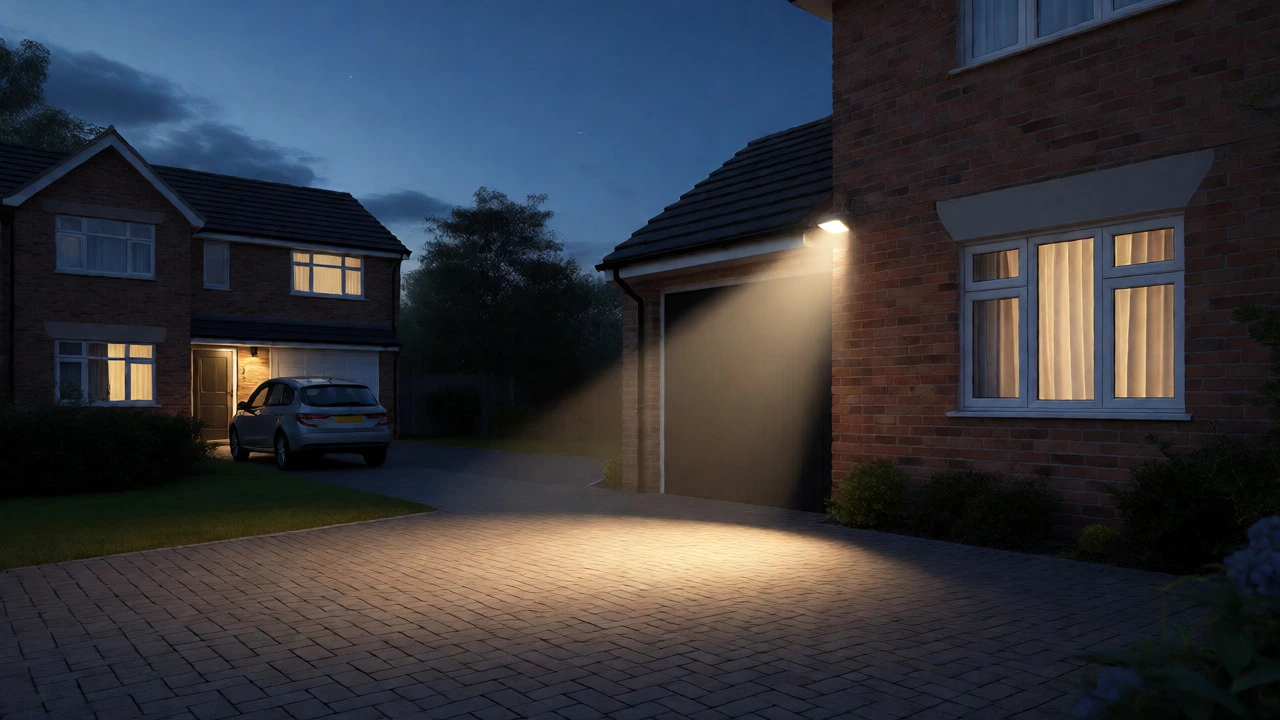
Driveways are prime targets for theft and vandalism. A standard single-car driveway (roughly 20-30 feet long) benefits significantly from 700-1,500 lumens. This is enough to illuminate the entire path from street to garage. However, if you rely heavily on CCTV to read license plates, bump this up to 2,000-3,000 lumens. Remember, light intensity drops rapidly with distance. If your fixture is mounted high on a garage wall, you need more lumens to ensure the ground stays lit compared to a fixture mounted lower on a fence post.
Gardens and Large Open Areas
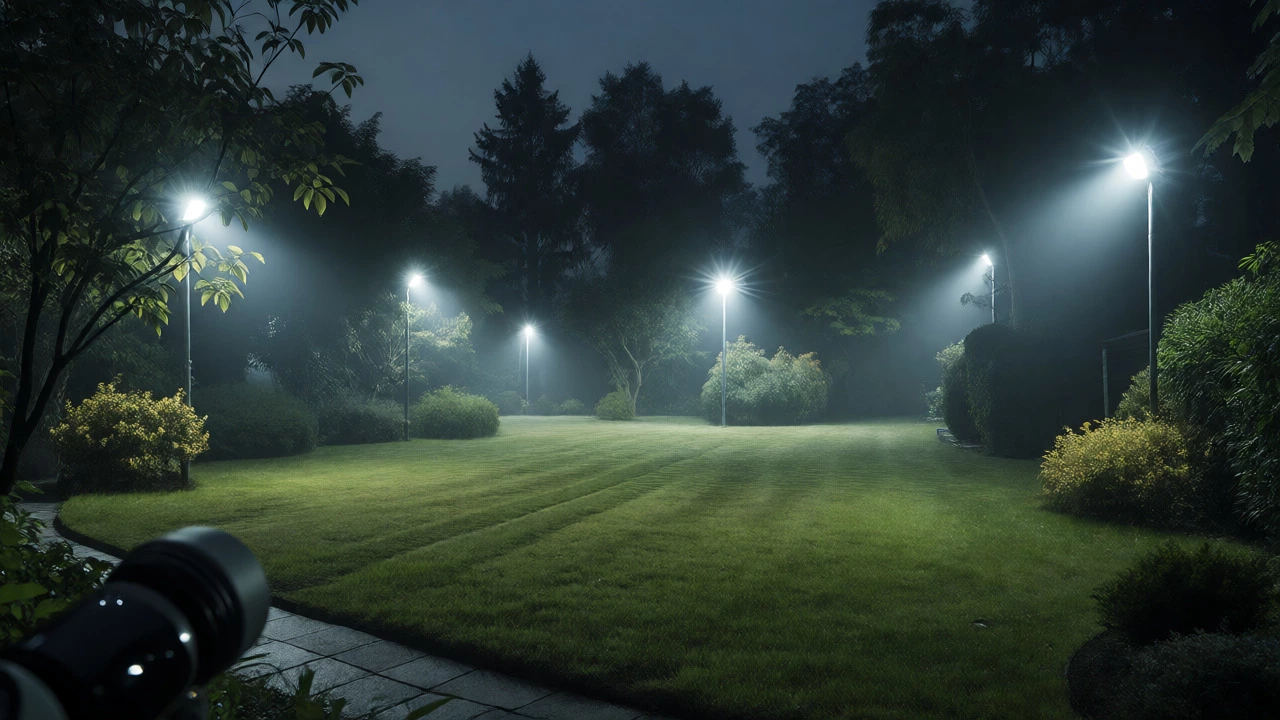
Wide yards are tricky because shadows love to hide there. For general perimeter security across a large garden, look for fixtures in the 1,500-3,000 lumen range. These are typically floodlights designed to wash large surfaces with light. If you have a particularly expansive property, you might need multiple fixtures in this range rather than one massive super-bright unit. Multiple mid-range lights provide better coverage and reduce the "tunnel vision" effect of a single intense source.
The Camera Factor: When More Light Is Better
If you have installed security cameras, your lighting strategy changes. Modern 4K cameras are impressive, but they still struggle in low light. While some claim to be "starlight" capable, they produce grainy, noisy images in true darkness. To get crisp footage where you can identify faces or clothing colors, you need active illumination.
Experts generally recommend 1,500-2,500 lumens for camera-critical zones. This ensures the sensor receives enough photons to render clear details. But beware of the "washed-out" effect. If you blast a camera with 5,000 lumens from a nearby floodlight, the auto-exposure will darken the rest of the scene, turning everything else black. The goal is balanced, even lighting. Pairing a moderate-lumen motion light with a dedicated low-level ambient light often yields the best video results.
Avoiding the Glare Trap and Neighbor Disputes
There is a ceiling to useful brightness. Once you cross roughly 2,500-3,000 lumens per fixture in a residential setting, diminishing returns kick in hard. Not only do you start wasting energy, but you also create significant glare. Glare reduces contrast, making it harder for human eyes to see detail. Worse, it spills onto neighboring properties. In Australia, strict local council regulations often limit light spill. A 6,000-lumen light aimed incorrectly can turn your neighbor’s bedroom into a disco, leading to complaints and potential fines.
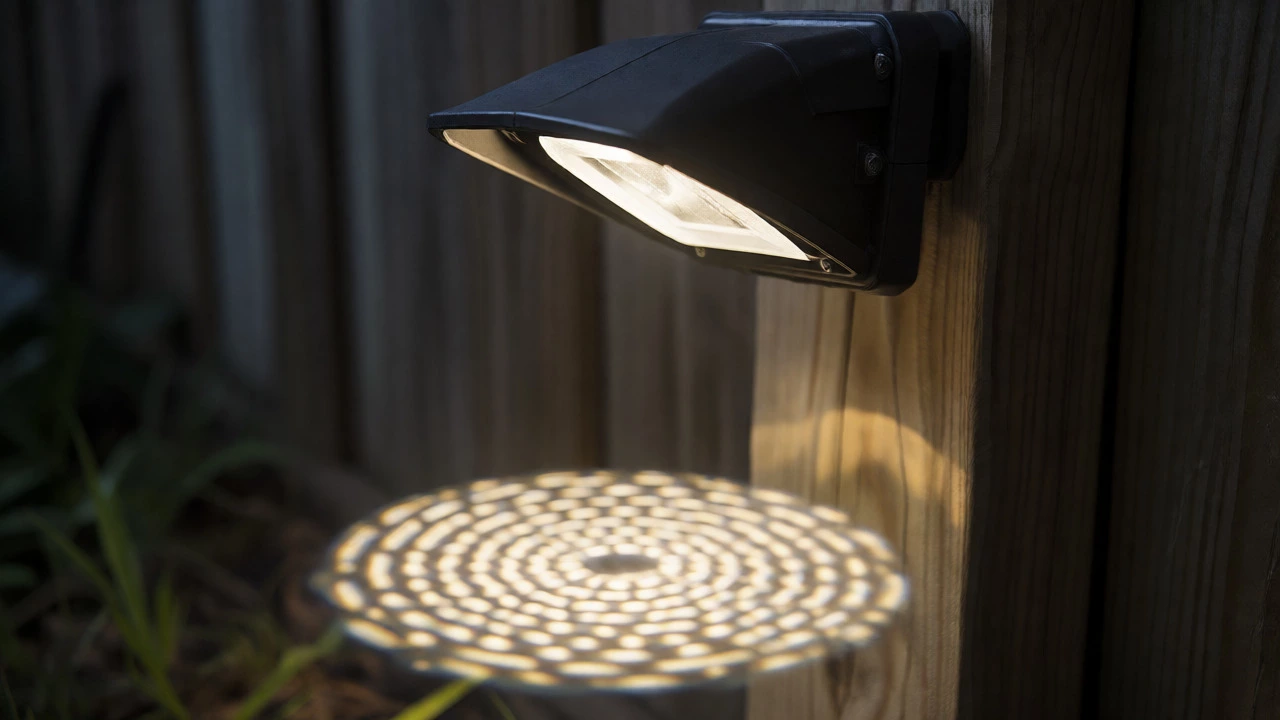
Always shield your lights. Use fixtures with hoods or shields that direct light downward and away from adjacent windows. A well-shielded 1,000-lumen light often provides better usable security than an unshielded 3,000-lumen blaster.
Practical Installation Tips for Maximum Effectiveness
- Mount Height Matters: Install fixtures between 8 and 10 feet high. Lower mounts are easier to tamper with; higher mounts lose intensity due to distance.
- Use Motion Sensors Wisely: Continuous bright lighting annoys neighbors. Set motion sensors to trigger high-lumen modes only when movement is detected, reverting to low-level ambient light otherwise.
- Check Beam Angles: Narrow beams (15-30 degrees) throw light further, ideal for spotting threats at a distance. Wide beams (60+ degrees) cover larger areas but lose intensity quickly.
- Solar Considerations: If using solar lights, remember that battery degradation happens. A solar light rated for 1,000 lumens might drop to 600 after two years. Buy slightly higher specs to account for this decline.
Frequently Asked Questions
Is 1000 lumens enough for a driveway?
Yes, 1,000 lumens is generally sufficient for a standard single-car driveway. It provides clear visibility for pedestrians and vehicles. However, if you need to capture detailed license plate footage via CCTV, consider upgrading to 1,500-2,000 lumens to ensure the camera sensor has adequate light.
Do brighter lights always mean better security?
No. Excessively bright lights can cause glare, which actually reduces visibility by creating harsh shadows and blinding observers. They can also annoy neighbors and lead to light pollution complaints. The "best" light is one that illuminates the target area evenly without spilling light into unwanted spaces.
What color temperature should I choose for security lights?
For security purposes, cool white (4000K-5000K) is often preferred because it enhances contrast and makes details sharper to the human eye. Warm white (2700K-3000K) is better for entryways where you want a welcoming atmosphere. Avoid blue-heavy lights (>5000K) as they can distort skin tones and attract insects.
How does mounting height affect lumen requirements?
Light intensity decreases with the square of the distance from the source. If you double the mounting height, you need four times the lumens to maintain the same brightness on the ground. Therefore, second-story roofline installations typically require 2,000-4,000+ lumens to effectively light the ground below, whereas first-story mounts may suffice with 700-1,500 lumens.
Are LED lights better than halogen for security?
Absolutely. LEDs are far more efficient, producing more lumens per watt of electricity. They also last longer and handle frequent on/off cycling from motion sensors better than halogen bulbs. Additionally, LEDs generate less heat, reducing fire risk near flammable materials like wooden eaves or dry vegetation.