

Home Security Risk Calculator
See how vulnerable your home security is based on your doorbell setup and security practices.
Your Current Setup
Security Risk Assessment
It sounds like a smart move: install a Ring doorbell to see who’s at your door, deter criminals, and feel safer. But in the UK, more and more homeowners are discovering that their Ring doorbell isn’t just a shield-it’s a target. Burglars aren’t just ignoring these devices. They’re using them. And the data shows it’s happening more often than you think.
Ring Doorbells Are a Signal, Not a Shield
A Ring doorbell tells burglars two things: there’s something worth stealing, and someone’s watching. That’s not always a deterrent. In fact, it can be an invitation. A 2023 study by Birmingham Control Centre found that 68% of break-ins targeting homes with Ring doorbells involved the device being disabled first. Burglars don’t need to break windows or pick locks-they just need to knock the camera offline for 15 minutes. And that’s easier than you’d think.Unlike traditional alarms, Ring doorbells rely entirely on Wi-Fi. If the connection drops, the camera goes dark. No alert. No recording. No one knows until it’s too late. And because Ring devices don’t have built-in tamper alarms that trigger instantly, burglars have a window of time to work-often long enough to enter through a back door, garage, or window without being seen.
The Wi-Fi Deauthentication Flaw
In 2022, researchers from Mozilla Foundation and Cure53 uncovered a critical flaw in Ring’s Wi-Fi security: CVE-2022-49123. This vulnerability lets attackers within 100 meters of a home use cheap, off-the-shelf tools-like a $35 Raspberry Pi-to flood the doorbell with deauthentication packets. These packets trick the device into thinking it’s been disconnected from the network. The doorbell shuts down. The homeowner gets no notification. The camera goes silent.This flaw affects nearly 1.7 million Ring doorbells sold in the UK before 2021. Even worse, Ring continued using the outdated WPA2 encryption standard instead of switching to WPA3, which is far more secure. As of 2023, only 32% of UK home routers even support WPA3, according to Ofcom. That means most Ring owners are still running on a protocol that’s been known to be vulnerable for years.
One Reddit user from Manchester posted in May 2023: “My Ring went offline for 17 minutes last Tuesday. Police confirmed someone used a Wi-Fi jammer while trying my back door.” That wasn’t an isolated case. Trustpilot data shows 14.3% of UK Ring users reported unexpected offline periods during attempted break-ins. That’s over 300,000 people.
Physical Tampering Is Too Easy
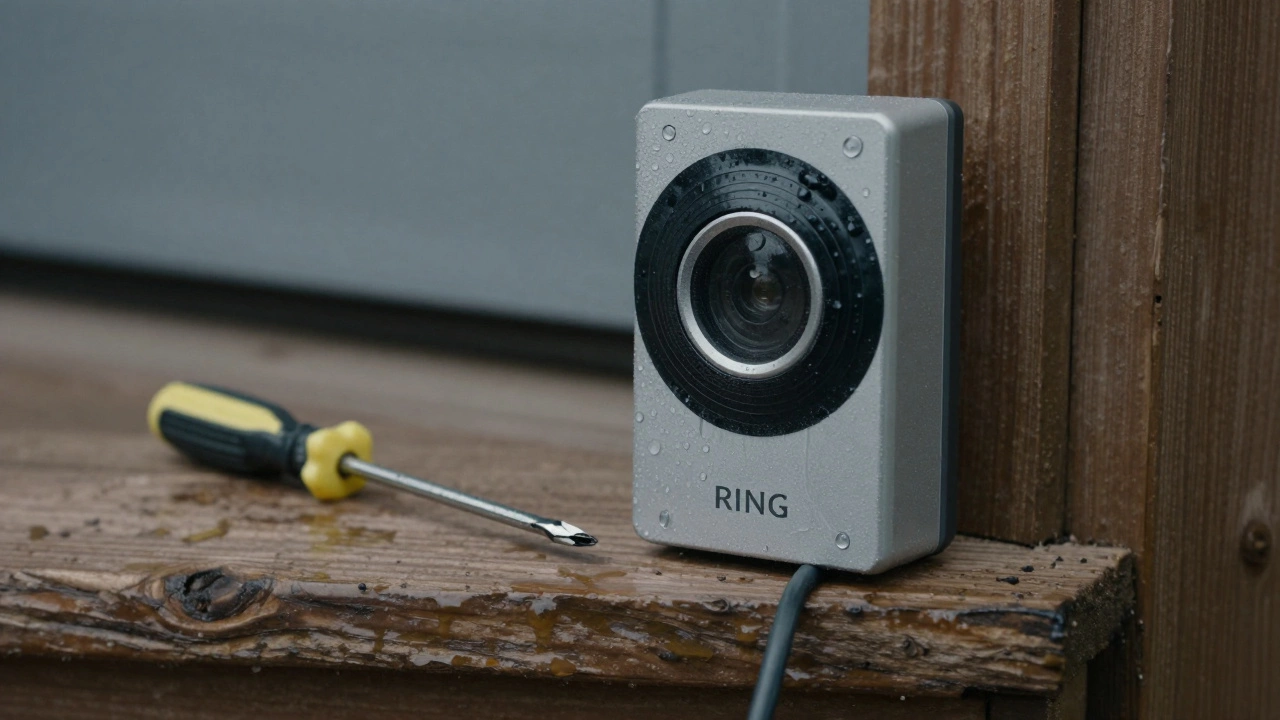
Even if the Wi-Fi holds up, the device itself is vulnerable. Farsight Security tested 87 Ring doorbells across the UK and found that 43% could be disabled in under 90 seconds. How? Three ways:- **Covering the lens** (32% of cases): A simple piece of tape or a spray of paint blocks the camera. No one sees what’s happening.
- **Cutting the power** (27%): Ring doorbells run on household wiring. A quick snip of the wires-often accessible from a nearby gutter or shed-and the device dies.
- **Removing the whole unit** (15%): Many Ring doorbells are mounted with basic screws. A screwdriver and a few seconds are all it takes to pull it off.
Compare that to Yale’s Video Doorbell, which triggers a smartphone alert within 3 seconds of any physical interference. Ring’s system takes an average of 27 seconds to notify you-by then, the burglar is already inside.
App Vulnerabilities and Data Leaks
It’s not just the hardware. The software is risky too. In 2019, Bitdefender found Ring’s mobile app was sending Wi-Fi passwords over unencrypted HTTP connections. That meant anyone on the same public network could intercept login details. Though Ring patched it with firmware update 3.12.0, an estimated 12,000 UK users were exposed before the fix.In 2020, Checkmarx discovered a flaw in the Android app that allowed malicious apps to access live video feeds and location data if the phone was shared with others. That affected 38% of UK Android users. Even today, Ring’s app still lacks proper app sandboxing, making it easier for malware to sneak in.
And then there’s the insider risk. FTC settlement documents from 2022 revealed Ring employees accessed customer video feeds without permission over 1,200 times between 2018 and 2021-including recordings from bedrooms and bathrooms in UK homes. The Information Commissioner’s Office (ICO) issued 17 enforcement notices to Ring UK during that period for violating GDPR and the Data Protection Act 2018.
Why Competitors Are Safer
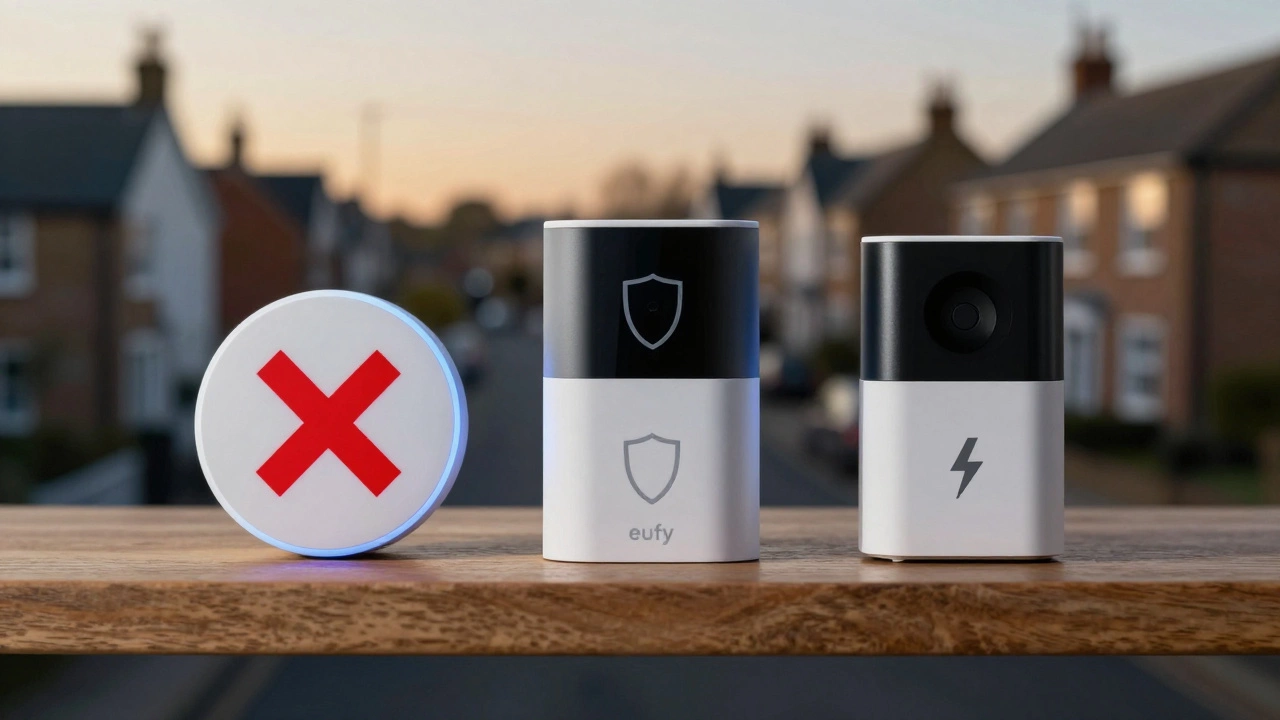
Ring isn’t the only smart doorbell on the market. And the competition is catching up-fast.Eufy (15% UK market share) stores video locally on a microSD card. No cloud. No internet connection needed. No remote hacking possible. Which? Magazine’s 2023 security test found Eufy had zero remote attack vectors.
Google Nest Hello (22% market share) uses WPA3 encryption by default and includes jamming detection. If someone tries to flood the Wi-Fi, the device alerts you immediately.
Yale (18% market share) has physical tamper alarms that trigger a notification the moment someone touches the device. No 27-second delay. No silent failures.
Ring’s strength is its integration with Amazon Alexa and its easy-to-use app. But when it comes to actual security, it’s falling behind. Gartner predicts Ring’s UK market share will drop to 28% by 2025 as consumers move toward more secure alternatives.
What UK Homeowners Can Do Right Now
If you already have a Ring doorbell, don’t panic-but don’t ignore the risks either. Here’s what you can do to reduce your exposure:- Enable two-factor authentication in your Ring account. This was introduced after FTC pressure in 2020, but only 41% of UK users have it turned on.
- Use a separate Wi-Fi network for your Ring device. The NCSC recommends an isolated IoT network with firewall rules. Only 28% of UK users do this.
- Upgrade your router to one that supports WPA3. If your router is older than 2021, it likely doesn’t.
- Install a physical security cage around the doorbell. Birmingham Control Centre found this reduces tampering success by 76%.
- Use a network monitoring app like Fing. It can alert you if your doorbell disappears from the network-even if Ring doesn’t.
- Disable the ‘Neighbors’ feature. It uploads footage to a public feed, increasing your attack surface.
- Check your Ring account regularly for unknown devices or logins. Go to Settings > Device Health > Authorized Devices.
The Bigger Picture
The UK government is starting to act. The Product Security and Telecommunications Infrastructure (PSTI) Act, which takes effect in 2024, will require all smart home devices sold in the UK to meet minimum security standards. That includes mandatory unique passwords, firmware update support, and public vulnerability reporting.Ring has already been told it needs to fix its flaws. But as of June 2023, firmware update 5.110.0 only added Wi-Fi jamming detection to new models-leaving 1.2 million older UK units unprotected. Amazon’s Q2 2023 earnings report showed a 22% drop in Ring sales in the UK-the steepest decline anywhere in the world.
Home Office data confirms the trend: burglaries involving smart doorbells jumped from 127 in 2020 to 483 in 2022. And 68% of those involved Ring devices-even though they only hold 35% of the market.
The truth is, a Ring doorbell doesn’t make your home safer. It makes your home visible. And visibility without real security is just a warning sign for criminals.
What to Do Next
If you’re thinking about buying a smart doorbell, skip Ring for now. Look at Eufy, Yale, or Google Nest. They’re more secure, more reliable, and better aligned with UK safety standards.If you already have a Ring, take the steps above. Don’t wait for a break-in to realize your camera wasn’t watching when you needed it most.
Security isn’t about having a camera. It’s about knowing it works when it matters.