
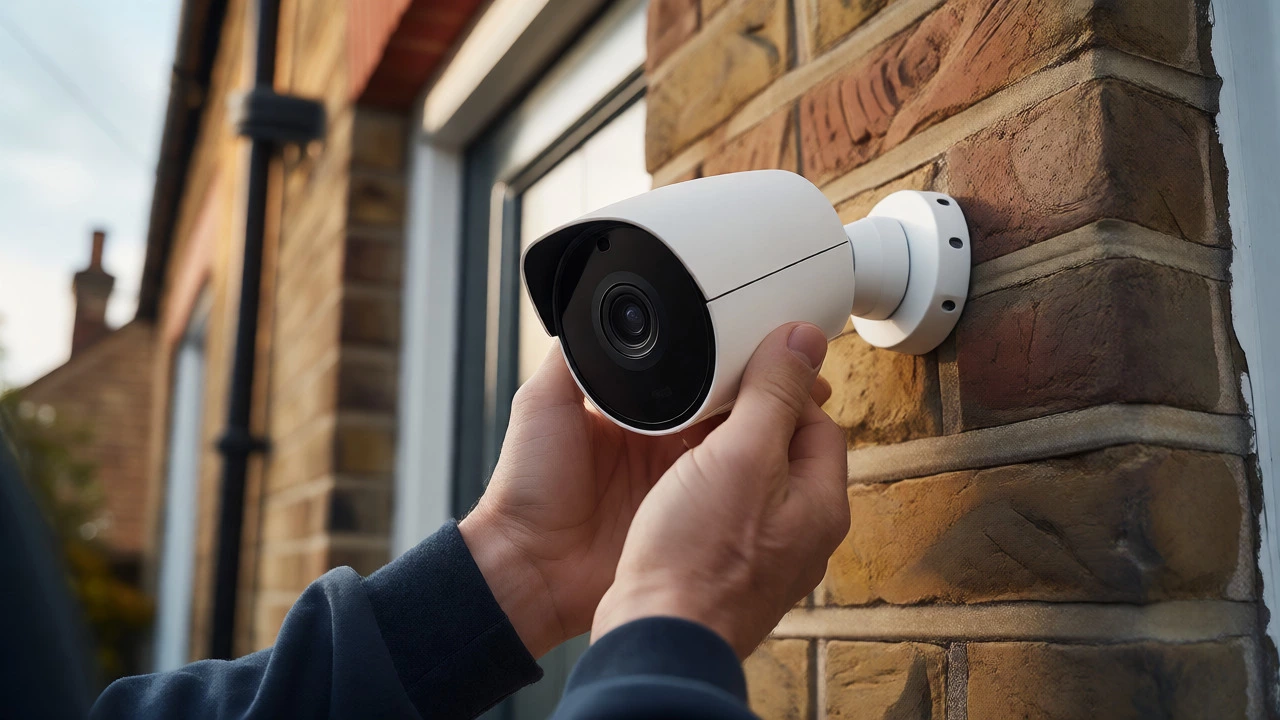
CCTV Installation Approval Checker
Select your options and click "Check Requirements" to see what approvals you might need.
You just bought a shiny new CCTV camera and you’re ready to drill into the wall. But hold on. Before you make that first hole, do you actually have permission to put it there? It’s a question many homeowners skip until they get a nasty letter from their landlord, a complaint from a neighbor, or worse, a fine from the local council.
Getting approval isn’t about one universal stamp of approval. It depends entirely on where you live, who owns the building, and what your camera sees. In Adelaide, Australia, the rules differ from London or New York. But the core logic remains: if you don’t own the wall, ask the owner. If you see someone else’s private space, check privacy laws. If you’re in a heritage zone, check planning rules. This guide walks you through exactly how to secure those green lights without the headache.
Who Needs to Say Yes? Identifying Your Approver
The first hurdle is ownership. If you rent your home, you likely cannot install permanent fixtures without written consent. Most tenancy agreements explicitly forbid altering the property structure-drilling holes, running cables through walls, or attaching brackets to the facade-without landlord approval. Don’t just text them. Send a formal request.
For social housing or council-owned properties, the rules are often stricter. Local authorities usually require prior written permission. They want to know exactly where the camera goes, how it’s mounted, and how you’ll repair any damage when you move out. If you’re in an apartment block or a strata-titled community, the situation gets more complex. You aren’t just asking a landlord; you’re asking a Body Corporate or Owners Corporation. Shared facades are common property. Installing a camera on the outside of your unit might require a vote at a general meeting or approval from the building manager, especially if it impacts the aesthetic uniformity of the building.
Even if you own your detached house, you might still need approval. If you live in a gated community with strict architectural guidelines, your Homeowners Association (HOA) or equivalent body may have rules about visible security devices. Check your covenants before buying the mount.
Planning Permission and Heritage Restrictions
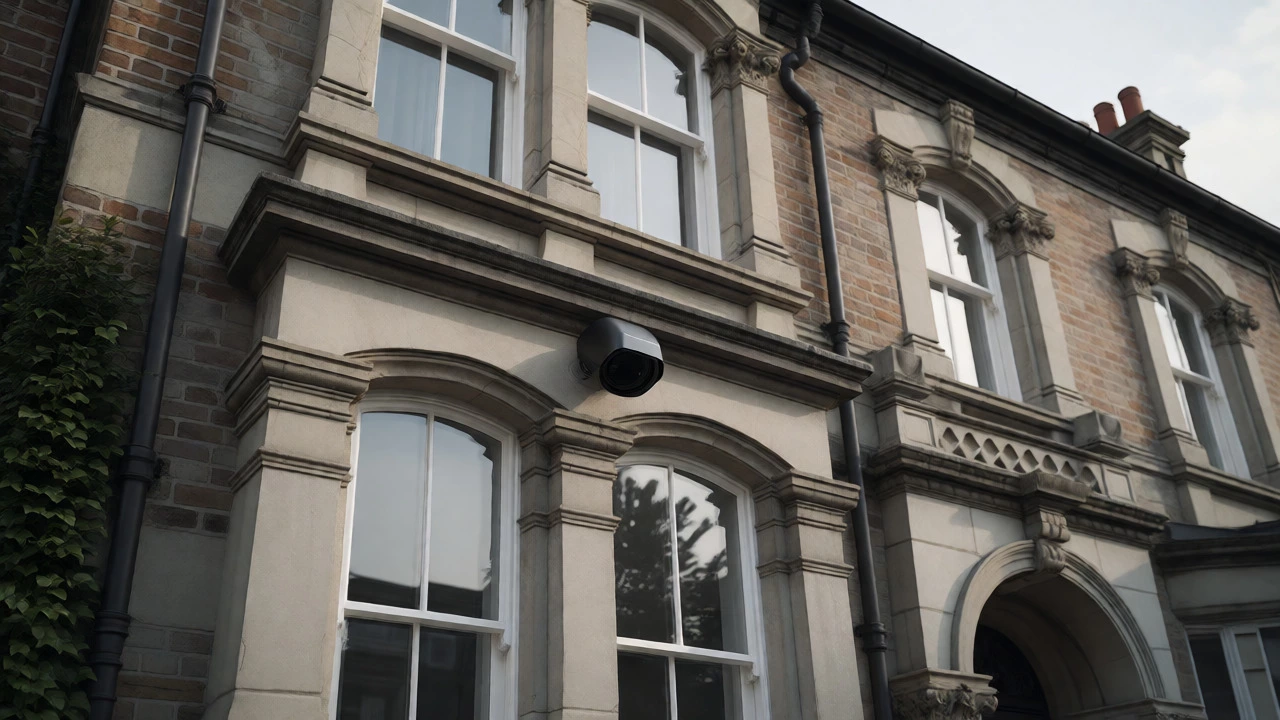
Do you need planning permission? In many jurisdictions, including parts of the UK and Australia, domestic CCTV falls under "permitted development," meaning no specific application is needed for standard installations. However, this exemption has limits. If you live in a listed building, a conservation area, or a heritage overlay zone, drilling into the exterior can be restricted. These areas protect historical character, so adding modern tech like a bulky camera might require special consent.
| Constraint Type | Typical Limitation | Action Required |
|---|---|---|
| Camera Size | Often limited to approx. 0.75m x 0.25m x 0.25m | Check dimensions against local council rules |
| Height | Must be at least 2.5m above ground level | Adjust mounting bracket height |
| Quantity | Limited number per wall (e.g., max 4) | Consolidate views or use wide-angle lenses |
| Heritage Status | Listed buildings or Conservation Areas | Apply for Listed Building Consent |
Always verify these numbers with your local planning authority. Rules change, and thresholds vary by municipality. If your installation changes the external appearance of the building significantly, assume you need to ask. It’s cheaper to ask now than to repaint later.
The Privacy Trap: What Can Your Camera See?
This is where most disputes start. Your camera is on your land, but its lens doesn’t respect boundaries. If your field of view captures a neighbor’s front door, their garden, or a public footpath, you enter the realm of data protection law. In Australia, the Privacy Act applies if you’re recording personal information beyond your household’s domestic use. While pure domestic use often has exemptions, capturing public spaces or other people’s private areas complicates things.
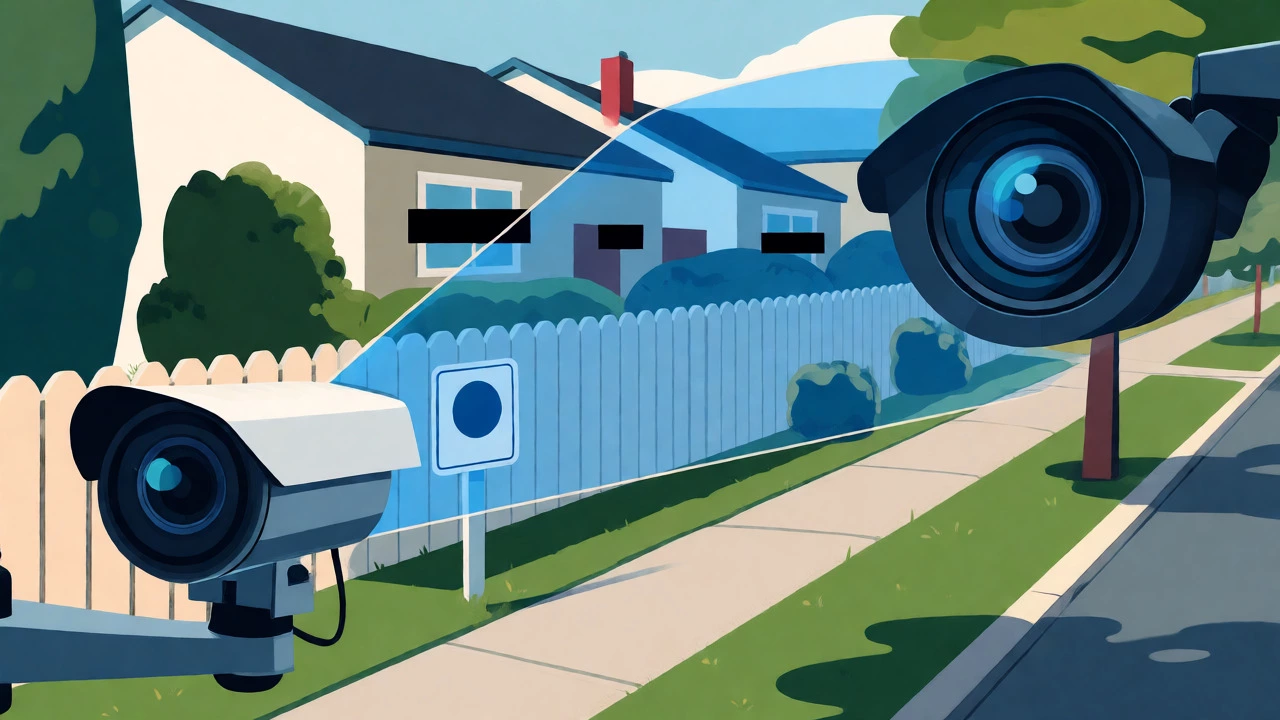
Positioning is key. Aim narrowly. Use digital privacy masks-a feature in most modern IP cameras-to black out sections of the image that include neighbors’ windows or shared driveways. If you can’t avoid capturing public space, transparency becomes your best defense. Put up a clear sign stating that CCTV is in operation. This informs passersby and demonstrates good faith. Also, consider audio. Recording sound is far more intrusive than video. Many landlords and privacy regulators frown upon continuous audio recording. Unless you have a very specific reason, disable the microphone or ensure it only activates during motion events.
Workplace and Commercial Considerations
If you’re installing CCTV for a small business or home office that employs staff, the rules tighten significantly. You can’t just watch employees because you feel like it. You need a legitimate purpose, such as safety or theft prevention, and you must inform workers before monitoring begins. In many regions, a Data Protection Impact Assessment (DPIA) is required if the surveillance poses high risks to employee rights.
Signage is mandatory in commercial settings. Signs must be legible, placed at entrances, and clearly state who holds the footage and why it’s being recorded. Access to footage should be restricted to authorized personnel. If you’re using cloud storage, ensure your provider complies with local data sovereignty laws. For instance, storing Australian citizen data on overseas servers may trigger additional compliance checks under the Notifiable Data Breaches scheme.
Public Space and Infrastructure Permits
What if you want to mount a camera on a streetlight pole or a tree in the nature strip? That’s not your property. Attaching private equipment to public infrastructure usually requires a permit from the local council or utility company. Unauthorized attachments can result in removal orders and fines. In some cities, even cameras on private property that point directly onto a public highway might need registration or approval, particularly if they contribute to city-wide surveillance networks.
Before you buy the bracket, contact your local council’s customer service. Ask specifically about "private CCTV attachment to public assets." They will direct you to the correct form. Some councils allow it for crime prevention initiatives, while others prohibit it entirely to maintain visual amenity.
A Practical Approval Checklist
To streamline the process, prepare a concise application package. Whether you’re emailing your landlord or submitting a form to the council, include these details:
- Site Plan: An annotated photo showing exactly where each camera will go.
- Field of View: A diagram or description of what the camera sees. Highlight any neighboring properties or public areas included.
- Technical Specs: Camera dimensions, mounting method (screws, adhesive, clamp), and power source (wired vs. battery).
- Purpose: Why do you need it? (e.g., "Package theft prevention," "Elderly parent monitoring").
- Audio Policy: State clearly whether audio is recorded and how long footage is retained.
- Installer Credentials: If applicable, provide details of the licensed electrician or technician performing the work.
Keep copies of all written approvals. If a landlord refuses, ask for the specific reason. Often, compromising on placement-such as moving a camera from the front facade to the side wall-can resolve objections quickly.
Installation Best Practices After Approval
Once you have the green light, execute carefully. Hire a qualified installer if wiring is involved. Poor electrical work can void insurance claims. Ensure cables are neatly secured and protected from weather. Test the night vision and motion detection immediately. Adjust angles to minimize glare from streetlights or car headlights, which can wash out footage and reduce evidentiary value.
Finally, review your setup annually. Technology changes, and so do regulations. If you add a new camera or change the field of view, revisit your permissions. It’s better to update a landlord’s consent than to explain away an unauthorized modification years later.
Do I need planning permission for CCTV in Australia?
Generally, no, for standard residential installations. However, if you live in a heritage-listed property, a conservation area, or a strata-managed building, you may need specific consent from the local council or owners corporation. Always check with your local planning authority if your installation alters the building's external appearance.
Can my landlord refuse CCTV installation?
Yes, if you are renting. Landlords typically have the right to refuse alterations to the property structure. They may also impose conditions, such as requiring professional installation, prohibiting audio recording, or mandating that you restore the property to its original condition upon moving out.
Does my CCTV camera need a sign?
While not always legally mandatory for purely domestic use within your boundary, signs are highly recommended if your camera captures public areas or neighbors' property. For businesses, signage is almost always required by law to inform individuals they are being monitored.
What happens if I install CCTV without approval?
Consequences vary. A landlord may deduct costs for removal and repair from your bond. A strata committee may issue a notice to remove non-compliant fixtures. In heritage zones, you could face fines or legal orders to restore the building. Privacy complaints can also lead to investigations by data protection authorities.
Can I record audio with my CCTV?
This is tricky. Continuous audio recording is often considered more intrusive than video and may violate wiretapping or surveillance laws depending on your jurisdiction. Many landlords and privacy guidelines recommend disabling audio unless necessary, or ensuring it only records during active events.