
Security Camera Placement Advisor
Home Security Camera Calculator
Answer these questions to get personalized recommendations for your security camera setup.
When you're setting up a home security system, one of the first questions you’ll face is: indoor or outdoor security cameras? It seems simple-put a camera where you need to see-but the real answer isn’t about preference. It’s about purpose, durability, and what actually keeps your home safe.
Outdoor Cameras Are Built for the Elements
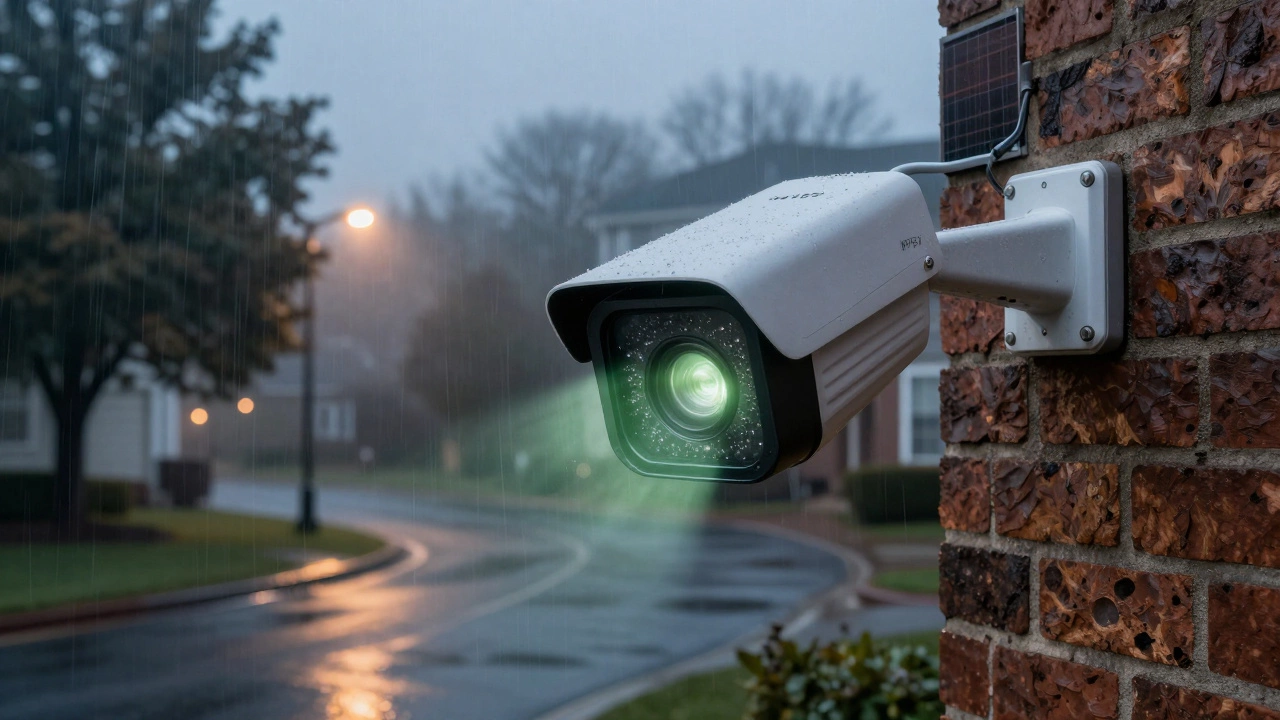
Outdoor security cameras aren’t just indoor cameras with a raincoat. They’re engineered to survive Adelaide’s summer heat, winter rains, and the occasional hailstorm. Look at the specs: a good outdoor camera has an IP65 or higher rating. That means it’s completely sealed against dust and can handle powerful water jets. Some, like the TP-Link Tapo C400S2, even hit IP67-meaning they can be briefly submerged in water without damage. They’re made with thick polycarbonate or metal housings that won’t crack under UV rays or freeze in sub-zero temps. Most can operate between -22°F and 140°F. That’s not a marketing claim-it’s a survival requirement. If you’ve ever seen a camera fog up after a cold night, that’s because the internal electronics are condensing moisture. Outdoor cameras are designed to prevent that. Indoor ones? They’re not. Night vision is another big differentiator. Outdoor cameras need to see 100 feet or more. They use powerful infrared LEDs to light up driveways, backyards, and alleyways. Indoor cameras, on the other hand, only need to cover a living room or hallway-so their IR range is usually under 30 feet. Put an indoor camera outside, even under a porch, and within days, moisture gets in. GW Security USA tested this: 92% of indoor cameras developed internal condensation within 48 hours. By two weeks, they were dead.Indoor Cameras Are for Watching What Happens Inside
Indoor cameras are all about detail, discretion, and ease. They’re small, sleek, and designed to blend into your living room, nursery, or home office. You don’t want a bulky black box staring down from your ceiling-you want something that looks like a speaker or a smoke detector. They’re cheaper, too. A basic indoor camera starts around $60. Outdoor models? Start at $90 and go up fast, especially if you want 2K video, two-way audio, or solar power. That price difference isn’t just about branding-it’s about materials, weatherproofing, and stronger hardware. Indoor cameras also have smarter AI features. Google Nest and Ring now recognize people, pets, and packages with high accuracy. They can tell the difference between your cat walking by and a stranger at the front door. That’s because they’re trained on indoor environments-where motion is predictable. Outdoor cameras have to ignore blowing leaves, passing cars, and animals. That’s a harder job.Where to Place Each Type for Maximum Effect
You’re not just buying cameras-you’re building a system. Placement matters more than brand. For outdoor cameras, focus on entry points: front and back doors, garage entrances, side gates, and any windows at ground level. Mount them 8 to 10 feet high, angled slightly down. This gives you a clear view of faces and license plates without glare from the sun. Don’t point them at your neighbor’s yard. In Australia, privacy laws are strict about recording public spaces or adjacent properties. Stick to your own property. Outdoor cameras should also cover your driveway and any storage areas. A thief won’t break in through your front door if they know a camera is watching the side gate. That’s why 58% of commercial security sales are outdoor cameras-they cover the perimeter, the first line of defense. Indoor cameras go where valuables are kept or where activity needs monitoring. A camera in your home office can catch if someone’s stealing laptops. One in the nursery lets you check on your baby without walking in. A camera near your safe or jewelry box adds a layer of deterrence. They’re not for watching the street-they’re for watching what happens behind your walls.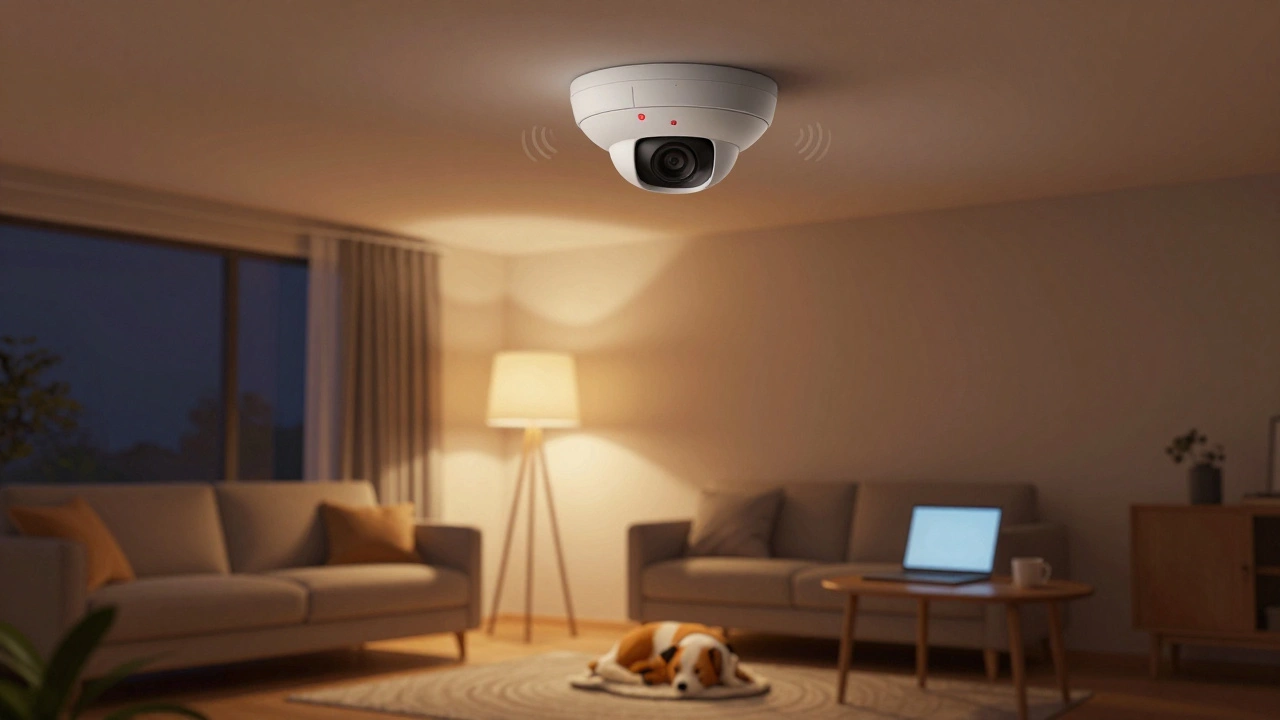
Cost, Installation, and Maintenance
Outdoor cameras cost more upfront, and they’re harder to install. You need weatherproof wiring, conduit to protect cables, and mounts that won’t rust. Most require hardwiring to a power source. Some newer models are battery-powered with solar charging, but even those need regular cleaning and checking. Dust, salt air, and spider webs can clog lenses. You’ll want to clean them every three months. Indoor cameras? Plug them in. Mount them with adhesive strips. Connect them to Wi-Fi. Done in 30 minutes. Maintenance? Wipe the lens twice a year. No conduit. No drilling through walls. No worrying about rain. But here’s the catch: if you try to save money by putting an indoor camera outside, you’re not saving-you’re risking. A single failed camera during a break-in is worse than never having one at all. The cost of replacing a damaged indoor camera? $60. The cost of stolen electronics or a broken window? Hundreds or thousands.What Experts Say (And What Users Experience)
Security professionals don’t debate this. They all agree: use the right tool for the job. Dr. Michael Chen from ZeroEyes says, “Indoor cameras aren’t designed for outdoor conditions. Using them outside creates a false sense of security.” Reddit users have posted dozens of horror stories. One person put a TP-Link Tapo C200 under their covered porch. It worked for 11 days. Then the lens fogged. Video went dark. No warning. No alert. Just silence. On the flip side, outdoor camera reviews on Trustpilot average 4.3/5. People love the night vision and weather resistance. Indoor cameras? 4.5/5 on Amazon. Users praise how easy they are to set up and how unobtrusive they look.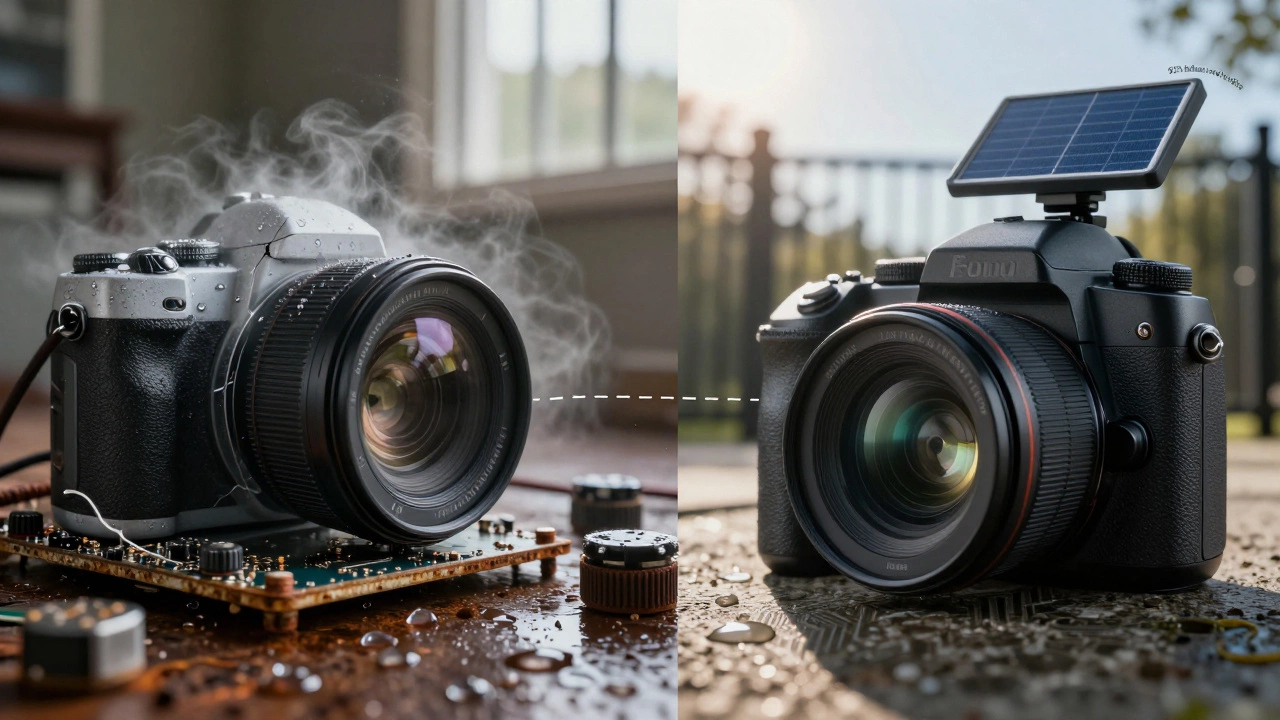
It’s Not Either/Or-It’s Both
The best home security system doesn’t choose between indoor and outdoor. It uses both. Think of it like a house alarm. You don’t just lock the front door-you install deadbolts, window sensors, and motion detectors inside. Same with cameras. Outdoor cameras deter and record what happens outside. Indoor cameras capture what happens after someone gets in. If a burglar breaks a window, an outdoor camera catches them climbing in. An indoor camera catches them running through the hallway. Together, they give you full context. Police need that. Insurance companies need that. You need that. Modern systems like Ring Alarm, Google Nest, and TP-Link’s Tapo ecosystem let you manage both types from one app. You get alerts, live feeds, and cloud storage in one place. No need to juggle multiple apps or remember which camera is where.What to Buy in 2026
If you’re starting from scratch:- For outdoor: Get a camera with IP66 or IP67 rating, 2K resolution, and solar or hardwired power. The TP-Link Tapo C400S2 or Eufy SoloCam S40 are solid picks.
- For indoor: Look for AI person/pet detection, 1080p or higher, and two-way audio. Google Nest Cam (Indoor) or Arlo Essential Indoor are top choices.
- Always pick models that work with your existing smart home platform-Google Home, Apple HomeKit, or Alexa.
Final Answer
Is it better to have indoor or outdoor security cameras? Neither. It’s better to have both. Outdoor cameras protect your perimeter. Indoor cameras protect your space. One stops a break-in before it starts. The other gives you proof after it happens. Don’t compromise. Don’t try to stretch an indoor camera beyond its limits. Use the right tool for each job. Your home, your peace of mind, and your insurance claim will thank you.Can I use an indoor security camera outside under a porch?
No. Even under a covered porch, indoor cameras aren’t built to handle moisture, temperature swings, or humidity. Testing shows 92% of indoor cameras develop internal condensation within 48 hours of outdoor exposure, leading to complete failure within two weeks. The lens fogs, the electronics corrode, and the camera stops working-often without warning. It’s not worth the risk.
Do outdoor security cameras need Wi-Fi?
Not always. Many outdoor cameras now use cellular backup, local storage on SD cards, or hardwired connections. Wi-Fi is convenient for live viewing and alerts, but if your Wi-Fi signal is weak outside, you can still install a camera with local recording and use a Wi-Fi extender or mesh system to boost coverage. Some models, like the Eufy SoloCam S40, run on solar power and store footage locally-no Wi-Fi needed.
How high should I mount outdoor security cameras?
Mount outdoor cameras 8 to 10 feet above the ground. This height gives you a clear view of faces and license plates while making it harder for someone to reach or tamper with the camera. Angle the camera down 15 to 20 degrees to avoid glare from the sun and capture the ground clearly. Follow the Security Industry Association’s 2023 guidelines-they’re based on real-world effectiveness, not just theory.
Are outdoor security cameras worth the extra cost?
Yes, if you care about real protection. Outdoor cameras cost 25-40% more than indoor ones, but that price covers rugged materials, weatherproofing, longer-range night vision, and tamper resistance. A $90 outdoor camera that lasts 10 years is cheaper than a $60 indoor camera that fails after six months. Plus, insurers may lower premiums for homes with verified outdoor surveillance. The return isn’t just in security-it’s in savings.
Can indoor cameras detect motion through a window?
Indoor cameras can detect motion through a window, but they’re not designed for it. Glass reflects infrared light, which can blind the camera’s night vision. Bright lights outside at night-like streetlights or neighbor’s porch lights-can cause glare that hides movement. Plus, the camera’s motion sensors are calibrated for indoor environments. You’ll get false alerts from passing cars or trees. For monitoring outside from inside, use a dedicated outdoor camera.
Do I need professional installation for outdoor cameras?
Not always, but it’s recommended. If you’re hardwiring cameras or running cables through walls, a professional ensures proper sealing, grounding, and compliance with electrical codes. DIY installation works for battery-powered or solar cameras with Wi-Fi, but if you’re installing multiple outdoor units or want integration with an alarm system, professional setup reduces risk and improves reliability. Around 85% of commercial installations use pros-for good reason.