
Night Vision Technology Selector
Select your primary monitoring scenario below to find the best camera technology for your needs.
Urban/Suburban Home
Front porch, driveway near streetlights, or storefront with windows.
Dark/Enclosed Areas
Backyards without lights, windowless basements, dark alleys, or garages.
Extreme Conditions
Large perimeters, farms, smoke/fog environments, or wildlife tracking.
Recommended Technology
Why this works:
Explanation goes here.
Best For:
Key Specifications
⚠️ Limitation to Note
Limitation text goes here.
Picture this: you’re checking your backyard footage at 3 AM. The screen is pitch black, or worse, it’s a grainy mess of green static. You need to know if that shadow is a raccoon or an intruder, but the camera just won’t cooperate. This is where the confusion starts. Everyone talks about “night vision” and “infrared” like they are the same thing. They aren’t.
If you are shopping for security cameras, understanding the difference between these technologies is the only way to stop guessing and start seeing clearly. One technology amplifies what little light exists. The other creates its own light. And a third-thermal imaging-doesn't care about light at all; it sees heat. Choosing the wrong one means blind spots in your security coverage.
The Short Answer: Light vs. Heat
Let’s cut through the marketing jargon right away. When most people say “night vision,” they usually mean one of two things, and the distinction matters more than you think.
- Night Vision (Low-Light): These cameras amplify existing ambient light (moonlight, streetlights) to make a dark scene visible. They need some light to work.
- Active Infrared (IR): These cameras have built-in LEDs that shine invisible infrared light onto the scene. They create their own illumination, so they work in total darkness.
- Thermal Imaging: A specialized type of infrared that detects heat signatures rather than reflected light. It works day or night, through smoke and fog.
The biggest takeaway? If you want color and detail in a dimly lit room, you want low-light night vision. If you need to see in a windowless basement or a dark alley, you need active infrared. If you are tracking wildlife or searching through smoke, you need thermal.
How Night Vision Cameras Actually Work
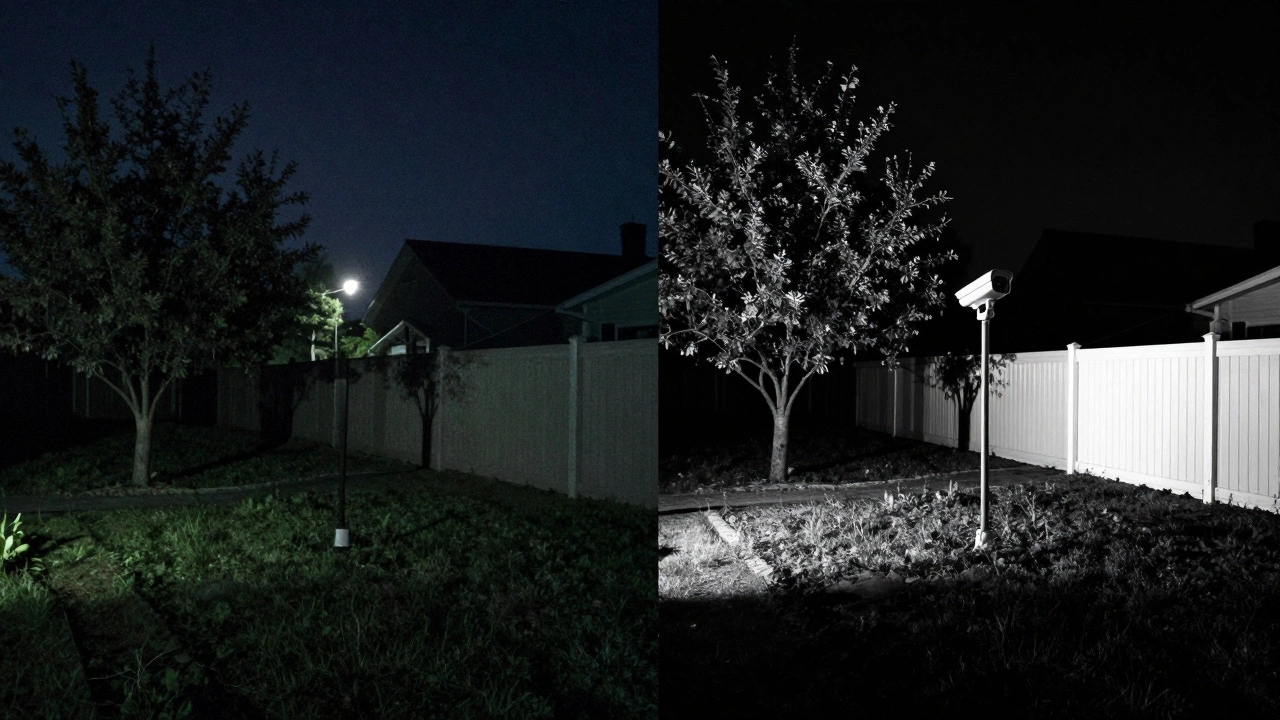
True night vision technology relies on sensitivity. Think of it like turning up the volume on a quiet room. The camera sensor grabs every photon of visible light available-from a distant streetlamp, moonlight, or even starlight-and amplifies it digitally or electronically.
This is why many night vision images look green or grainy grayscale. The camera is stretching faint light signals to create an image. Brands like Eufy and AOSU describe this as capturing “faint light around us” to enhance brightness. However, there is a hard limit here: physics. If there is absolutely zero light, there is nothing to amplify. A pure low-light night vision camera will go completely black in a sealed, unlit closet.
This makes standard night vision excellent for areas with some background illumination, like a front porch with a dim bulb or a yard near a street. But don’t expect miracles in pitch-black environments without help.
Active Infrared: The Invisible Flashlight
Now, let’s talk about what most consumer “night vision” cameras actually use: Active Infrared (IR). You’ve probably seen this before. When your phone camera switches to night mode outdoors, or when your home security feed turns black and white, that’s IR kicking in.
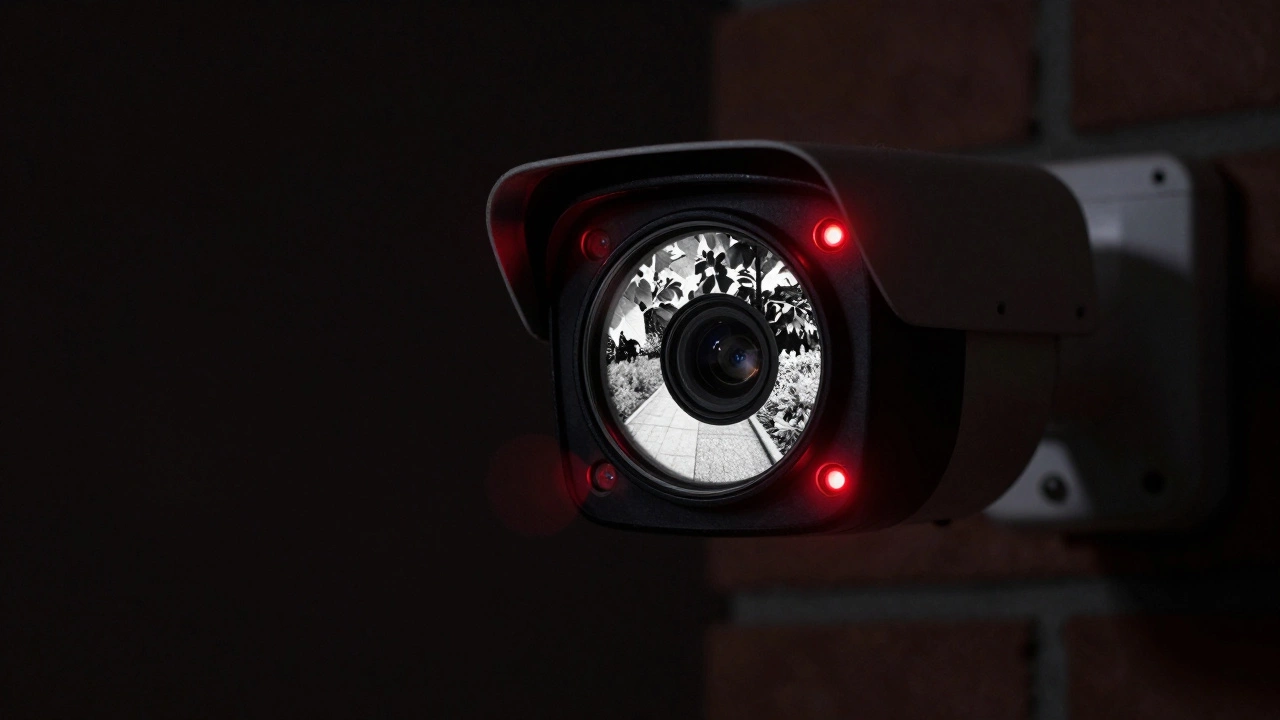
These cameras have small LED lights surrounding the lens. When the camera detects low light, these LEDs blast the area with infrared radiation. To human eyes, this light is invisible. To the camera sensor, it’s bright as day. The sensor captures the infrared light reflecting off objects, creating a sharp, high-contrast black-and-white image.
This solves the “total darkness” problem. Because the camera provides its own light source, it doesn’t care if the moon is hidden behind clouds. It works in a locked garage, a dark hallway, or a dense forest at midnight. The trade-off? You lose color. Everything looks monochrome because infrared sensors don’t process visible color wavelengths in the same way.
Thermal Imaging: Seeing Heat, Not Light
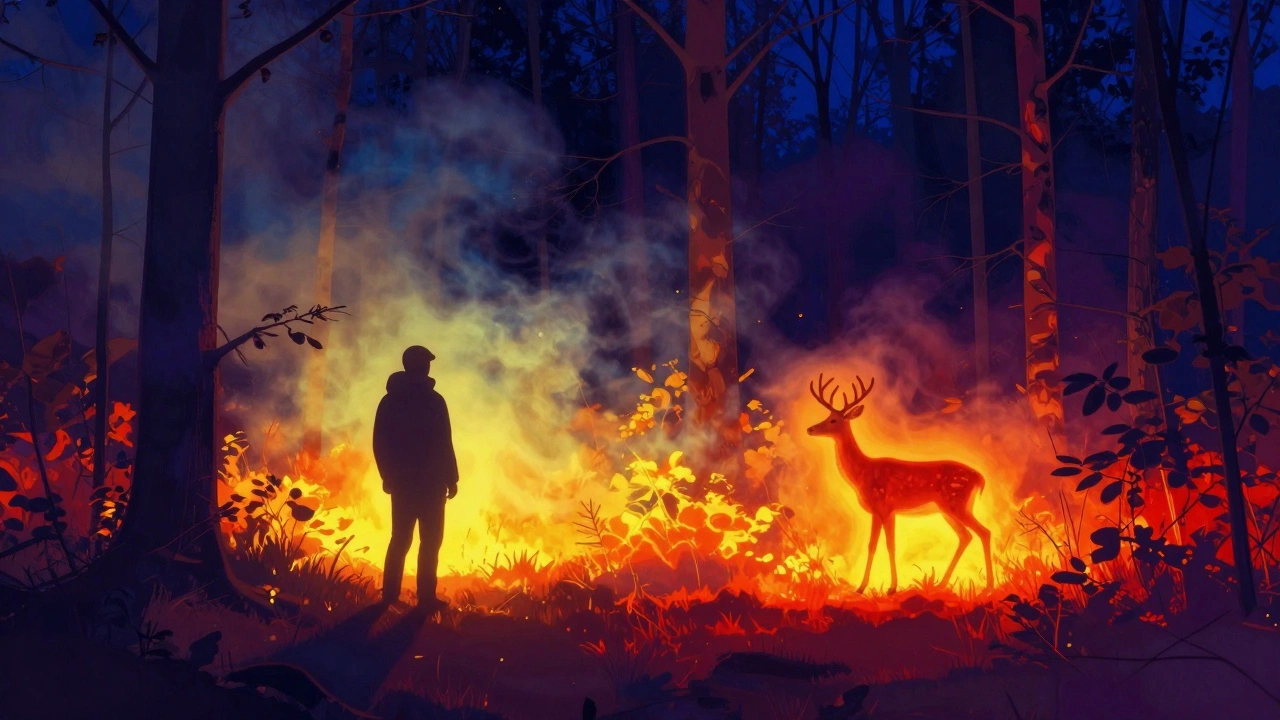
Then there is the heavyweight champion of visibility: Thermal Imaging. Often grouped under the broad umbrella of “infrared,” thermal cameras operate on a completely different principle. They do not detect reflected light at all. Instead, they detect long-wave infrared radiation-the heat emitted by objects.
Every object above absolute zero emits heat. Your body, a car engine, a warm cup of coffee-they all glow in the thermal spectrum. Manufacturers like FLIR note that these cameras can detect temperature differences as small as 0.01°C. This allows them to create images based on heat maps, often displayed in false colors like red, yellow, and blue, or stark grayscale.
Why does this matter? Because thermal cameras are immune to lighting conditions. It doesn’t matter if it’s noon or midnight, sunny or overcast. More importantly, thermal waves pass through obscurants that block visible light. Smoke, fog, dust, and even thin foliage won’t hide a heat signature from a thermal lens. This is why military units, firefighters, and industrial inspectors rely on them.
Head-to-Head Comparison
| Feature | Night Vision (Low-Light) | Active Infrared (IR LED) | Thermal Imaging |
|---|---|---|---|
| Light Requirement | Needs some ambient light | None (creates own light) | None (detects heat) |
| Total Darkness? | No | Yes | Yes |
| Image Type | Color or Green/Grayscale | Black & White | Heat Map (False Color/Gray) |
| Detail Level | High (faces/text readable) | Medium-High (clear outlines) | Low (heat blobs, hard to ID faces) |
| See Through Fog/Smoke? | No | Poor | Yes |
| Cost | Moderate | Affordable | High |
Which One Do You Actually Need?
The best camera depends entirely on your specific environment and goals. Here is how to decide.
Choose Low-Light Night Vision If:
- You need to identify faces, license plates, or clothing colors.
- Your monitoring area has consistent ambient lighting (streetlights, porch lights).
- You prefer natural-looking video feeds for reviewing incidents later.
This is ideal for urban homes, storefronts with windows, or driveways near streetlamps. You get the best balance of cost and visual clarity.
Choose Active Infrared (IR) If:
- You are securing dark areas like backyards, side alleys, or interior rooms without windows.
- Budget is a primary concern (most modern security cameras include IR).
- You don’t mind black-and-white footage as long as you can see movement and shapes.
This is the standard for 95% of residential security setups. It’s reliable, affordable, and handles complete darkness effortlessly.
Choose Thermal Imaging If:
- You are monitoring large perimeters, farms, or industrial sites.
- You need detection through smoke, heavy fog, or dense vegetation.
- You are looking for early warning systems (detecting a person long before they are visible to IR).
Thermal is expensive and less useful for identifying *who* someone is, but unmatched for knowing *that* someone is there. It’s a professional-grade tool for safety-critical applications.
Common Pitfalls to Avoid
One mistake buyers make is assuming IR LEDs have infinite range. They don’t. Most consumer IR LEDs reach 30 to 50 feet effectively. Beyond that, the light scatters, and the image gets washed out or dark again. If you have a sprawling property, you’ll need multiple cameras or external IR illuminators.
Another issue is “IR washout.” If an IR camera points directly at a reflective surface like a glass door or a shiny metal fence close to the lens, the infrared light bounces back intensely, blowing out the image into a white blur. Positioning matters.
Finally, remember that thermal cameras struggle with identification. While they can tell you a human-shaped heat signature is walking toward your shed, they likely won’t show you enough facial detail to recognize your neighbor. Pair thermal detection with a standard IR or optical camera for verification.
Can I use a night vision camera in total darkness?
If by "night vision" you mean a low-light camera that amplifies ambient light, then no. It needs at least a tiny bit of light (like moonlight) to function. However, most modern security cameras labeled as having "night vision" actually use Active Infrared (IR) LEDs. These cameras emit their own invisible light, allowing them to see perfectly well in total darkness.
Why is my infrared camera footage black and white?
Active infrared cameras capture light outside the visible spectrum. Standard image sensors switch to monochrome mode in low light to maximize sensitivity and contrast. Since the IR LEDs illuminate the scene with non-visible light, color information is lost, resulting in clear black-and-white images.
Is thermal imaging better than regular night vision?
It depends on your goal. Thermal imaging is superior for detection in adverse conditions like smoke, fog, or complete darkness, and it cannot be blinded by bright lights. However, it provides lower visual detail, making it harder to identify faces or read text. Regular night vision (low-light or IR) offers better detail for recognition tasks in typical residential settings.
What is the range of infrared LEDs on security cameras?
Most consumer-grade security cameras have IR ranges between 30 and 50 feet (10-15 meters). Professional models with external illuminators can reach 100 feet or more. Keep in mind that rain, fog, and physical obstructions can significantly reduce effective range.
Can animals see the infrared light from my camera?
Generally, no. The infrared light used by security cameras (usually 850nm or 940nm wavelength) is invisible to the human eye and most common animals. However, some nocturnal animals with highly sensitive night vision might perceive the faint glow of cheaper 850nm LEDs. For covert monitoring, look for cameras using 940nm IR, which is completely invisible.