
Porch Light Security & Efficiency Analyzer
Select your current or preferred lighting strategy to see its security profile, cost analysis, and expert recommendations.
Always On
Continuous illumination day and night
Always Off
Complete darkness at the entryway
Motion Sensor
Activates only when movement is detected
Smart Scheduled
Automated timing with randomization
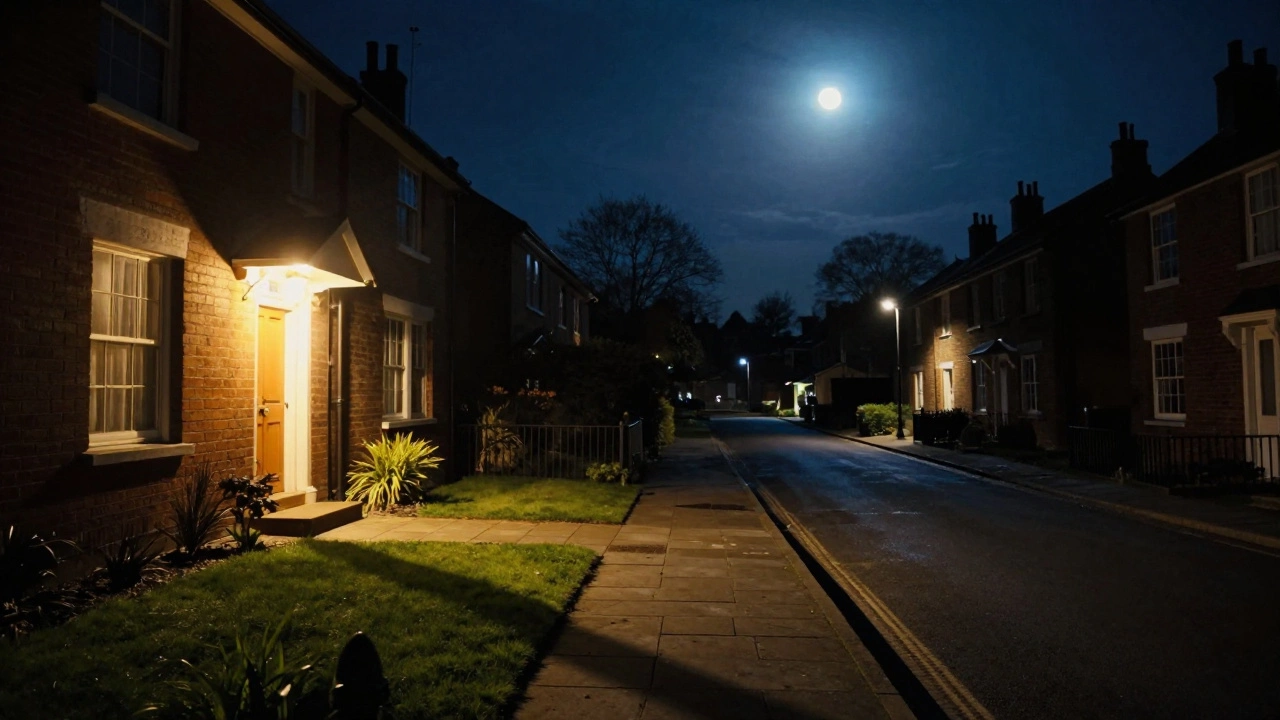
There is a quiet debate happening in neighborhoods everywhere. You pull up to your driveway after a long day, and you see two types of houses. One has a bright beacon shining from the front door, casting long shadows across the lawn. The other sits in total darkness, relying on streetlights to reveal its shape. Which one feels safer? Which one is actually smarter?
The question of whether to leave your porch light on or off at night isn't just about saving electricity. It is a strategic decision that affects your home's security profile, your energy bill, and even the wildlife in your backyard. For decades, the rule was simple: keep it on to scare off burglars. But with modern technology, that binary choice has become outdated. Leaving a light on all night can sometimes signal an empty house, while leaving it off might invite trouble.
We need to look past the old habits and examine what actually works for protecting your home in 2026. The answer lies not in a switch, but in a system.
The Psychology of Burglary and Lighting
To understand if you should leave your light on, you first have to understand how intruders think. Most residential break-ins are opportunistic. They are not planned heists; they are crimes of convenience. A burglar looks for the path of least resistance. Darkness provides cover. It hides their approach, masks their identity, and makes it harder for neighbors or cameras to spot them clearly.
Crime deterrence relies heavily on visibility. When a porch is well-lit, the element of surprise is removed. An intruder knows they are being seen. Studies consistently show that well-lit properties are less likely to be targeted because the risk of detection is higher. However, there is a catch. If your porch light is always on, rain or shine, day or night, it becomes part of the background noise. Intruders learn patterns quickly. If they know your light is always on, they may assume no one is home to change the setting, or they may simply time their approach to avoid the glare.
This is where the concept of Perceived occupancy comes into play. A static light doesn't prove anyone is inside. In fact, some security experts argue that a house with lights on all night, including the living room windows, often signals that the owners are away on vacation. The goal is to create the illusion of activity, not just illumination.
Safety Beyond Security: Navigating Your Entryway
While stopping a break-in is crucial, the most immediate benefit of a porch light is preventing injury. How many times have you fumbled for keys in the dark, only to trip over a loose paver or miss a step? Falls are a leading cause of injury for homeowners, especially older adults.
A lit entryway serves multiple functions:
- Visibility for Visitors: Guests, delivery drivers, and family members arriving late at night need to see the doorbell, the lock, and any obstacles on the path.
- Camera Enhancement: If you have a Video doorbell or security camera, adequate lighting improves image quality. Many cameras struggle in low-light conditions, producing grainy footage that is useless for identification. A porch light acts as a fill light, ensuring faces and license plates are clear.
- Psychological Comfort: Walking into a dark void is unsettling. A warm, welcoming light reduces anxiety for everyone entering the home.
The key here is consistency during active hours. If you are home and awake, the light should be on. If you expect guests, it should be on. This balances safety with the need to avoid predictable patterns.
The Hidden Costs of "Always On"
Leaving a traditional incandescent bulb on all night used to be expensive. Today, with LED technology, the cost is minimal. An LED bulb uses up to 90% less energy than its incandescent counterpart. You might spend less than a dollar a month keeping a single LED porch light on 24/7. So, why do experts still advise against it?
It’s not just about money. It’s about Light pollution and environmental impact. Constant artificial light disrupts local ecosystems. It confuses nocturnal animals, interferes with bird migration, and contributes to skyglow, making it difficult to see stars. In many suburban areas, there is growing pressure to reduce unnecessary nighttime lighting.
Furthermore, constant lighting can reduce privacy. A bright porch light casts light back into your windows, allowing people on the street to see into your living room. You trade exterior security for interior exposure. This is a trade-off many homeowners aren't comfortable with.
The Hybrid Solution: Motion Sensors and Smart Controls
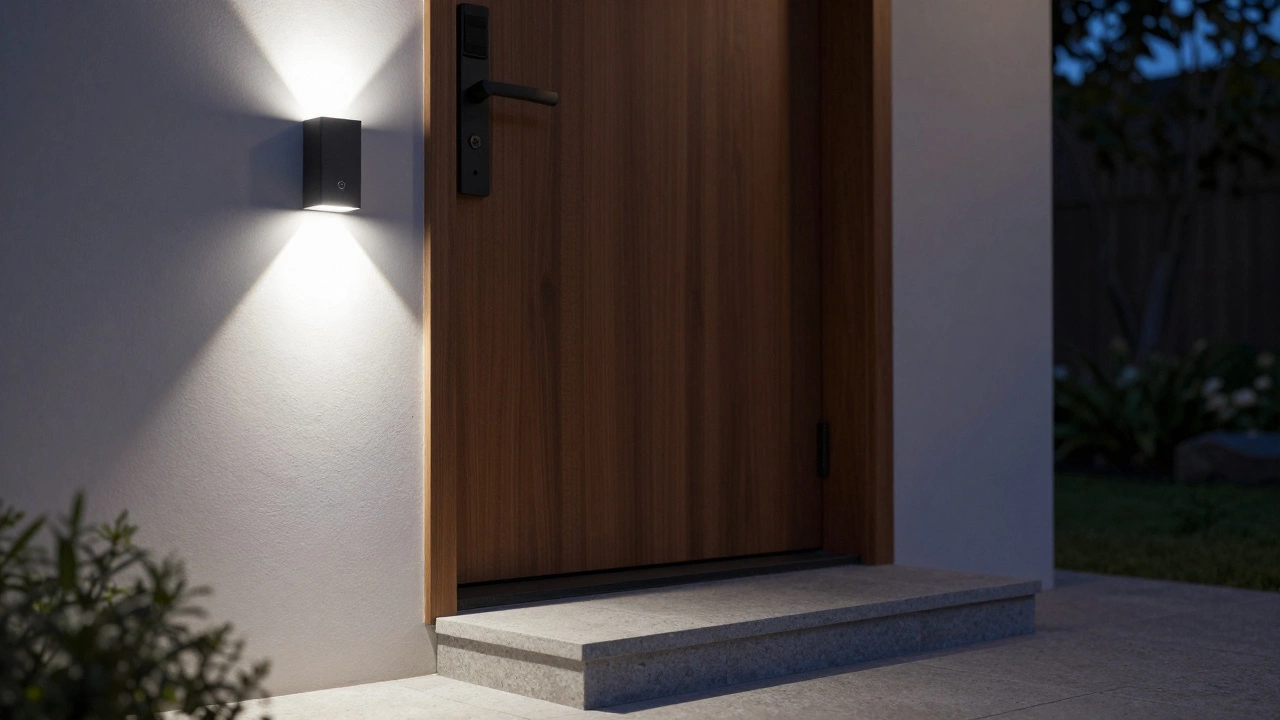
The best approach isn't "on" or "off." It's "smart." Modern home security integrates lighting into a broader ecosystem. Instead of leaving the light on, you use technology to ensure the light is on *when it matters*.
Motion-activated lights are the gold standard for this. Here is why they outperform static lights:
- Surprise Factor: A sudden burst of light startles potential intruders. It draws attention to their location immediately.
- Energy Efficiency: The light only operates when movement is detected, drastically reducing usage.
- Pattern Breaking: Because the light turns on and off based on activity, it mimics human behavior. A burglar cannot predict when the light will activate, which keeps them off-balance.
However, basic motion sensors have flaws. They can trigger too easily (cats, leaves) or fail to detect slow approaches. This is where Smart lighting systems come in. These systems allow you to set schedules. For example, you can program your porch light to turn on automatically at sunset and off at sunrise, but only during the weeks you are on vacation. Or, you can integrate it with your alarm system so that if the alarm is armed, the lights flash or stay on continuously to deter tampering.
| Strategy | Security Value | Energy Cost | Privacy Impact | Best For |
|---|---|---|---|---|
| Always On | Moderate (Predictable) | Low (with LED) | High (Glare inward) | Vacation mode |
| Always Off | Low (Hidden target) | None | High (Dark interior) | Minimalist aesthetics |
| Motion Sensor | High (Surprise element) | Very Low | Low (Brief exposure) | Daily use |
| Smart Scheduled | High (Simulates occupancy) | Low | Controlled | Travel/Absence |
Choosing the Right Brightness and Placement
If you decide to upgrade your lighting, brightness matters. Too dim, and it doesn't help. Too bright, and it creates harsh shadows where intruders can still hide. Experts recommend a range of 800-1100 lumens for a main entryway. This provides ample illumination without blinding you or your guests.
Placement is equally critical. Avoid mounting the light directly above the door if possible, as this casts shadows downward onto the face of anyone standing there. Instead, consider wall-mounted fixtures on either side of the door or angled pathway lights that wash the entry area evenly. Layering your lighting-combining a softer ambient light with a brighter task light triggered by motion-creates a balanced environment that is both safe and inviting.
Integrating with Your Wireless Alarm System
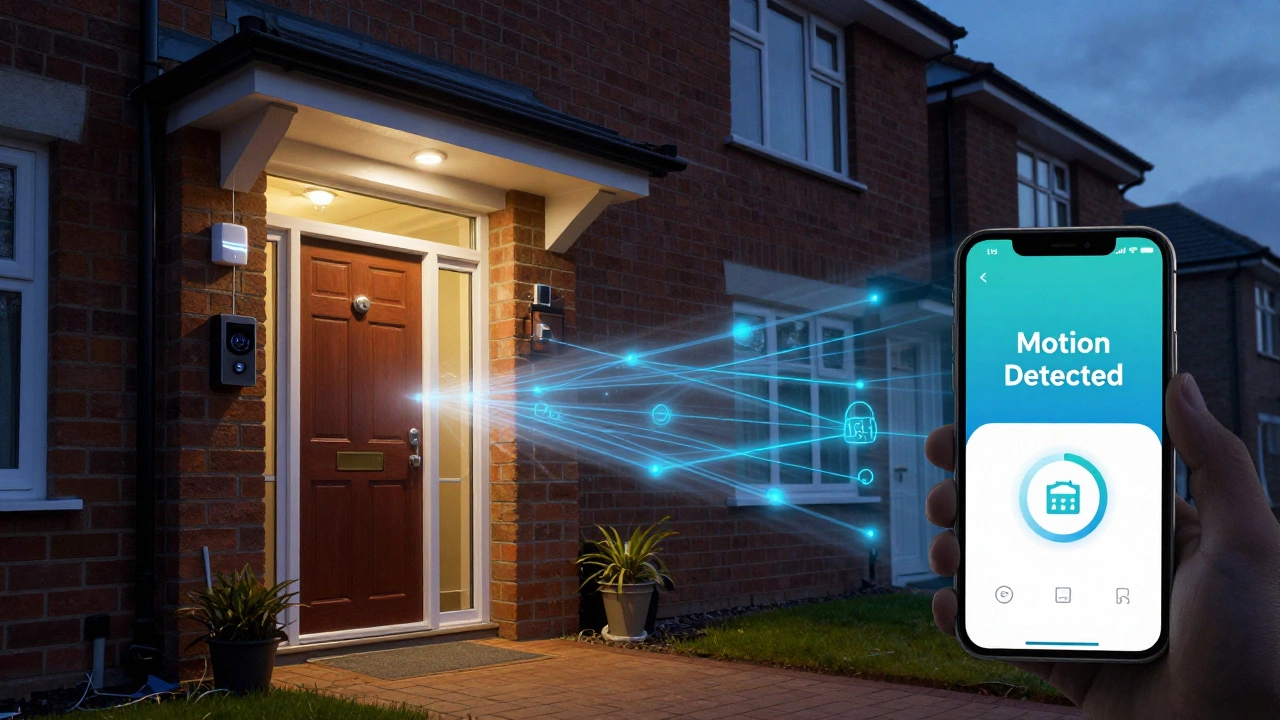
Your porch light shouldn't work in isolation. It is a component of your overall Wireless alarm system. Many modern smart home hubs allow you to link your lights to your security sensors. Imagine this scenario: a window sensor on the ground floor is tripped. Instantly, your porch lights, driveway floodlights, and interior hallway lights all turn on. This does two things: it disorients the intruder and alerts neighbors that something is wrong.
This integration transforms passive lighting into an active defense mechanism. It ensures that your home responds dynamically to threats, rather than relying on a static state of illumination.
Practical Tips for Implementation
Upgrading your porch lighting doesn't require a full electrical overhaul. Start small:
- Swap Bulbs: Replace old bulbs with high-quality LEDs. Look for "warm white" (2700K-3000K) for a welcoming feel or "cool white" (4000K+) for sharper security visibility.
- Add a Sensor: If your current fixture doesn't have a motion sensor, buy a plug-in smart bulb or a retrofit sensor module. These are inexpensive and easy to install.
- Use Timers: If you travel often, use smart plugs to randomize your lighting schedule. Apps can simulate someone moving through the house by turning lights on and off at irregular intervals.
- Check Angles: Ensure your light covers the path from the sidewalk to the door, not just the door itself.
The goal is to create a layered defense. Your porch light is the first line of visual deterrence. By combining it with smart controls and alarm integration, you maximize safety while minimizing waste and environmental impact.
Does leaving the porch light on really stop burglars?
It helps, but it is not a guarantee. Static lighting deters opportunistic criminals who prefer darkness. However, determined intruders may adapt to constant light. Motion-activated lights are generally more effective because they introduce an element of surprise and draw immediate attention to the intruder's presence.
How many lumens do I need for a porch light?
For a standard front porch, 800 to 1100 lumens is ideal. This provides enough brightness to identify visitors and read mail without creating harsh glare or excessive light pollution. If you have a large covered area, you may need higher output or multiple fixtures.
Is it better to use motion sensors or timers?
Motion sensors are better for daily security as they respond to real-time activity. Timers are useful for simulating occupancy when you are away on vacation. The best setup combines both: motion sensors for daily use and randomized timers for periods of absence.
Do LED porch lights save money compared to incandescent?
Yes, significantly. LED bulbs use up to 90% less energy and last much longer than incandescent bulbs. Even if left on all night, the cost difference is minimal, but using LEDs with motion sensors reduces energy consumption to near zero during inactive periods.
Can my porch light connect to my wireless alarm system?
Many modern smart home systems allow this integration. You can configure your alarm to trigger specific lights when a sensor is breached. This enhances security by startling intruders and alerting neighbors. Check compatibility with your specific alarm brand and smart hub.