
When your neighbour’s dog won’t stop barking, it’s not just annoying—it’s a violation of your right to peace at home. A barking dog alarm, a device that detects and responds to excessive canine vocalization with sound or vibration to discourage barking. Also known as dog bark deterrent, it’s a non-confrontational tool used by homeowners to manage noise without escalating tensions. Unlike anti-bark collars that target the dog directly, these alarms work from a distance, triggering only when barking exceeds a set threshold. They’re designed to interrupt the behaviour, not punish the animal, making them a preferred option for those who want results without cruelty.
These devices relate closely to pet-friendly alarms, security systems that ignore pet movement or noise to avoid false triggers, which use advanced sensors to tell the difference between a dog’s bark and a human’s footsteps. Many modern barking dog alarms use the same PIR or audio-pattern recognition tech found in home security systems. But here’s the catch: they’re not magic. If the dog is barking due to anxiety, boredom, or territorial behaviour, the alarm alone won’t fix the root cause. That’s why local councils and animal welfare groups often recommend combining alarms with noise complaint procedures and, if needed, talking to the owner.
You might wonder: can you actually call the police for a barking dog? In the UK, yes—but only after documenting the issue and contacting your local council first. Police rarely intervene unless there’s a breach of the Anti-Social Behaviour Act, and even then, they’ll push you toward the environmental health team. That’s why so many people turn to barking dog alarms as a first step. They’re legal, affordable, and silent to you—only the dog hears the deterrent. And unlike shouting out the window or leaving nasty notes, they give you control without conflict.
What most people don’t realize is that these alarms work best when paired with other tactics. Motion-activated outdoor lights can startle dogs into silence. Soundproofing your fence or adding white noise indoors reduces the impact. And if the barking happens at night, timing matters—many alarms have scheduling features to only activate during quiet hours. You’re not just buying a device; you’re building a layered solution.
Below, you’ll find real advice from people who’ve been where you are: dealing with noisy neighbours, weighing legal options, and testing different devices. Some swear by ultrasonic deterrents. Others found success only after filing a formal noise complaint. A few even discovered their dog’s barking was triggered by the neighbour’s alarm system—ironic, but true. These aren’t theory pieces. They’re stories, data, and practical fixes from real homeowners who got their peace back—without a lawsuit.
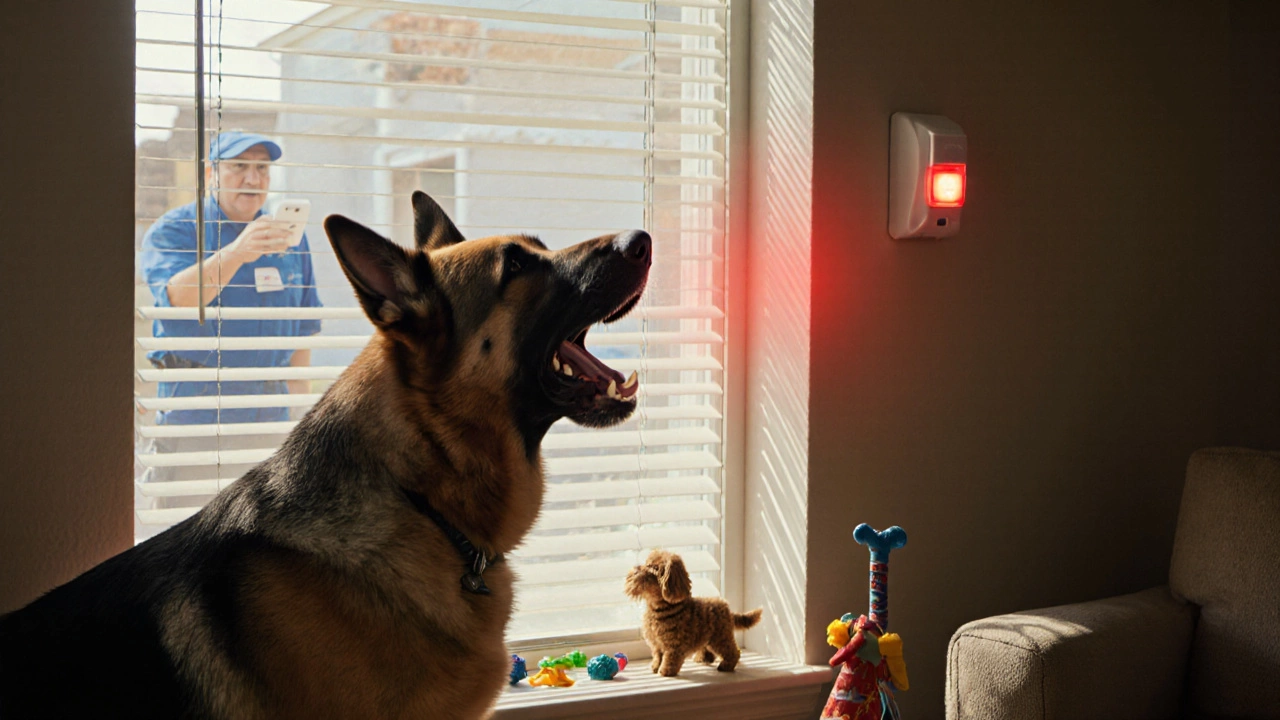
A barking dog can set off traditional alarms, but modern pet-friendly systems use advanced filtering to ignore pet sounds. Learn how they work, which ones actually work, and how to avoid false alarms.