
When your false alarms from dogs, triggered by pets moving through motion detection zones, causing unnecessary alerts and police dispatches. Also known as pet-triggered alarms, they’re one of the top reasons people disable their security systems entirely. You’re not alone. Many homeowners install alarms hoping for peace of mind, only to get frustrated when their dog walks past the sensor at 3 a.m. and the siren blares. The problem isn’t your dog—it’s the system you’re using.
Most standard motion sensors, especially PIR sensors, passive infrared sensors that detect heat movement and are commonly used in home alarms, can’t tell the difference between a person and a pet. Even small dogs or cats can set them off. That’s why pet-friendly alarms, alarm systems designed to ignore small animals while still detecting human intruders exist. But not all are created equal. Some just lower sensitivity, which means they might miss a real burglar. Others use dual-tech sensors that combine PIR with microwave detection, reducing false triggers by requiring both heat and movement to trigger. The best ones even let you set weight thresholds—so a 15-pound dog won’t set it off, but a 100-pound person will.
It’s not just about the sensor type. Placement matters. Mounting sensors too low, near pet pathways, or in rooms where your dog sleeps can turn your alarm into a daily annoyance. Even something as simple as a draft from a vent or sunlight hitting a floor can confuse older sensors. And if you’ve got a dog that jumps on furniture or runs through the hallway after dinner? That’s a recipe for constant false alarms. You don’t need to ban your pet from the house—you need smarter tech.
Some people try anti-bark collars thinking that’ll help, but that’s fixing the symptom, not the cause. If your dog barks and triggers the alarm, it’s not the bark—it’s the motion. The real fix is matching your alarm system to your home’s layout and your pet’s behavior. That’s why posts here cover everything from PIR sensor disadvantages to how to choose the right motion sensor type, whether it’s microwave, ultrasonic, or dual-tech. You’ll also find advice on where to install sensors so your dog doesn’t trigger them, and how to test your system before you rely on it.
And if you’re using a smart system like Ring or Vivint, you’re probably wondering: do these systems handle pets better? Some do, with AI-powered pet detection, but it’s not foolproof. Camera-based systems can help, but they rely on good lighting and clear views. If your dog runs fast or the camera angle is off, it still misses the call. The truth is, no system is perfect—but with the right setup, you can cut false alarms by 80% or more.
Below, you’ll find real-world guides from people who’ve been there. Whether you’re dealing with a hyperactive pup, a senior dog that wanders at night, or just want to stop the police showing up for no reason, the posts here give you the exact steps to fix it—no fluff, no theory, just what works.
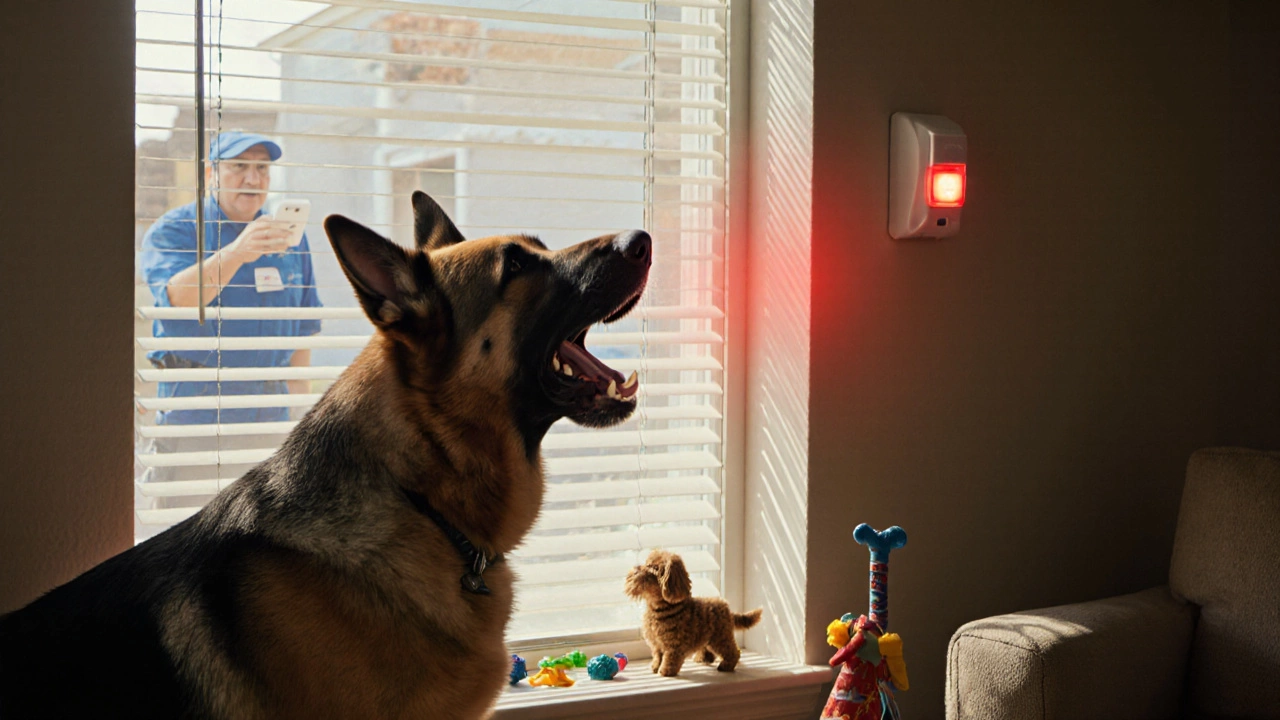
A barking dog can set off traditional alarms, but modern pet-friendly systems use advanced filtering to ignore pet sounds. Learn how they work, which ones actually work, and how to avoid false alarms.