
When your home alarm system, a network of sensors, control panels, and communication tools designed to detect intrusions and alert homeowners. Also known as burglar alarm system, it's meant to give you peace of mind—but too often, it just gives you stress. You hear that loud siren at 3 a.m. and rush downstairs, only to find your dog just barked. Or your alarm goes off because the cat walked past the sensor. Maybe your phone stopped sending alerts when the WiFi went down. These aren’t rare glitches—they’re home alarm system problems that happen to nearly everyone at some point.
False alarms are the biggest headache. A PIR sensor, a motion detector that senses body heat, commonly used in home security systems might trigger from a draft, a heating vent, or even sunlight moving across the floor. Pet owners face extra trouble: standard sensors can’t tell the difference between a burglar and a Labrador. That’s why pet-friendly alarm, a security system designed to ignore pets under a certain weight or movement pattern systems exist—they use smarter filtering, like dual-tech sensors or height-based detection, to avoid waking the whole neighborhood over a cat nap.
Then there’s connectivity. If your alarm relies on WiFi, a power outage or router glitch can leave you blind. WiFi alarm outage, a situation where a smart alarm system loses internet connection and stops sending remote alerts doesn’t mean your system is dead—many still sound locally and record to a backup drive—but you won’t get that push notification. And if you’re counting on your phone to arm or disarm the system, you’re one bad signal away from vulnerability.
Even the best systems have weak spots. A sensor covered in dust, a dying battery in a door contact, or a camera with a blocked lens—all these small things add up. And if you didn’t test your system after installation, you might not even know it’s failing until it’s too late. Most people think once it’s installed, it’s set and forget. But alarms need checkups, just like your car.
You’re not alone in this. Over half of homeowners with alarms report false alarms at least once a month. And nearly a third say their system failed during a real incident because of a simple glitch. The good news? Almost every problem has a fix. You don’t need to replace your whole system. Sometimes it’s just repositioning a sensor, switching to a cellular backup, or adjusting the sensitivity settings. Other times, it’s choosing a different type of motion detector altogether—like microwave or ultrasonic—instead of relying on PIR alone.
What you’ll find below are real stories and solutions from people who’ve been there. From why your Ring alarm goes silent during WiFi outages, to how to stop your dog from setting off the alarm, to whether thermal cameras can actually help (spoiler: no, they can’t see through walls). These aren’t theory pieces—they’re practical fixes based on what actually works in homes across the UK. No fluff. No jargon. Just what to check, what to change, and what to ignore.
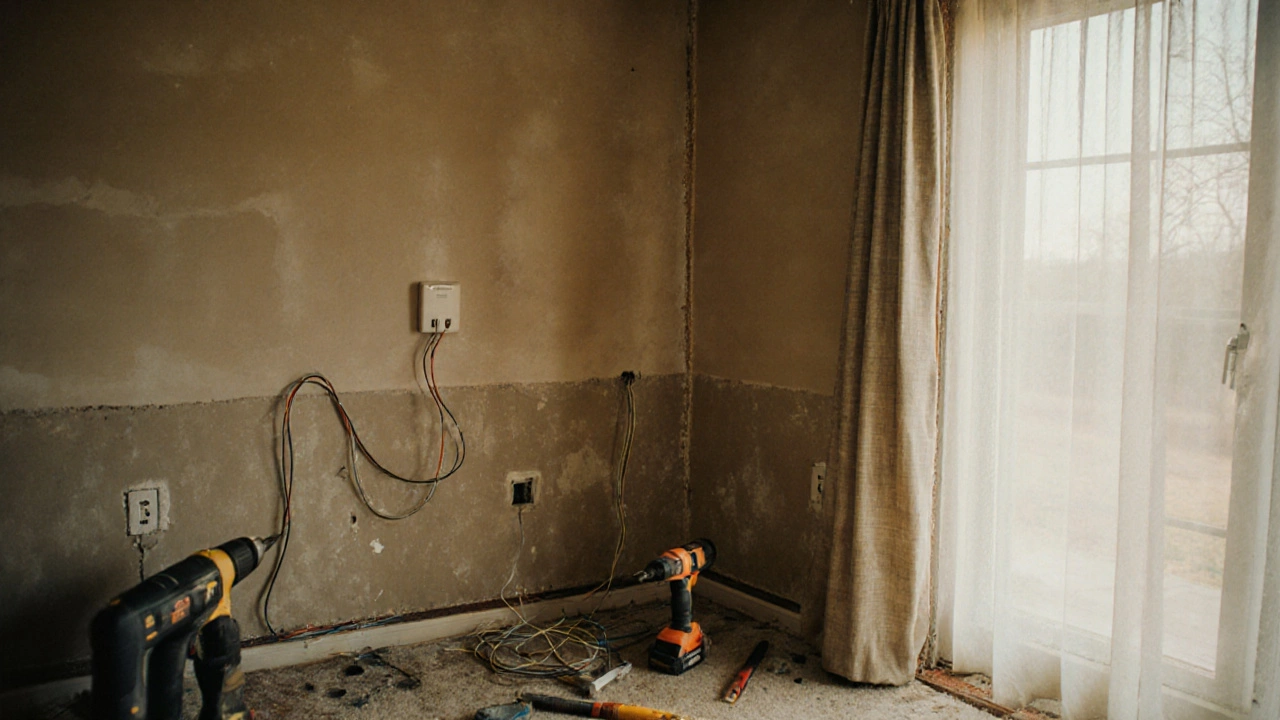
Wired alarm systems are outdated for most homes. They’re expensive to install, hard to move, ugly to look at, and easy to disable. Wireless systems now outperform them in reliability, cost, and features.