
When you think of home security, you probably imagine cameras, alarms, or motion sensors—but solar security lights, outdoor lighting systems powered by sunlight that activate when motion is detected. Also known as solar-powered outdoor lights, they’re one of the simplest and most effective ways to deter intruders without running wires or paying for electricity. Unlike traditional floodlights that stay on all night, solar security lights only turn on when someone approaches. That means they save energy, avoid light pollution, and surprise potential burglars with sudden illumination—exactly what most criminals aren’t prepared for.
These lights don’t just shine—they work as part of a larger security strategy. Many models now include built-in motion sensor lights, devices that detect movement using infrared or microwave technology to trigger illumination, which ties directly into how alarm systems respond to activity. Some even come with integrated solar-powered cameras, small surveillance units that run on solar energy and record video when motion is sensed, giving you both light and footage without needing a power outlet. You don’t need a full CCTV setup to benefit—just a few well-placed solar lights along your driveway, back gate, or side path can make your home look far more monitored than it actually is.
What makes them stand out isn’t just the tech—it’s the simplicity. No electrician. No monthly bills. No messy cables snaking across your yard. They charge all day, turn on at night, and only activate when something moves. That’s why they’re so popular in the UK, where long winter nights and unpredictable weather demand reliable, low-maintenance solutions. And unlike battery-powered lights that die after a few months, quality solar models use high-efficiency panels and long-life batteries that last years. Some even work in cloudy conditions, thanks to improved photovoltaic tech.
But not all solar lights are created equal. If you pick one with weak sensors, it might turn on every time a cat walks by—or worse, stay dark when a person actually approaches. Look for models with adjustable sensitivity, weatherproof ratings (IP65 or higher), and bright LED output (at least 800 lumens). Pair them with motion sensors that cover wide angles, and you’ve got a system that works like a silent alarm: no noise, just light that says, “I see you.”
They’re not just for homes. Small businesses, garages, sheds, and even rural properties use them to cut costs and improve safety. And because they’re easy to install, you can move them around as your needs change—no drilling, no rewiring. If you’ve ever worried about dark corners where someone could hide, or wondered how to make your driveway safer without spending thousands, solar security lights are the answer.
Below, you’ll find real-world insights on how these lights perform in different conditions, how they compare to other outdoor lighting options, and what to avoid when buying one. Whether you’re looking to upgrade your driveway lighting, reduce energy use, or simply make your property less inviting to troublemakers, the posts here give you the facts—not the fluff.
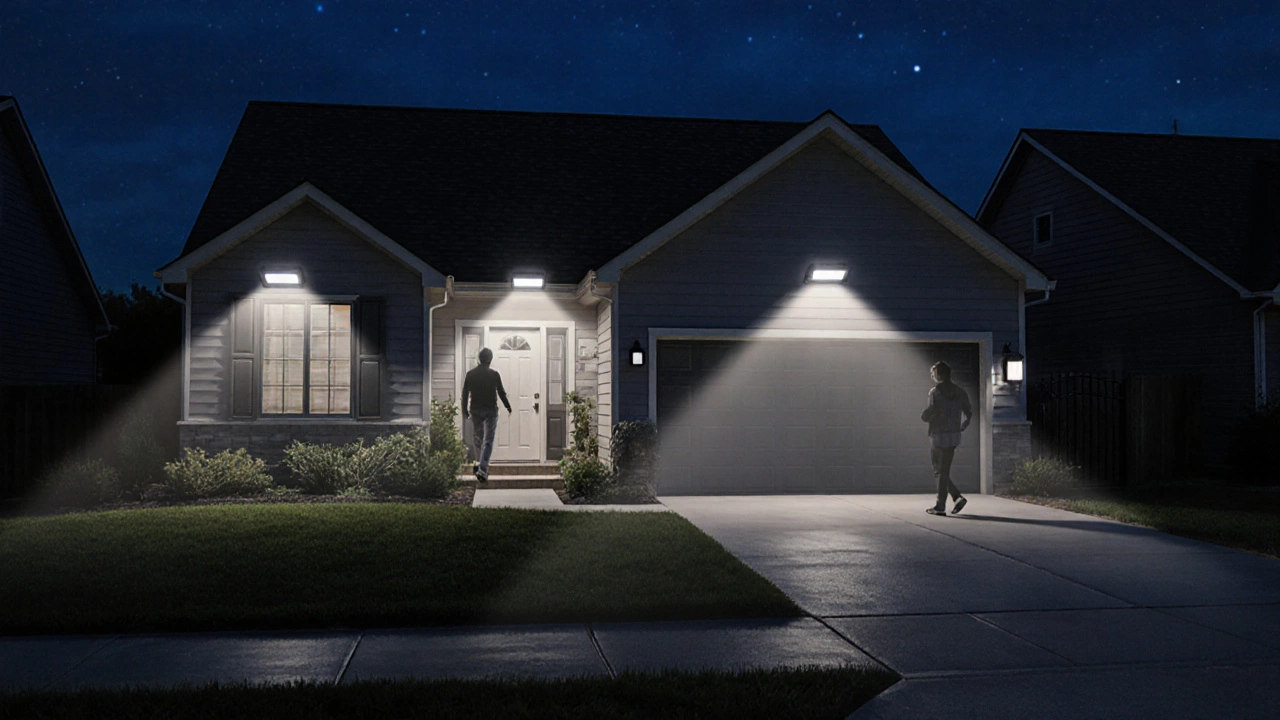
Learn how to choose outdoor security lighting that actually works-covering brightness, color temperature, motion sensors, solar vs. hardwired, placement, and real-world tips for 2025. Stop guessing. Start protecting.