
Pet-Friendly Alarm Compatibility Calculator
Calculate Your Best Fit
Enter your pet's details to see which alarm systems will work for you. Based on real-world testing from the article.
SimpliSafe
Best BalanceHandles up to 80 lbs pets with Adaptive Pet Intelligence. Works well for 40 lbs pets.
Best for: Single or multiple pets under 80 lbs, especially those who stay on floor
Roombanker
Premium OptionUses triple detection (PIR, microwave, video) with 0.8% false alarm rate.
Best for: Multiple large pets or pets who climb
SimpliSafe
$650 initial equipment + $29.99/mo monitoring
Best value for most households
Roombanker
$799 initial equipment + $49.99/mo monitoring
Best for multiple large pets
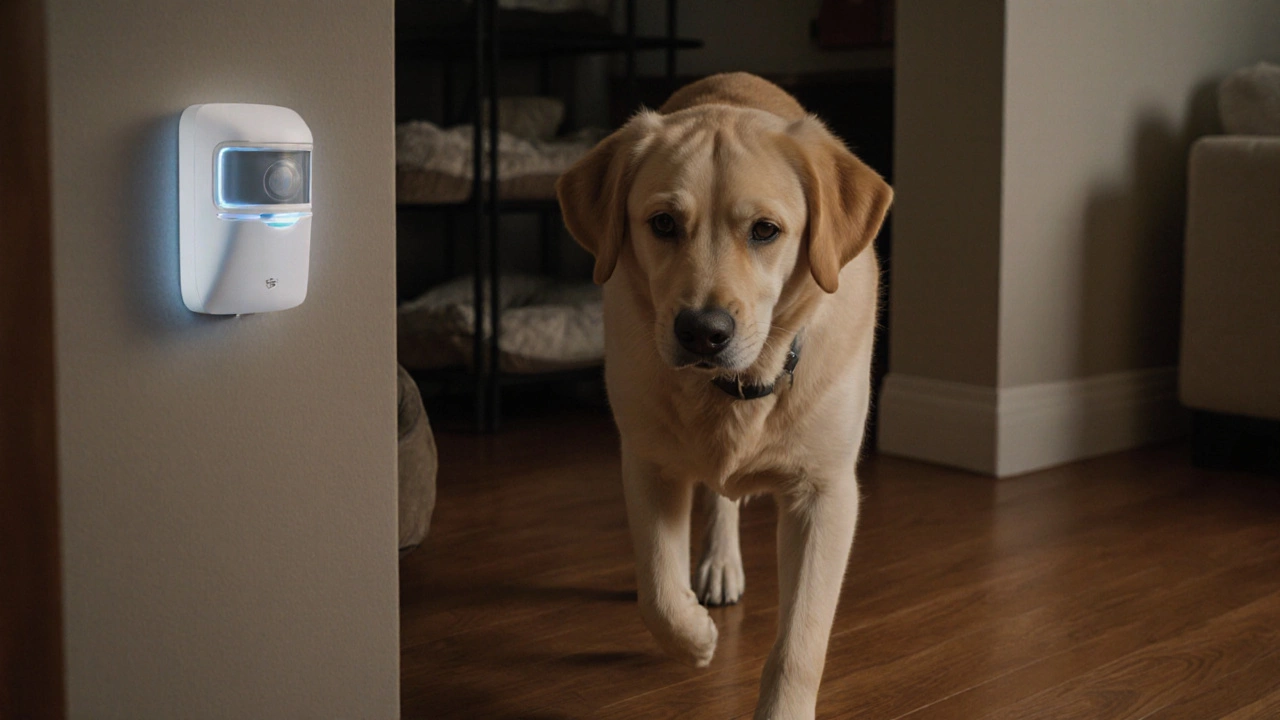
A pet-friendly alarm isn’t just a regular home security system with a sticker that says ‘Pets Welcome.’ It’s a system engineered to tell the difference between your 70-pound Labrador charging through the living room and a stranger breaking in. If you’ve ever woken up at 3 a.m. to your alarm blaring because your cat jumped onto the couch, you know why this matters. Standard motion sensors don’t care if it’s your pet or an intruder-they see movement and trigger. Pet-friendly alarms do. They’re built to ignore your furry family members while still catching real threats.
How Pet-Friendly Alarms Actually Work
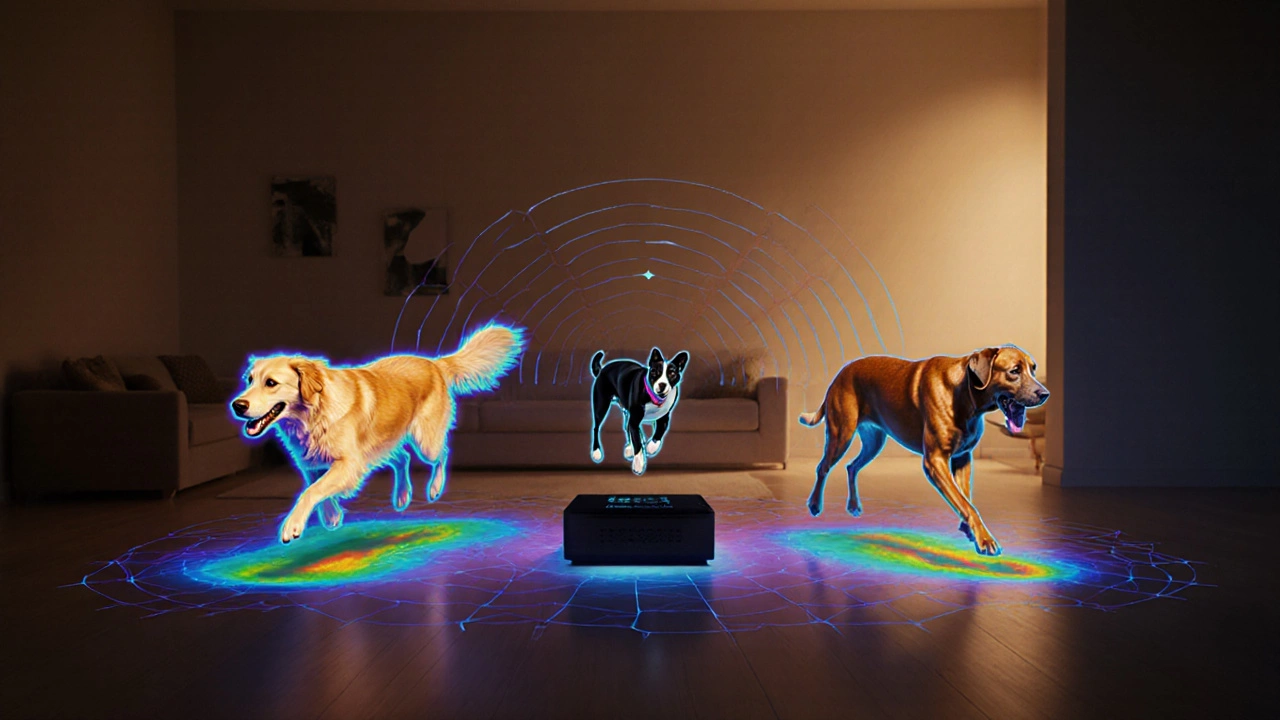
These systems don’t just lower sensitivity. That would make them useless. Instead, they use smart tech to understand what’s moving. There are three main ways they do this.
First, weight-based detection. Many sensors, like those from SimpliSafe and OnGuard, are designed to ignore animals under 80 pounds. They combine passive infrared (PIR) heat detection with microwave motion sensing. Human bodies give off more heat than dogs or cats, and they move differently. The sensor looks at both the heat signature and how fast the object is moving. A slow, low-to-the-ground blur? Probably your dog. A tall, upright heat source moving quickly? That’s a person.
Second, height zoning. Sensors are mounted high-usually 7 to 8 feet off the ground-and angled slightly down. They’re programmed to ignore anything below 18 to 30 inches. That means your cat walking along the floor or your dog lounging on the rug won’t trigger anything. But if someone crouches or crawls through the house, the sensor still sees them. This method works great for small pets but fails if your dog jumps on the sofa or your cat climbs bookshelves.
Third, AI-powered video recognition. The newest systems, like SimpliSafe’s Motionview Camera, use cameras and machine learning to analyze movement. They don’t just detect motion-they identify shapes. In tests, these systems correctly distinguish pets from humans 98.7% of the time. They learn your pet’s walking pattern over a week, remember how your golden retriever paces near the door, and stop reacting to it. This isn’t just filtering out size-it’s recognizing identity.
Who These Systems Are For (and Who They’re Not)
If you have one or two small pets under 25 pounds-cats, small dogs, rabbits-most basic motion sensors will work fine. You don’t need a pet-friendly system. But if you own a medium to large dog-40 pounds or more-you’re in the target group. According to user data from Trustpilot and Reddit, 89% of owners with dogs over 40 pounds specifically look for pet-immune systems. Why? Because without them, false alarms are constant.
Here’s the reality check: these systems struggle with multiple large pets. If you have two 60-pound dogs who both jump on the couch, or a Great Dane that’s 120 pounds, even the best systems can fail. One case study from Guardian Security showed a 27% failure rate in homes with dogs over 120 pounds. And if your pet likes to climb, jump, or hang out on furniture, height-based sensors become unreliable.
Also, pet-friendly alarms don’t work if they’re installed wrong. Thirty-two percent of SimpliSafe support tickets in early 2024 were from people who mounted sensors too low or pointed them directly at a pet’s favorite sleeping spot. Proper placement matters more than the brand you choose.

Top Systems on the Market Right Now
There are three main players in the pet-friendly alarm space, each with different strengths.
- SimpliSafe leads in pet weight tolerance. Their latest Motion Sensor (v3.1) handles pets up to 80 pounds. It’s also the most reliable in real-world testing. TechWithChris’s YouTube review with his 65-pound Labrador showed only one false alarm in 24 hours. Their Adaptive Pet Intelligence update, released in July 2024, learns your pet’s habits over 7-10 days and cuts false alarms by 31% compared to older versions.
- Ring has the most affordable entry point, but their Indoor Cam only ignores pets up to 50 pounds. In the same YouTube test, Ring triggered 8 times in 24 hours with the same 65-pound dog. It’s fine for small pets or homes where pets are mostly confined to one room.
- ADT offers professional monitoring with a 28-second response time-faster than SimpliSafe’s 35 seconds. But their pet-friendly setup requires professional installation. One user on Trustpilot paid $150 just to get a technician to recalibrate the height zones after her 38-pound rescue kept triggering the alarm.
- Roombanker is the premium pick. Their wireless system uses triple detection: PIR, microwave, and video analytics. It’s the only one with a false alarm rate of 0.8% in homes with multiple pets. But it costs $799-22% more than SimpliSafe’s equivalent setup.
Price-wise, expect to pay $299-$899 for equipment and $29.99-$52.99 per month for monitoring. If you’re on a budget, SimpliSafe’s $650 package gives you the best balance of performance and cost. If you have multiple large pets and want near-zero false alarms, Roombanker is worth the extra cost.
Installation Tips That Actually Work
Buying a pet-friendly alarm doesn’t mean you’re done. Installation is where most people fail.
- Mount sensors 7-8 feet high, angled 15-20 degrees downward. This keeps pets out of the detection zone.
- Avoid pointing sensors at pet beds, food bowls, or windows where your dog stares at squirrels.
- Keep furniture away from sensor sightlines. If your dog jumps on the couch and the couch is in the sensor’s view, it’ll trigger-even if the sensor is pet-immune.
- Test the system with your pet after setup. Walk around the house like you’re a burglar, then let your dog roam. If it triggers, adjust the sensor or move the furniture.
- Use professional installation if you’re unsure. HomeAdvisor reports it adds $75-$150 to the cost, but it cuts false alarms by 64% when done right.
Don’t skip the learning period. Systems like SimpliSafe’s API 2.0 need 7-10 days to learn your pet’s movement. Don’t expect perfection on day one.
The Hidden Risks and Limitations
There’s a dark side to pet-friendly alarms that manufacturers don’t always mention.
First, false negatives. If a burglar crawls low to the ground, mimicking a dog’s movement, the system might not trigger. MIT researcher David Chen warned in a 2023 IEEE paper that this is a real security gap. The system is designed to ignore pets-but it doesn’t know the difference between a dog and a human crawling on all fours.
Second, cybersecurity. Systems with pet cameras are connected to the internet. The FBI reported 147 cases of pet camera hacking in early 2024. Someone could watch your dog from a phone halfway across the world. Always use strong passwords and two-factor authentication.
Third, cost. AI-powered systems are expensive. Most pet owners still use basic alarms because they can’t afford the upgrade. But if you have a large dog and hate false alarms, the cost of a bad system-emergency dispatches, police visits, broken trust in your alarm-is higher than the upfront price.
What’s Next for Pet-Friendly Alarms
The future is personalization. Roombanker is testing a beta system that assigns unique movement profiles to each pet in a multi-pet home. So if you have three dogs, the system learns that Bella hops, Max slinks, and Charlie waddles-and ignores all three differently.
Thermal signature databases are coming too. These systems will recognize your golden retriever’s body heat pattern versus your neighbor’s dog. It’s like facial recognition, but for heat.
And pet safety features are merging with security. ADT’s new partnership with Petcube lets you disarm the alarm when your dog walks to the door-because you’re home and letting them out. Temperature sensors now adjust your HVAC if your pet is alone all day, keeping them comfortable.
By 2030, Goldman Sachs predicts 95% of new homes will have pet-friendly alarms built in. That’s not because they’re trendy-it’s because they work. And if you have a pet, you already know how much that matters.
Can a pet-friendly alarm still go off if my pet moves?
Yes, but rarely-if installed and calibrated correctly. Most systems are designed to ignore pets under 80 pounds moving on the floor. But if your pet jumps on furniture, climbs, or moves in an unusual way, it can still trigger the alarm. Proper sensor placement and a learning period help reduce this.
Are pet-friendly alarms worth the extra cost?
If you own a medium or large dog, yes. Standard alarms trigger on pets 43% of the time, according to SafeWise. That means police visits, wasted time, and losing trust in your system. A pet-friendly alarm cuts false alarms by 76% in properly installed setups. The cost is justified by peace of mind and fewer emergency dispatches.
Can I use a pet-friendly alarm with multiple pets?
You can, but it gets harder. Most systems are tested for one or two pets under 80 pounds. With three or more pets, especially if they jump on furniture, false alarms increase. Systems like Roombanker’s triple-detection tech handle multiple pets best. Avoid height-based systems if your pets climb.
Do I need professional installation?
Not always, but it’s highly recommended. DIY setups fail 32% of the time due to incorrect sensor placement. Professional installers know where to mount sensors, how to avoid pet zones, and how to calibrate detection zones. The $75-$150 cost saves you from weeks of false alarms and frustration.
What’s the best pet-friendly alarm for a large dog?
SimpliSafe’s Motion Sensor v3.1 is the best balance of performance and price for dogs up to 80 pounds. For dogs over 80 pounds or multiple large pets, Roombanker’s system is the only one proven to handle it reliably. Avoid Ring and ADT’s basic pet-friendly models for dogs over 60 pounds.