

Home Security Value Calculator
Choose Your Home Situation
Answer these questions to see which alarm system provides the best value for your home.
When it comes to protecting your home, not all alarms are created equal. A loud siren might scare off a burglar, but if no one hears it-or if the system keeps going off because your dog walked by-how effective is it really? The truth is, the most effective alarm system isn’t just about noise. It’s about reliability, speed, and intelligence. As of 2025, the clear winner is a monitored alarm system with AI-powered video analytics.
Why Most Alarms Fail
You’ve probably heard stories about people who had alarms but still got robbed. Or worse-had their alarm go off at 3 a.m. every night because the cat jumped on the sensor. That’s not security. That’s noise pollution with a price tag. Basic unmonitored alarms, like the cheap $80 kits you find online, rely on you to notice the alert on your phone. But what if you’re asleep? On vacation? Forgot to arm the system? These systems have a 68% customer retention rate after three years, according to Security.org’s 2025 analysis. That’s because people get tired of false alarms and unreliable performance. Even wireless systems that seem convenient can fail. In homes over 5,000 square feet, signal degradation can reduce effectiveness by 30%. Batteries die. Wi-Fi goes down. And without professional backup, your alarm becomes a glorified doorbell chime.The Gold Standard: Monitored Alarms with AI
The most effective alarm system today combines two key features: professional monitoring and artificial intelligence. Professional monitoring means a live person at a central station is watching your system 24/7. When the alarm triggers, they don’t just wait for you to call. They immediately verify the threat-using video feeds, sensor data, and even voice confirmation-and dispatch police or emergency services within seconds. ADT’s SMART Monitoring system, tested by Security.org in January 2025, has an average police dispatch time of just 30 seconds. That’s faster than most people can dial 911. In one real case reported on Reddit, a homeowner’s police response was four minutes faster than with a previous unmonitored system-and the intruder was caught before entering the house. But monitoring alone isn’t enough. False alarms kill trust. That’s where AI comes in. Modern systems like those from ADT, Vivint, and Ring now use AI-powered video analytics to distinguish between humans, pets, and environmental triggers like blowing curtains or passing cars. According to Allied Home Security’s March 2025 technical analysis, these systems reduce false alarms by 70% compared to older motion sensors. This isn’t marketing fluff. It’s backed by data. Dual-technology sensors that require both heat and motion to trigger have cut false alarms by 65%. AI doesn’t just detect movement-it understands context.Wired vs. Wireless: Which Is More Reliable?
Some people swear by wired systems. And for good reason. Wired alarms have a 99.99% uptime, according to Allied Home Security’s March 2025 report. They can’t be jammed. They don’t rely on batteries. They’re immune to Wi-Fi outages. But here’s the catch: installing them is invasive. It takes 8 to 12 hours. You’re drilling holes, running wires through walls, and often paying $1,200 to $2,500 for professional installation. That’s fine for new builds or major renovations-but not for most homeowners. Wireless systems, on the other hand, install in 2 to 4 hours. You stick sensors to walls. Snap cameras on shelves. Sync everything with your phone. SimpliSafe and Ring made this easy, and that’s why DIY systems now control 43% of the residential market. The trade-off? Wireless systems can suffer from signal interference, especially in large homes or homes with thick walls. Battery replacement is required every 1 to 3 years. And if your internet goes down, you lose remote access-unless you have a backup like Ring Alarm Pro, which now includes built-in cellular and Wi-Fi failover.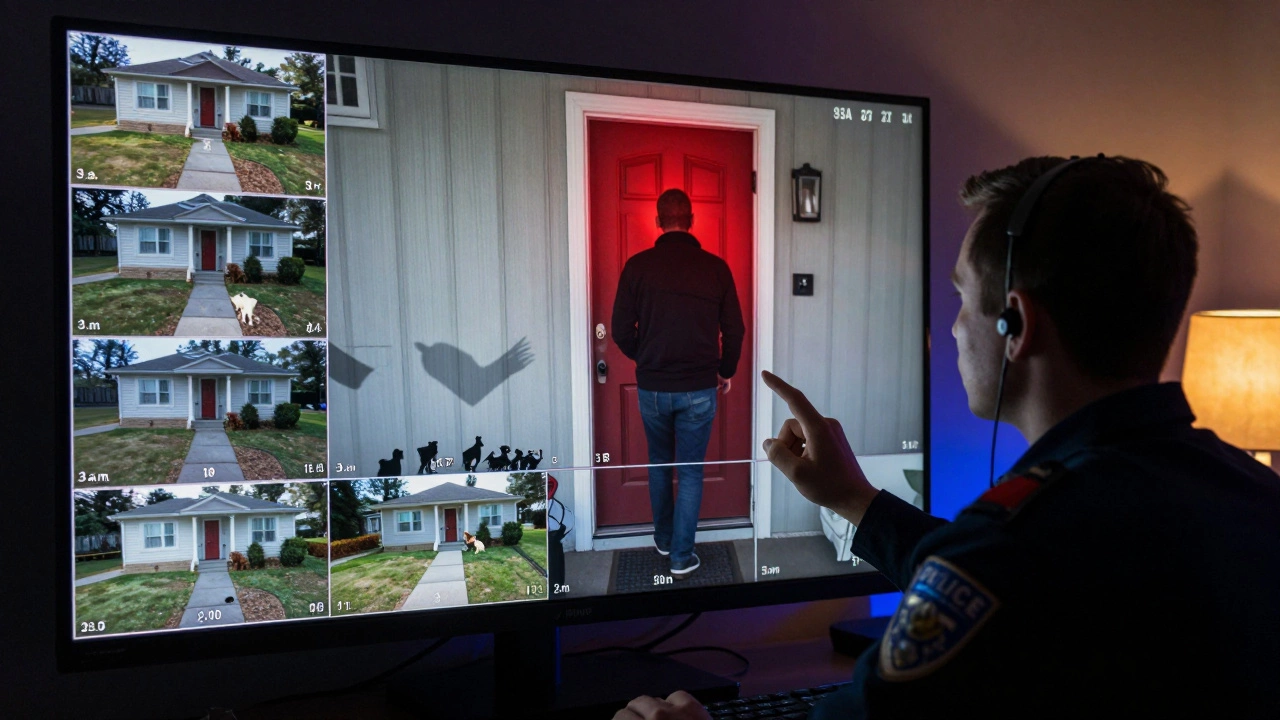
Smart Features That Actually Matter
Not every “smart” feature is useful. A camera that lets you talk to someone at the door is great. A system that sends you 15 alerts a day because the wind blew a trash can over? Not so much. The smart features that deliver real value:- AI-powered human detection: Filters out pets, shadows, and cars.
- Automated arming/disarming: Uses geofencing to know when you leave or return home.
- Video verification: The monitoring center sees the video feed before calling police-reducing false dispatches.
- Backup connectivity: Cellular or local storage so the system works even if the internet dies.
Costs and Value: What You’re Really Paying For
Let’s talk money. You can buy a basic wireless kit for under $100. Kangaroo, Roku, and Wyze all offer them. But here’s the problem: Consumer Reports found that 65% of these budget systems lack proper encryption. Your data could be exposed. Your video feeds could be hacked. Professional systems cost more-but they’re worth it.- DIY systems: $100-$200 upfront. Monitoring: $10-$30/month.
- Professional systems: $1,200-$2,500 upfront (installation included). Monitoring: $30-$50/month.

Who Should Choose What?
If you’re trying to decide, here’s a simple guide:- Choose ADT or Vivint if you want the fastest response, don’t mind professional installation, and want the most reliable system. Best for families, older adults, or anyone who wants hands-off security.
- Choose SimpliSafe if you want easy setup, strong deterrents (their visible panels scare off intruders), and don’t need video integration. Best for renters or those who move often.
- Choose Ring Alarm Pro if you want video doorbells, backup internet, and don’t mind paying a bit more for tech features. Best for tech-savvy users who want cameras and automation.
- Avoid budget systems under $100 if data privacy and reliability matter to you. They’re not worth the risk.
What’s Next? The Future of Alarms
By 2027, Gartner predicts 75% of security systems will use machine learning to predict threats-not just react to them. That means your alarm will learn your routine. It’ll know when your teenager comes home late. It’ll flag when a stranger lingers near your garage. It’ll even alert you if your elderly parent hasn’t moved around the house for hours. The future isn’t just smarter alarms. It’s predictive protection. Right now, the most effective alarm system is the one that combines professional monitoring with AI detection. It’s fast. It’s accurate. It works when you can’t. And in a world where every second counts, that’s not just smart-it’s essential.Are wired alarm systems better than wireless ones?
Wired systems are more reliable, with 99.99% uptime and no risk of signal jamming or battery failure. But they require professional installation, take 8-12 hours, and cost $1,200-$2,500. Wireless systems are easier to install, cheaper upfront, and scalable-but they can suffer from signal issues in large homes and need regular battery replacements. For most homeowners, modern wireless systems with cellular backup offer the best balance of reliability and convenience.
Do AI alarms really reduce false alarms?
Yes. AI-powered video analytics can distinguish between humans, pets, and environmental triggers like moving shadows or wind-blown objects. According to Allied Home Security’s March 2025 report, these systems reduce false alarms by 70% compared to older motion sensors. Systems using dual-technology sensors (heat + motion) cut false alarms by 65%. This means fewer midnight alerts and more trust in your system.
Is professional monitoring worth the monthly cost?
If your goal is real protection-not just noise-then yes. Professional monitoring reduces emergency response time by 45-60%, according to Safe and Sound’s 2025 guide. ADT’s system dispatches police in an average of 30 seconds. That speed can mean the difference between stopping a break-in and recovering from one. Customer retention for monitored systems is 92% after three years, compared to 68% for self-monitored ones. The monthly fee buys peace of mind that no app alert ever can.
Can I install a smart alarm system myself?
Absolutely. Systems like SimpliSafe, Ring Alarm, and Eufy are designed for DIY installation and can be set up in 2-4 hours. However, Consumer Reports found that 65% of users still need at least one technical support call during setup. If you’re comfortable with apps and Bluetooth pairing, DIY works. If you want guaranteed performance and zero hassle, professional installation (like ADT or Vivint) is the safer choice.
What’s the best alarm system for renters?
SimpliSafe is the top choice for renters. It’s fully wireless, requires no drilling, and can be taken with you when you move. Its visible panels and loud siren deter intruders, and it offers professional monitoring for $17.99/month. Unlike systems tied to hardwired sensors or permanent installations, SimpliSafe gives you full control without violating lease agreements.
Are cheap alarm systems under $100 safe?
Not reliably. Consumer Reports found that 65% of budget alarm kits under $100 lack proper encryption, leaving video feeds and sensor data vulnerable to hacking. They also have higher false alarm rates and no professional monitoring. For under $100, you’re buying a toy-not a security system. If you’re serious about safety, invest in a system with UL 2050 certification and FCC Part 15 compliance, which 89% of top brands meet.