
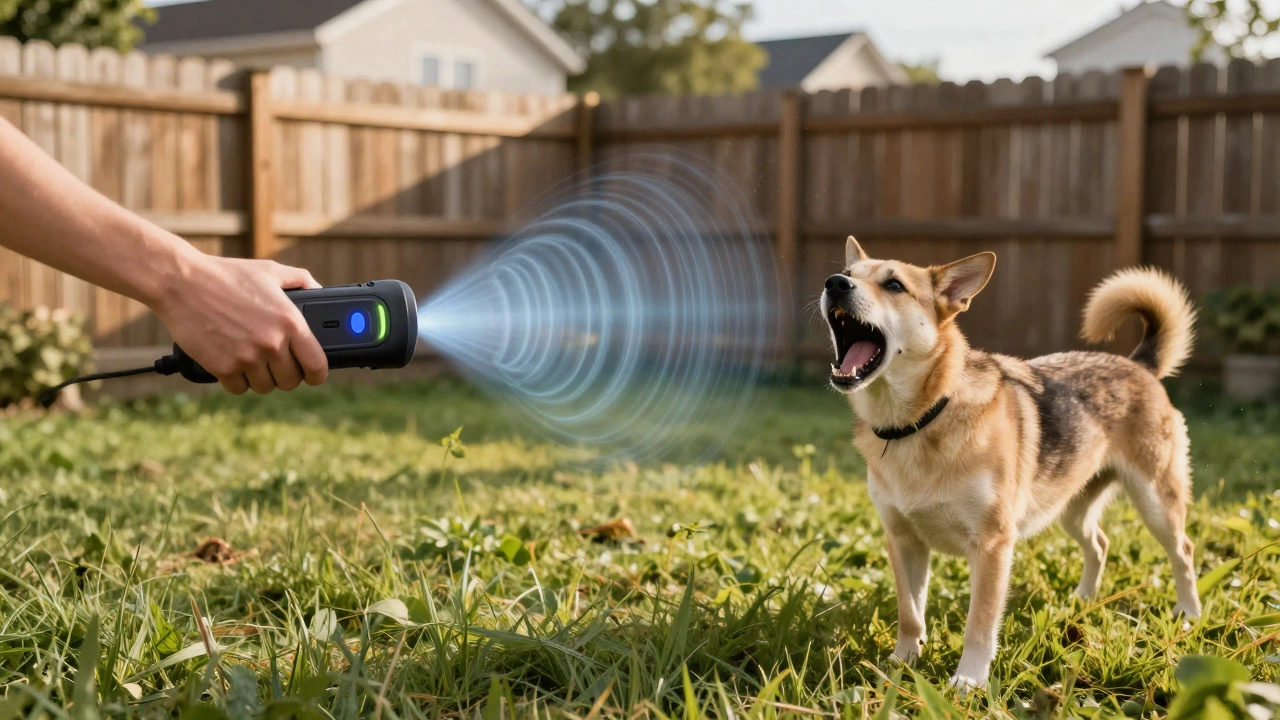
Ultrasonic Dog Deterrent Distance Calculator
How This Tool Works
This calculator determines if your ultrasonic dog deterrent will work based on your distance from the barking dog. According to the article, effective range depends on the device model and environmental conditions.
DAZER II
Effective range: Up to 10 meters
HUSH U20
Effective range: Up to 10 meters
HUSH UB122
Effective range: Up to 15 meters
Important Usage Notes
Remember:
- Sound doesn't travel through walls or dense foliage
- Direct line of sight is critical for effectiveness
- Use only when barking starts, not continuously
- Combine with verbal commands for best results
Ever been stuck inside on a quiet afternoon, only to have a neighbor’s dog start up again-loud, relentless, and unrelenting? You’ve tried talking to the owner, you’ve tried earplugs, you’ve even tried ignoring it. But what if the answer wasn’t another argument, but a simple, silent sound? The truth is, there’s one specific type of sound that stops dogs in their tracks: ultrasonic sound.
How Ultrasonic Sound Stops a Dog from Barking
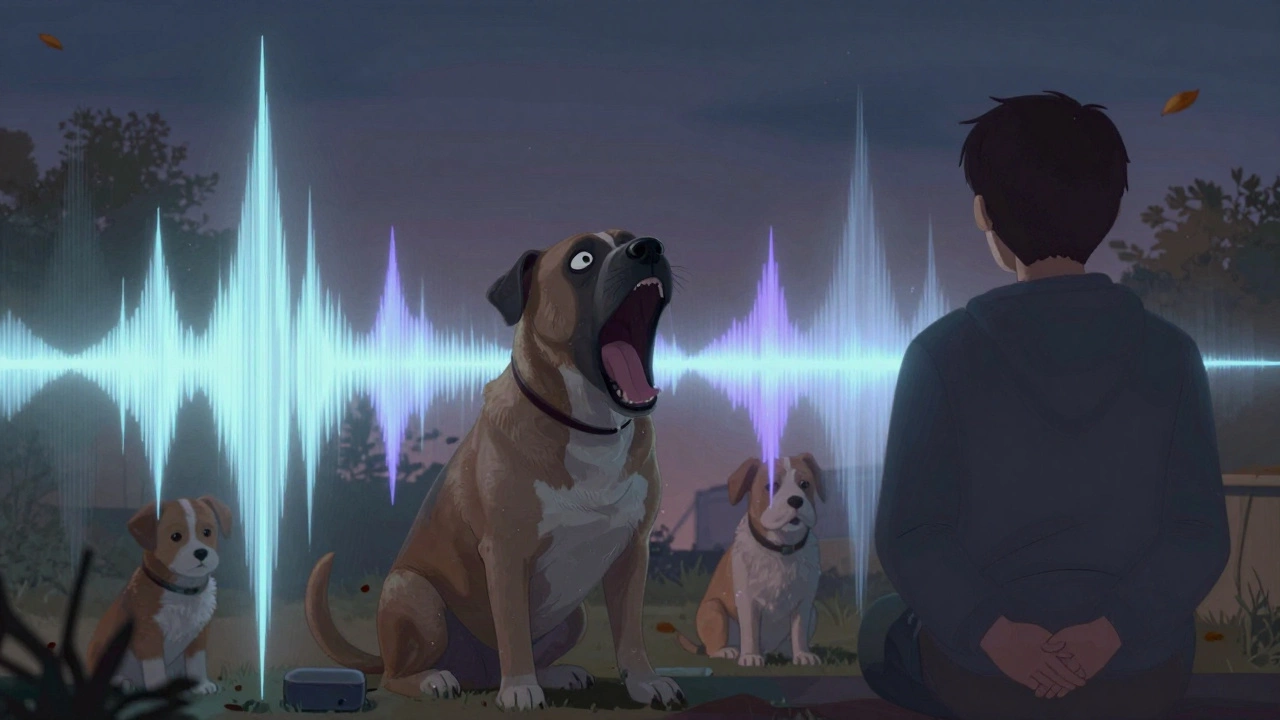
It’s not a loud noise. It’s not a siren. It’s not even something you can hear. Ultrasonic sound operates at around 25 kilohertz (kHz), which is just above the range of human hearing (which tops out at about 20 kHz). But dogs? They hear it clearly. And to them, it’s annoying-sharp, piercing, and impossible to ignore.
This isn’t magic. It’s biology. Dogs have far more sensitive hearing than humans. Their ears pick up high-frequency tones we can’t even imagine. When a dog barks, it’s often because they’re excited, anxious, or reacting to something outside. The ultrasonic device interrupts that focus. It doesn’t hurt. It doesn’t shock. It just says, “Stop. This is uncomfortable.” And when the dog stops barking, the sound stops too. That’s the key.
The American Kennel Club calls this a “correction mechanism.” It teaches the dog: bark → unpleasant noise. quiet → silence and comfort. It’s not punishment. It’s a gentle nudge. And for many dogs, it works fast. One YouTube tester recorded a neighbor’s dog reacting within milliseconds-running back inside, nails scratching on concrete as the sound hit. That’s not exaggeration. That’s real-time behavior change.
How These Devices Actually Work
You won’t find these in big-box stores. They’re handheld, often shaped like flashlights, and designed for quick use during walks or when barking starts outside your window. The most common models come from DAZER Australia, with names like the DAZER II, HUSH U20, and HUSH UB122.
- The HUSH U20 works up to 10 meters away.
- The HUSH UB122 pushes that to 15 meters-useful if the barking dog is across the street or in a backyard.
- Both emit short bursts of sound (1-2 seconds) when you press a button.
- They have LED lights to show they’re working, and some even vibrate slightly so you know the device fired.
What makes them smarter than older models? Frequency variation. Some devices use a flat, steady tone. But dogs get used to that. The newer ones switch between 20-30 kHz in a wave pattern. It keeps the dog guessing. No habituation. No ignoring.
These aren’t meant to be left on all day. Constant exposure makes dogs tune it out. You use it only when the barking starts. Turn it off when the dog is quiet. That’s how you train-not overwhelm.
When It Works Best
Ultrasonic devices aren’t magic wands. They work best under specific conditions:
- Direct line of sight: Sound doesn’t bend around walls. If there’s a fence, bush, or even a curtain between you and the dog, the signal weakens.
- Close range: Stay within the device’s range. The HUSH U20 won’t work at 12 meters. Period.
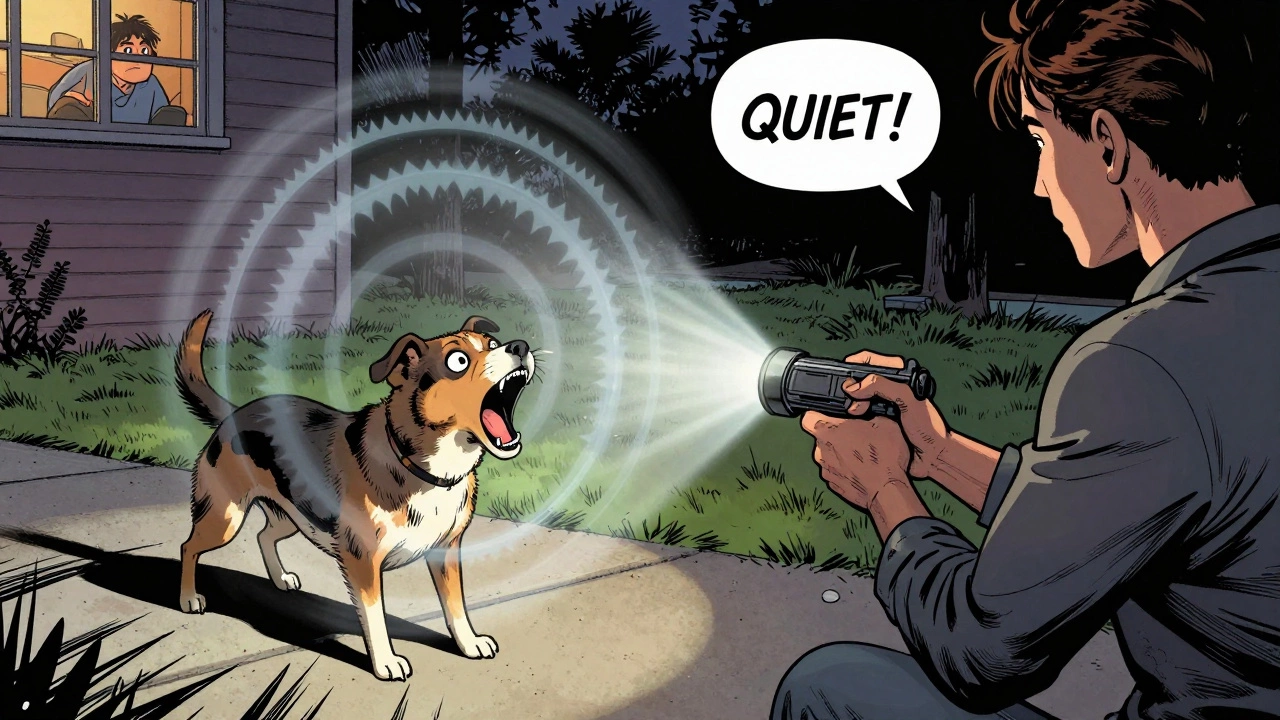
- Proper aim: Point the device directly at the dog’s head. Not at the ground. Not at the fence. Right at them.
- Clear batteries: Weak batteries mean weak sound. Always keep spares.
It also helps to pair the sound with a firm, calm command like “Quiet!” or “Enough!” Dogs respond better when they get both a physical cue (the sound) and a verbal one. The AKC says this combo is more effective than sound alone.
And it’s not just for nuisance barking. People use these devices to:
- Stop dogs from jumping on guests
- Keep loose dogs at a distance during walks
- Discourage dogs from approaching cars or bikes
- Manage aggression during encounters
One walker in Adelaide told me they used it when a stray dog charged at their dog on a trail. They pressed the button. The dog skidded to a halt, turned, and ran off. No yelling. No fear. Just a quick, quiet fix.
When It Doesn’t Work
Here’s the hard truth: ultrasonic devices don’t work for everyone.
- Puppies under 9 months: Their ears aren’t fully developed. The sound might not register.
- Dogs over 8 years: Hearing loss is common. If they can’t hear it, it won’t stop them.
- Guard dogs or highly trained dogs: These dogs are conditioned to ignore distractions. A loud noise won’t faze them.
- Wind or heavy rain: Outdoor use in bad weather can scatter the sound.
- Long-term use without training: If you only use the device to silence barking, the dog doesn’t learn why to stop. They just learn to wait until you’re not around.
And yes-some dogs get used to it. Over weeks or months, they stop reacting. That’s called desensitization. It’s why experts say: don’t rely on this alone. Use it as a tool, not a solution.
What the Experts Say
The ASPCA lists ultrasonic devices as “low-stress training tools.” That’s important. Unlike shock collars, they don’t cause pain. They don’t burn. They don’t zap. They just create discomfort. That’s why they’re legal everywhere in Australia and approved by animal welfare groups.
DAZER Australia says they’ve helped thousands of neighbors resolve barking conflicts without lawsuits or tension. And the feedback from users? Mostly positive. One homeowner in Port Adelaide said she used the HUSH UB122 for two weeks. The barking dropped by 80%. The owner finally started training their dog. The device didn’t fix everything-but it bought her peace.
But here’s the catch: the best results come when you combine the device with positive reinforcement. Reward the dog when they’re quiet. Give treats. Praise them. Teach them that silence gets attention-not just noise.
Real-World Limits and Risks
These devices are safe, but not foolproof.
If you have a dog with anxiety, noise sensitivity, or past trauma, this might make things worse. Always test it first on your own pet in a calm setting. Watch for signs of fear-trembling, hiding, or panting. If you see any, stop using it.
Also, don’t use it on multiple dogs at once. The sound spreads, and you risk overwhelming them. One dog at a time. One trigger at a time.
And remember: this isn’t a replacement for training. It’s a bridge. A way to create calm while you teach your dog-or your neighbor’s dog-what quiet looks like.
What to Look for When Buying
Not all ultrasonic devices are the same. Here’s what to check before buying:
- Range: 10-15 meters is ideal for outdoor use.
- Frequency variation: Look for “wave mode” or “multi-frequency” settings.
- Battery life: Rechargeable is better. Replaceable AA/AAA batteries are easier to carry.
- Feedback: LED lights or vibration help confirm the device fired.
- Weather resistance: If you’re using it outside, get one rated for light rain.
Popular models like the DAZER II and HUSH UB122 are sold at pet stores in Adelaide and online. Don’t buy the cheapest one. Stick to brands with clear testing and customer reviews.
Final Thought: It’s Not About Silencing-It’s About Understanding
Ultrasonic sound doesn’t make dogs stop barking because they’re bad. It makes them stop because they’re startled. That’s why it’s temporary. Real change comes when you understand why they bark in the first place.
Is it boredom? Fear? Attention-seeking? Loneliness? Once you know the reason, you can fix it. The device just gives you time to do that.
So if you’re tired of the noise, grab a device. Use it. But don’t stop there. Talk to the dog owner. Watch the behavior. Learn the pattern. And when the dog finally quiets down? Reward it. Not with silence. With kindness.
Can ultrasonic sound hurt my dog?
No. Ultrasonic devices don’t cause pain, shock, or physical discomfort. They emit high-frequency sound that dogs find annoying but not harmful. The ASPCA classifies them as low-stress tools, unlike shock collars. Always monitor your dog’s reaction-if they show fear, stop using it.
Will this work on all dogs?
Not all. Puppies under 9 months and senior dogs over 8 years often have reduced hearing and may not respond. Highly trained guard dogs or dogs with noise desensitization may ignore it. It works best on healthy adult dogs with normal hearing.
How far away can the device work?
Most handheld devices work between 10 and 15 meters. The HUSH U20 covers up to 10 meters, while the HUSH UB122 reaches 15 meters. Sound doesn’t travel well through walls or dense foliage, so direct line of sight is critical.
Do I need to use it every time my dog barks?
No. Overuse causes dogs to ignore the sound. Use it only during nuisance barking episodes. Combine it with a verbal command like “Quiet!” and reward silence. This teaches the dog what to do-not just what not to do.
Can I use this indoors?
Yes, but with caution. Indoor use can echo and affect other pets. Keep it focused on the barking dog. Avoid pointing it at walls or ceilings. For indoor training, consider a stationary ultrasonic unit designed for home use, not a handheld model.