
Robbery Risk Calculator
Your Security Risk Assessment
Based on the latest crime data from major U.S. cities, we'll calculate your home's robbery risk based on your daily routine and environment.
Your Security Risk Level
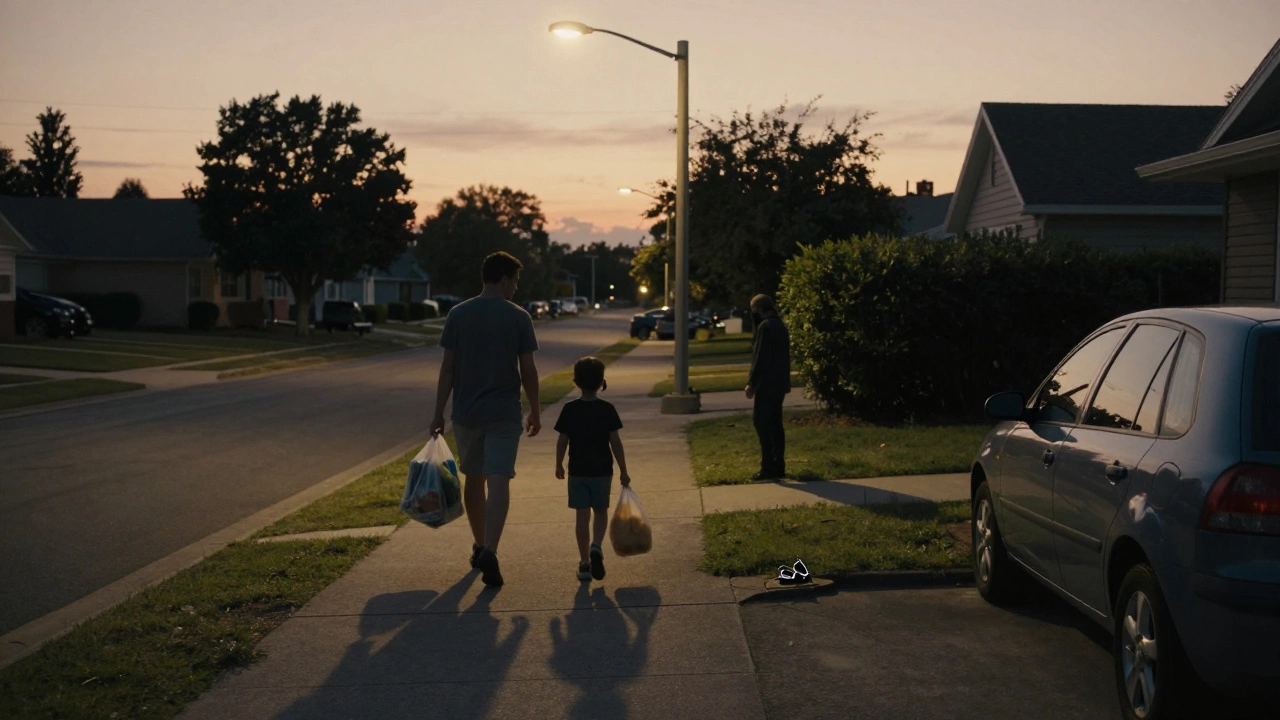
Most robberies don’t happen in the dead of night. They happen when people are still out, walking home, or just getting settled in - around 8 p.m.. That’s the single most dangerous hour for robberies in U.S. cities, according to crime data from 10 major metropolitan areas. It’s not midnight. It’s not 3 a.m. It’s 8 p.m. - right when dinner ends, streetlights come on, and the last stragglers head home from work or the bar.
Why 8 p.m. Is the Peak Hour
At 8 p.m., homes are often unoccupied. Kids are still up, but parents are distracted. Front doors are left unlocked after dropping off groceries. Cars are parked in driveways, keys still in ignition. Offenders know this. They don’t wait for total darkness. They wait for the quiet moment between activity and sleep.
Analysis from 2022 crime data across 13 major U.S. cities shows that 8 p.m. consistently ranks as the top hour for residential and street robberies. It’s not a fluke. It’s patterned. People are tired. They’re not watching the street. They’re checking their phones. They’re turning off lights. And that’s when the opportunity opens up.
Compare that to midnight. Yes, robberies spike again around 2 a.m. - but that’s mostly tied to late-night bars, transit hubs, and people stumbling home drunk. These are different kinds of robberies: opportunistic, often involving strangers, and more likely to happen on sidewalks or parking lots. The 8 p.m. wave? That’s the one that hits homes. The one that targets your porch light, your garage, your unlocked back door.
Darkness Isn’t the Only Factor
You’d think more robberies happen in total darkness. But research from the National Bureau of Economic Research found something surprising: when daylight saving time shifts clocks forward in spring, robbery rates drop by 27% during the hour after sunset. Why? Because it’s still light out at 8 p.m. - and that’s enough to deter most offenders.
That’s a huge clue. It’s not just about night. It’s about visibility. If you can see someone’s face, if a neighbor might look out their window, if a passing car catches movement - robbers walk away. They don’t want to be seen. They want shadows. And 8 p.m. gives them just enough.
Even in cities with bright streetlights, like Los Angeles or Phoenix, the 8 p.m. peak holds. That means it’s not about poor lighting. It’s about routine. People are predictable. They come home. They relax. They let their guard down. That’s the window criminals exploit.
Other High-Risk Hours
While 8 p.m. leads, it’s not alone. The next biggest spike happens between 2 a.m. and 4 a.m. That’s when bars close, public transit shuts down, and patrols thin out. This is when you’re most vulnerable if you’re walking alone, or if you live near a busy nightlife zone.
But here’s something most people miss: 3 p.m. also sees a surge - especially near schools and transit stations. This isn’t about homes. This is about street robberies targeting teens, college students, or workers heading home early. In the Bronx, 3 p.m. was the top hour for robberies. Why? School gets out. Kids are on their own. No adults around. It’s the same pattern in Chicago, Atlanta, and Philadelphia.
So the real danger window isn’t just night. It’s transition time - when routines change. People move. Lights flicker on. Doors open. That’s when the risk spikes.
What About Weekends and Seasons?
Friday nights are the worst. Police reports show Friday has the highest number of incidents per 10,000 residents - 755 on average. Saturday isn’t far behind. Sunday? The quietest day. People are home. They’re watching TV. They’re not out late.
Summer months - July and August - see about a 12% increase in robberies compared to winter. Why? More people are outside. More homes are left open. More tourists are in town. In cities like Boston or Chicago, the spike is even higher. But in places like San Diego or Miami, where the weather stays mild, the difference is smaller.
That means if you live in a place with cold winters and hot summers, your risk isn’t constant. It rises when the days are long and the nights are warm. That’s when you need to be extra careful.
How This Changes Your Security Strategy
Most people think: "I’ll just set the alarm at night." But if your biggest risk is 8 p.m., setting your alarm at 11 p.m. does nothing. You’re already vulnerable.
Here’s what actually works:
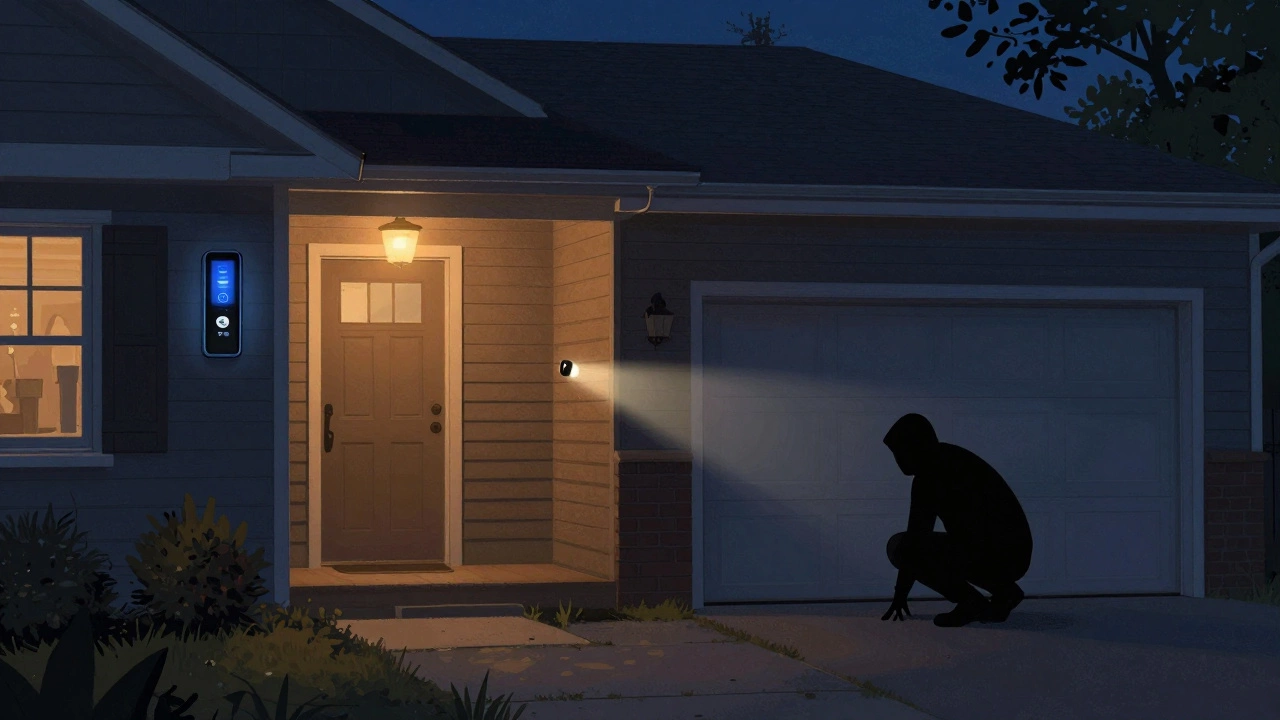
- Use motion-sensor lights on your porch, driveway, and side gates. Turn them on at 4 p.m. - not midnight.
- Set timers for indoor lights to turn on between 6 p.m. and 10 p.m. Even if you’re home, make it look like someone’s awake.
- Don’t leave doors unlocked just because "it’s not late yet." 8 p.m. is not "early evening." It’s peak risk time.
- Check your camera feed at 7:45 p.m. If you’re not home, see who’s around. Is someone lingering? Walking slowly? That’s not a delivery person.
- Use smart locks that auto-lock at 7 p.m. No more forgetting. No more "I’ll do it later."
And if you have a burglar alarm system, make sure it’s armed before you even sit down for dinner. Don’t wait until you’re in bed. That’s too late.
What You Can Do Right Now
You don’t need to buy a new system. You just need to change your habits.
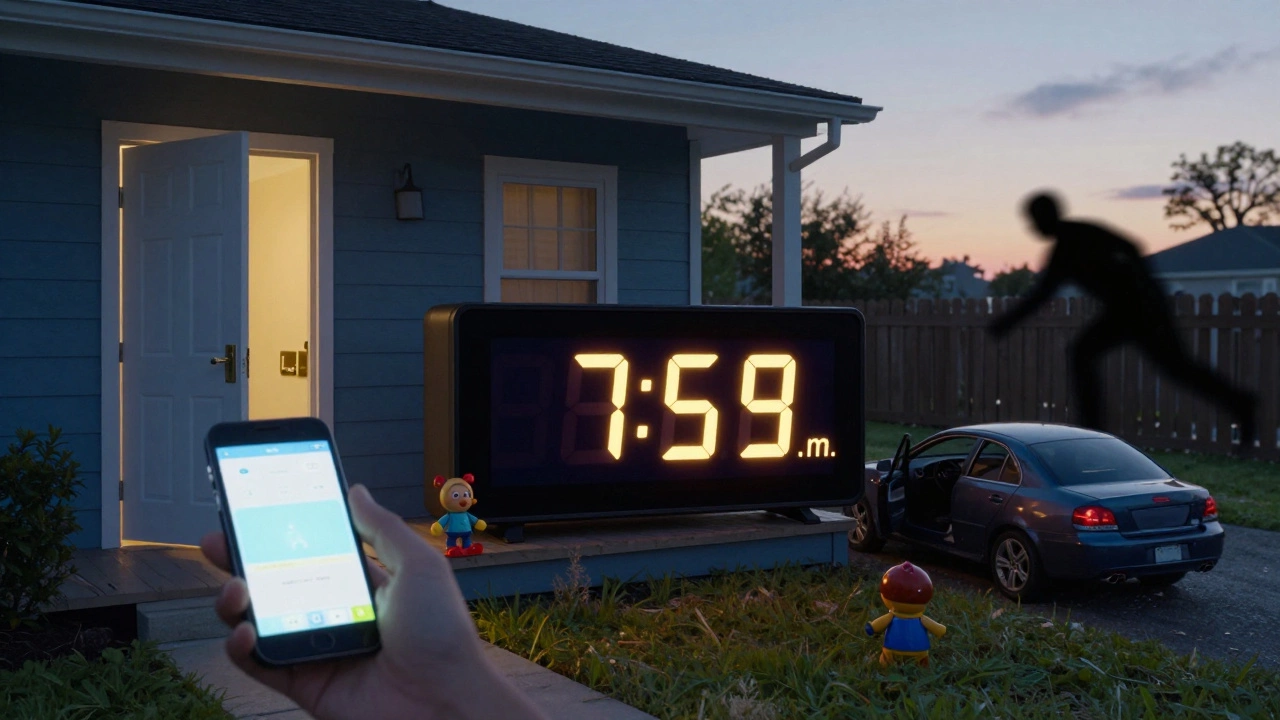
- Set your phone alarm for 7:30 p.m. every day. When it rings, check your doors and windows.
- Leave one light on in the front room, even if you’re home. It signals someone’s awake.
- Keep your garage door closed. Most break-ins happen through the garage - not the front door.
- If you have a smart camera, enable alerts for motion between 6 p.m. and 10 p.m. Ignore alerts after 11 p.m. unless you’re expecting someone.
Robberies aren’t random. They’re scheduled. And they follow human behavior. If you change your routine, you change the odds.
Is it true that most robberies happen after midnight?
No. While robberies do spike around 2 a.m., the highest number occurs at 8 p.m. That’s when people are home but distracted, doors are unlocked, and streetlights are just turning on - perfect conditions for offenders. Midnight robberies are more common near bars or transit hubs, but home break-ins peak earlier.
Do robberies happen more in summer or winter?
Robberies increase by about 12% in summer months like July and August. Warmer weather means more people are outside, homes are left open longer, and vacationers leave properties unattended. This is especially true in cities with seasonal temperature swings. In milder climates, the difference is smaller.
Should I arm my alarm system before going to bed?
Not late enough. Since 8 p.m. is the peak robbery hour, you should arm your alarm before you even sit down for dinner. Waiting until you’re in bed means you’ve already been vulnerable for hours. Set your alarm system to auto-arm at 7 p.m. or use a smart lock that locks automatically.
Does leaving a light on at night prevent robberies?
Yes - but only if it’s on during the high-risk window (6 p.m. to 10 p.m.). A light on at 3 a.m. doesn’t help much. Offenders avoid well-lit areas. Use timers to simulate activity during early evening hours. Even one light in the front room makes your home look occupied.
Are weekend nights more dangerous than weekdays?
Friday is the most dangerous day of the week for robberies, with the highest number of incidents per capita. Saturday is close behind. People are out late, homes are quieter, and patrols are thinner. Sunday is the safest. If you’re away for the weekend, plan your security around Friday night.
Final Thought
Robberies aren’t about luck. They’re about timing. And the biggest window isn’t when the world is asleep. It’s when you think you’re safe. Don’t wait for the moon to rise. Protect your home before the sun even sets.