

Barking Dog Training Timer
How to Use This Tool
Follow these steps from the article:
- When your dog barks, wait for 3 full seconds of silence
- Immediately reward with a treat and say "quiet"
- Repeat 15-20 times daily for 2-3 weeks
Positive Reinforcement Timer
Start this timer when your dog stops barking. Reward when the timer hits 0 seconds.
Daily Training Progress
Track your consistency. Aim for 15-20 sessions daily.
Excessive dog barking isn’t just annoying-it’s one of the top reasons people consider rehoming their pets. In the U.S. alone, over 10 million households report nuisance barking as their biggest pet problem. But here’s the truth: shutting up a dog isn’t about silencing it. It’s about understanding why it’s barking-and fixing the root cause.
Why Dogs Bark (And Why Punishment Doesn’t Work)
Dogs bark to communicate. Alerting you to a stranger, expressing anxiety when left alone, or just begging for attention-it’s all normal behavior. The problem isn’t the barking itself. It’s when it becomes constant, loud, or happens at the wrong times. Punishment doesn’t fix this. Yelling, spraying water, or using shock collars might stop the noise for a moment, but they make the dog more anxious. Studies show dogs subjected to aversive methods have cortisol levels 37% higher than those trained with rewards. That’s not control-that’s trauma. The American College of Veterinary Behaviorists and the AVMA now call punishment-based tools like shock collars unethical. They’re not just ineffective long-term-they’re harmful. And in January 2026, the FDA moved to classify shock collars as unapproved medical devices, signaling a likely ban in the U.S. by late 2026.The Only Method That Lasts: Positive Reinforcement Training
The most effective, science-backed way to reduce excessive barking? Positive reinforcement. Not a gadget. Not a spray. Just you, your dog, and a handful of treats. Here’s how it works:- Identify the trigger. Is it the doorbell? The mail carrier? Other dogs outside? Write it down.
- Prepare high-value treats. Small pieces of chicken, cheese, or hot dog-something your dog can’t resist. Cut them pea-sized so you don’t overfeed.
- Wait for silence. When your dog barks, don’t yell. Don’t rush. Wait for three full seconds of quiet.
- Reward immediately. The second your dog stops barking, give the treat and say “quiet” in a calm voice.
- Repeat. Do this 15-20 times a day for 2-3 weeks.
What About Anti-Bark Collars? (Spoiler: They’re Risky)
You’ll see ads for vibration, citronella, and ultrasonic collars claiming they “shut up” dogs in minutes. But here’s what they don’t tell you:- Citronella collars (like the SportDOG SDF-100A) have 85% accuracy in single-dog homes-but only 62% when other dogs are around. That means your dog gets sprayed for barking at a neighbor’s dog-and you’re punishing the wrong behavior.
- Vibration collars (like the Dogtra YS300) work better on herding breeds (72% success) than hounds (41%). But if your dog is sensitive, the vibration can trigger fear.
- Ultrasonic devices (like the PetTone 200X) work for 68% of dogs… at first. After four weeks, 22% of dogs get used to them and start barking again.
- False triggers happen 19-37% of the time. Your dog might get shocked or sprayed just because a car backfired or the wind blew a trash can.
Environmental Fixes That Work (Without a Collar)
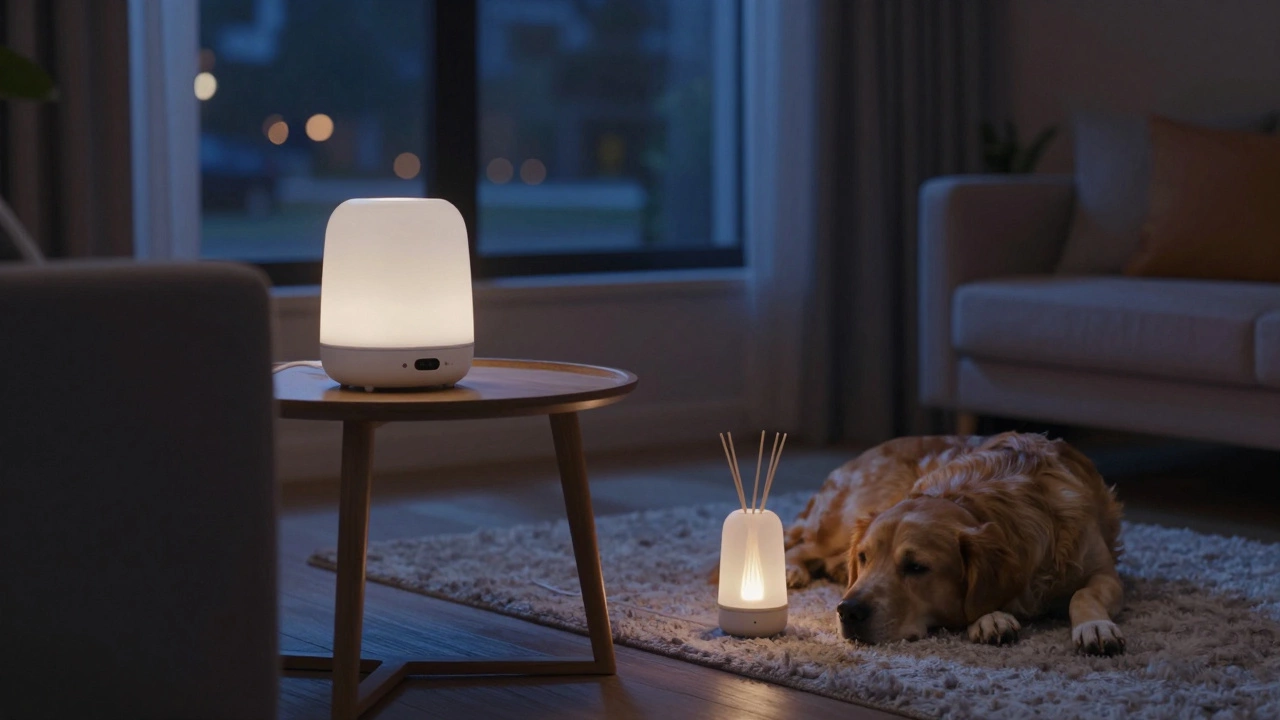
Sometimes, the problem isn’t the dog-it’s the environment. If your dog barks at people walking past the window, try this: apply privacy film to the lower half of your windows. A 2022 study from the University of Pennsylvania found that 3M’s Scotchshield Ultra film reduced visual triggers by 78%. No sight = no barking. For dogs that bark at night or when left alone, white noise helps. The Yogasleep Dohm Classic Sound Machine (set between 50-65 decibels) reduced auditory-triggered barking by 63% in 87% of households in a 2024 study. On Chewy.com, 327 owners reported a 60-70% drop in nighttime barking. If separation anxiety is the issue, combine white noise with a pheromone diffuser like Adaptil. A January 2026 study from Colorado State University found that dogs using both tools had an 82% reduction in anxiety-related barking-better than training alone.What to Avoid (And Why)
Don’t use:- Shock collars-illegal in many countries, banned by vets, and causing long-term stress.
- Ultrasonic whistles-most dogs tune out after a few days.
- Yelling or hitting-this teaches your dog to fear you.
- Water sprayers-these are unpredictable and increase anxiety.

Real Results: What Works in Real Life
One Reddit user, u/DogMomOf3, had a German Shepherd that barked 20+ times every time someone came to the door. After 10 days of consistent “thank you, ok, place” training (a method taught in a popular YouTube video), the barking dropped to 2-3 barks per visitor. Another owner in Adelaide used privacy film and a white noise machine. Within a week, her Border Collie stopped barking at the street. She didn’t buy a collar. She didn’t yell. She just changed the environment and rewarded quiet. Professional dog trainer Bob Martin surveyed 500 clients. Those who did 15 minutes of positive training twice a day saw a 75%+ drop in nuisance barking in four weeks. Those relying on collars alone? Only 47% saw improvement.When to Call a Professional
If you’ve tried training for three weeks and nothing’s changed, it’s time to get help. Look for a certified professional dog trainer (CPDT) or a board-certified veterinary behaviorist (DACVB). The ASPCA offers virtual consultations for $75 per session-and they resolve 92% of barking issues within three visits. The AKC also has a free online course called “Barking Solutions,” with 87% satisfaction from over 12,000 users.The Bottom Line
There’s no magic button to shut up a barking dog. But there’s a better way: patience, consistency, and kindness. Stop looking for a quick fix. Start building a calm, confident dog. The most effective solution isn’t a device. It’s you learning how to communicate with your dog. And that’s a skill that lasts a lifetime.Will a bark collar permanently stop my dog from barking?
No. Bark collars suppress barking temporarily but don’t address the cause. Many dogs habituate to the collar after a few weeks, and barking returns. Worse, 22-37% of dogs develop anxiety or fear from the punishment. Long-term success requires training, not suppression.
What’s the fastest way to stop a dog from barking?
The fastest way is to use positive reinforcement with high-value treats. When your dog barks, wait for three seconds of silence, then reward. Do this 15-20 times a day. Most owners see improvement in 3-7 days. Combine it with environmental changes like privacy film or white noise for faster results.
Do ultrasonic devices work on all dogs?
No. Ultrasonic devices work on about 68% of dogs in initial trials, but 22% become habituated within four weeks. They’re also ineffective for dogs with hearing loss or those barking due to anxiety. They don’t work on loud, territorial barking-only alert barking-and they can’t distinguish between your dog and a neighbor’s.
Is citronella spray safe for dogs?
Citronella spray is non-toxic and generally safe, but it’s not foolproof. It has an 85% detection rate in single-dog homes but drops to 62% in multi-dog households. Many dogs get sprayed when other dogs bark nearby, which confuses them. It’s better as a temporary tool-if paired with training-not a standalone solution.
Why does my dog bark more when I use a bark collar?
Because the collar increases stress. Dogs bark to communicate. If they’re punished for it, they become more anxious. Anxiety often leads to more barking. Studies show dogs using aversive collars have higher cortisol levels, which worsens the problem over time. The collar isn’t fixing the cause-it’s making it worse.
Can I train my dog to stop barking without treats?
It’s possible, but much harder. Treats are the most reliable reward because they’re immediate, measurable, and motivating. You can use toys, praise, or play-but dogs respond best to food during training. If you avoid treats, you’re reducing your chances of success by up to 50%. Stick with small, high-value treats for the first 2-3 weeks.
How long does it take to train a dog to stop barking?
Most dogs show improvement in 7-14 days with consistent training. Full reliability takes 2-3 weeks of daily 15-20 minute sessions. The key is timing: reward silence within three seconds. If you’re inconsistent, progress stalls. Patience and repetition are everything.