
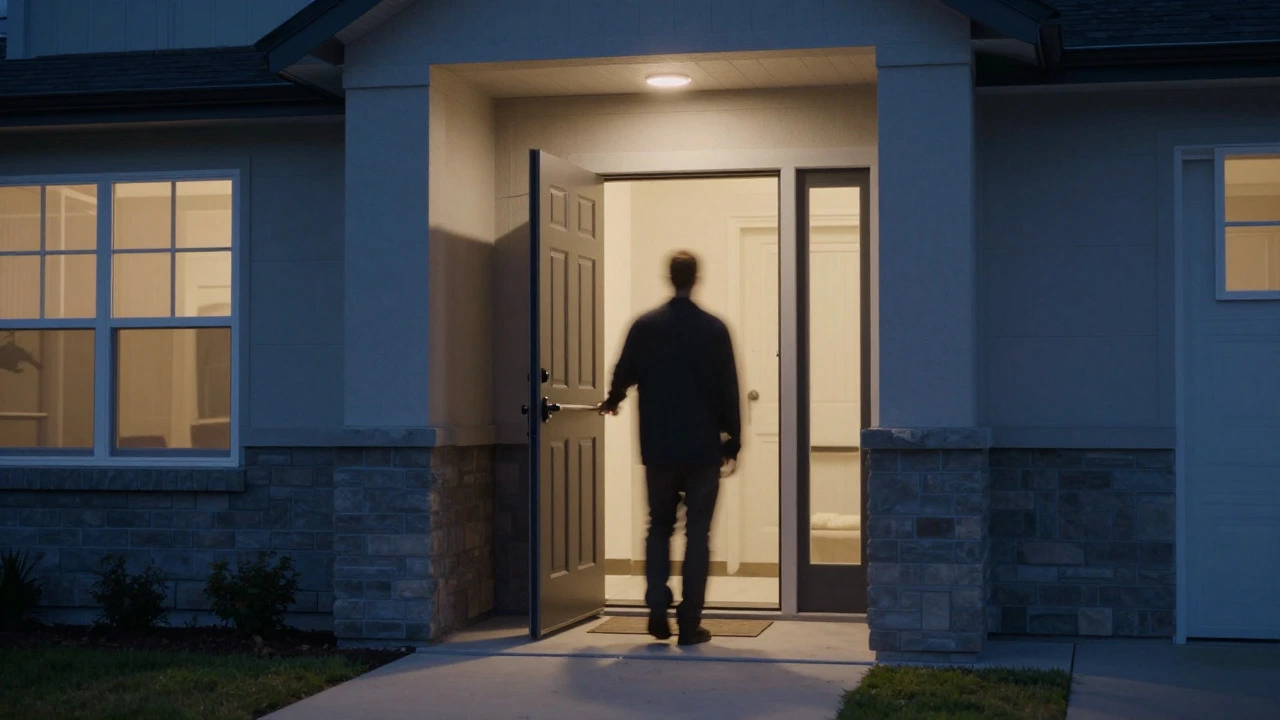
Home Vulnerability & Security Score Calculator
⚠Step 1: Identify Your Weak Points
Select the entry points that apply to your home.
Your Home Security Report
Analysis:
Recommended Actions:
Most people picture a masked figure smashing through a second-story window or prying open a back gate in the dead of night. The reality is far more mundane-and surprisingly predictable. If you look at police reports and insurance claims from across the United States between 2022 and 2026, a clear pattern emerges. Burglars are opportunists who prioritize speed and ease over drama.
The single most common way intruders get into homes is not by breaking in; it’s by walking in. Or at least, trying to walk in first. According to data aggregated by the International Association of Certified Home Inspectors (InterNACHI) and verified by multiple security firms, the front door accounts for approximately 34% of all residential break-ins. Yes, the front door. That number might shock you, but when you combine it with back doors and first-floor windows, these three points cover nearly 80% of all entries.
The Real Numbers: Where Intruders Actually Get In
To secure your home effectively, you need to stop guessing where the weak spots are and start looking at the actual distribution of risk. The data has remained remarkably consistent across recent years. Here is how burglars typically enter homes, based on consolidated law enforcement and insurance data:
| Entry Point | Percentage of Entries | Risk Level |
|---|---|---|
| Front Door | 34% | High |
| First-Floor Windows | 23% | High |
| Back Door | 22% | High |
| Garage / Garage-to-House Door | 9% | Medium |
| Basement | 4% | Low-Medium |
| Second-Floor Windows | 2% | Low |
| Other (Storage, Roof, etc.) | 6% | Low |
This table tells a critical story: 81% of all burglaries occur on the first floor. Offenders rarely climb ladders or smash skylights unless they have to. They want ground-level access that allows them to slip inside quickly and leave before anyone notices. By focusing your security efforts on the top three categories above, you address the vast majority of potential threats.
Why the Front Door Is the #1 Target
It seems counterintuitive. Isn’t the front door the most visible part of the house? Shouldn’t visibility deter crime? Surprisingly, no. For a burglar, the front door offers several advantages that outweigh the risk of being seen.
First, familiarity breeds negligence. Many homeowners develop habits that make the front door vulnerable. You might unlock it to take out the trash, let in a delivery driver, or simply forget to lock it after coming home from work. Data suggests that roughly 37.8% of burglars gain entry without using any force at all-they just turn the handle because it wasn’t locked. This isn’t about sophisticated lock-picking; it’s about human error.
Second, the front door often looks stronger than it is. A standard hollow-core door with a cheap strike plate can be kicked in with minimal effort. Burglars know this. They approach the front door under the guise of normal activity-pretending to be mail carriers, surveyors, or neighbors asking for directions. This social camouflage lowers their guard and increases their chances of success if the door is unlocked or poorly reinforced.
Finally, the front door provides immediate access to the main living areas. Once inside, an intruder can quickly locate valuables like electronics, jewelry, or cash kept in drawers or safes near entryways. Speed is everything in burglary, and the front door is the fastest route to the heart of the home.
The Hidden Danger of First-Floor Windows
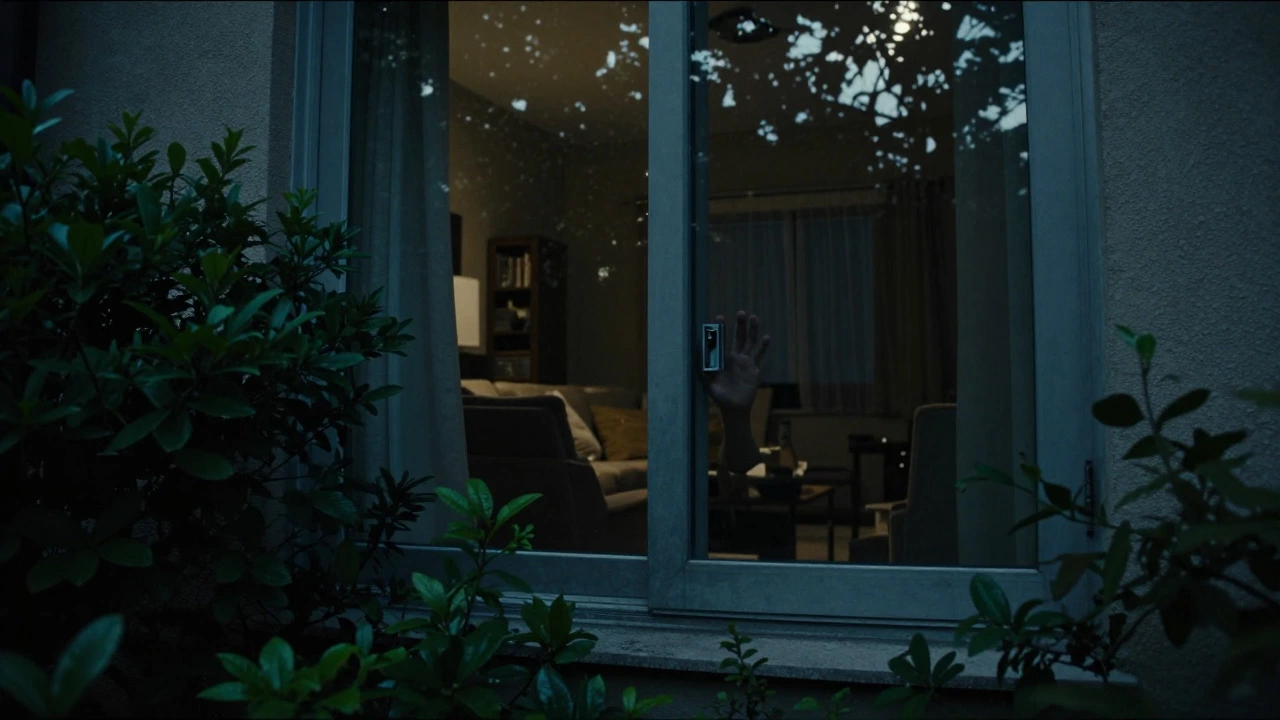
If the front door is the most common entry point, first-floor windows are a close second, accounting for 23% of breaks-ins. These openings are particularly dangerous because they are often overlooked in security planning. People tend to focus on doors, assuming windows are secondary. But windows offer concealment that doors do not.
A burglar can crouch behind a bush or fence and test a window latch without being seen from the street. Unlike a door, which announces its presence, a window can be opened silently. Many homeowners leave ground-floor windows slightly ajar for ventilation, especially during warmer months. To an intruder, an unlocked window is an invitation.
Consider the bedroom window. It’s often located away from high-traffic areas of the house, meaning an intruder can enter and search the room without triggering motion sensors placed in hallways or living rooms. Additionally, sliding glass doors-which fall under the category of large ground-level openings-are notoriously easy to lift off their tracks or pry open. If you have a patio door leading to your backyard, treat it with the same seriousness as your front door.
Back Doors and Garages: The Stealth Routes
Back doors account for 22% of entries, making them nearly as risky as front doors. What makes back doors attractive to criminals is concealment. Fences, hedges, and neighboring houses often block the view of rear entrances from the street. This lack of visibility gives burglars confidence that they won’t be spotted while testing the lock or kicking the door.
Moreover, back doors are frequently used for utility purposes. You might prop one open to move furniture, allow pets to go outside, or use it as a shortcut to the garage. These moments of convenience create windows of vulnerability. Even when closed, back doors sometimes feature older, weaker locks compared to the upgraded hardware installed on front entrances.
Attached garages represent another significant threat, responsible for about 9% of break-ins. The garage itself is rarely the target; rather, it’s the interior door connecting the garage to the house. Many homeowners neglect to install deadbolts on this internal door, relying instead on a simple knob lock. If a burglar gains access to the garage-by leaving the remote in a car, exploiting a broken opener, or finding the door propped open-they can walk straight into your home. Treat the garage-to-house door as a primary exterior entrance. It should have a solid core, a high-quality deadbolt, and preferably, a camera monitoring both sides.
Forced Entry vs. Unlocked Access
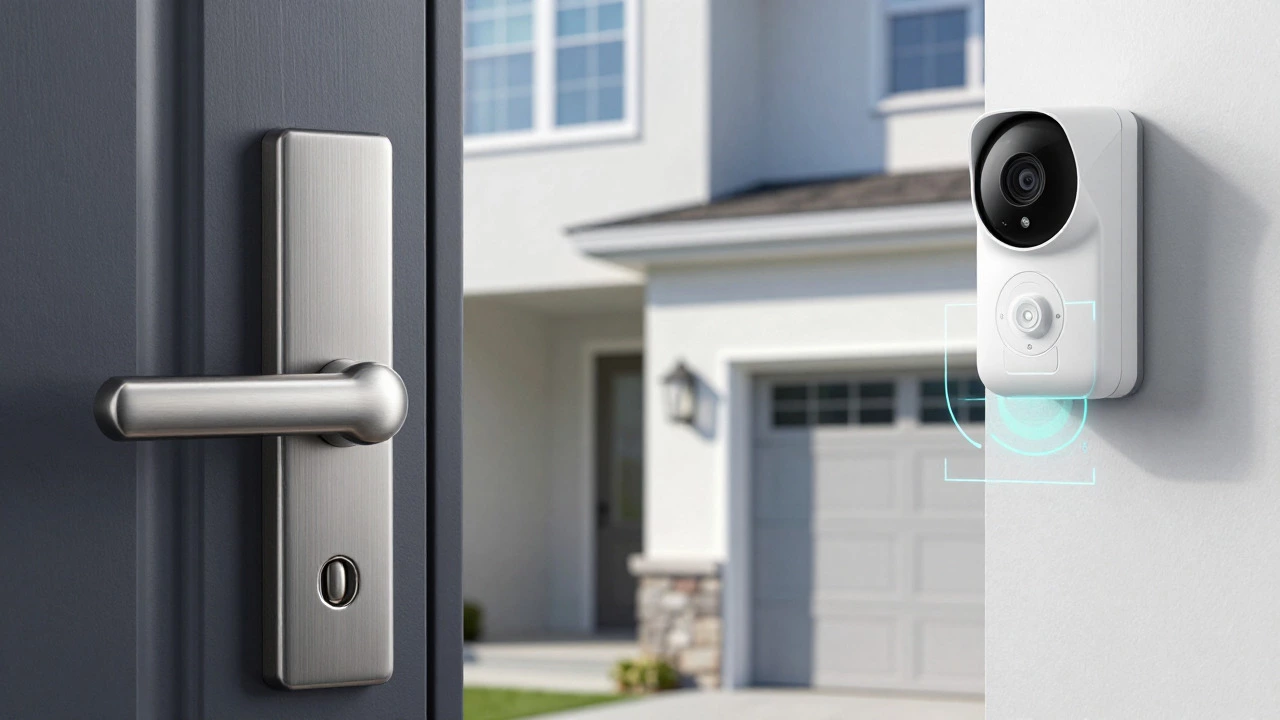
When discussing entry points, it’s crucial to distinguish between forced entry and unlawful entry without force. While movies depict burglars smashing glass and crowbarring doors, real-life statistics tell a different story. Approximately 40% of burglaries involve entering through an unlocked door or window. This means that for two out of every five intruders, the hardest part of the job was already done by the homeowner.
This statistic highlights a fundamental truth about home security: physical barriers are only effective if they are engaged. A $500 smart lock is useless if you don’t lock it. A reinforced steel door frame doesn’t matter if the latch is disengaged. The decline in overall burglary rates in recent years correlates with increased awareness of these basic practices, but complacency remains the biggest enemy.
However, when force is used, it’s usually targeted and efficient. Kicking a door near the hinges is more common than drilling out locks. Sliding a window screen aside is easier than breaking the glass. Understanding these methods helps you choose the right countermeasures. Reinforced strike plates prevent kick-ins. Window locks and security film make silent entry difficult. Motion-sensor lights eliminate the darkness that enables stealthy approaches.
How to Secure Your Top Vulnerabilities
Knowing where burglars enter is only half the battle. The next step is implementing practical, cost-effective solutions to harden these specific points. You don’t need to fortify your entire house like a bunker. Focus on the high-probability targets identified above.
- Upgrade Your Front and Back Doors: Replace hollow-core doors with solid-core or metal alternatives. Install Grade 1 deadbolts with at least a 1-inch throw. Use 3-inch screws to anchor the strike plate into the wall stud, not just the trim. This simple change dramatically increases resistance to kicking.
- Secure First-Floor Windows: Install key-operated locks or charley bars on sliding windows. Apply security film to glass panes to prevent shattering. Consider motorized window locks that integrate with your home automation system, ensuring windows are locked even if you forget manually.
- Fortify the Garage Connection: Install a heavy-duty deadbolt on the interior garage door. Add a chain lock or bar for extra protection. Ensure the garage door opener is updated to rolling-code technology to prevent signal replay attacks.
- Leverage Technology: Visible deterrents work. Studies show that 60% to 83% of potential intruders abandon attempts when they see security cameras or alarm signage. Place cameras at the front door, back door, and garage. Use motion-activated lighting to eliminate dark corners around entry points.
- Adopt a Locking Routine: Make locking up automatic. Use smart locks that auto-lock after a set period or send alerts if a door is left ajar. Involve all household members in checking windows and doors before bed and when leaving the house.
Remember, security is layered. No single measure is foolproof, but combining physical reinforcement with technological monitoring creates a formidable barrier. By addressing the front door, back door, and first-floor windows, you cover the bases for the overwhelming majority of burglary scenarios.
Do burglars really prefer the front door?
Yes. Despite being the most visible entrance, the front door accounts for 34% of all residential burglaries. This is largely due to homeowners leaving it unlocked for short trips, deliveries, or out of habit, allowing intruders to enter without force.
Are second-floor windows safe from burglars?
They are significantly safer. Only about 2% of burglaries involve second-floor entries. Most offenders avoid climbing ladders or scaling walls due to the time and noise involved, preferring quick, ground-level access.
What percentage of burglaries involve forced entry?
Approximately 60% of burglaries involve some form of forced entry, while around 40% occur through unlocked doors or windows. This highlights the importance of simply locking up, as many intruders rely on opportunity rather than skill.
Is my garage a major security risk?
Yes, attached garages account for about 9% of break-ins. The primary risk is the interior door connecting the garage to the house, which often lacks robust locking mechanisms. Treating this door like an exterior entrance is crucial.
How can I best secure my first-floor windows?
Install key-operated locks or sliding bars to prevent windows from being pushed open. Apply security film to reinforce the glass against shattering. Additionally, ensure landscaping doesn’t provide cover for someone approaching the window.