
Cruise Radio Safety Calculator
Check Your Baby Monitor Safety
Enter your baby monitor's frequency or select your device type to see if it's safe for cruises.
Why You Can’t Bring a Baby Monitor on a Cruise
If you’re planning a family cruise and thinking of packing your baby monitor, stop. Most major cruise lines - including Royal Caribbean, Carnival, Norwegian, and Princess - ban baby monitors outright. It’s not because they don’t care about parents. It’s because these devices can interfere with the ship’s most important safety systems.
Imagine this: you’re in your cabin, your baby is sleeping, and you’re enjoying dinner. You’ve got your monitor running, watching the screen, feeling calm. But what you don’t see is that your monitor’s radio signal is bouncing off the metal walls of the ship, mixing with signals from other devices, and possibly disrupting the ship’s navigation radio. That’s not science fiction. It’s a real risk backed by maritime law.
The Real Reason: Radio Interference With Ship Systems
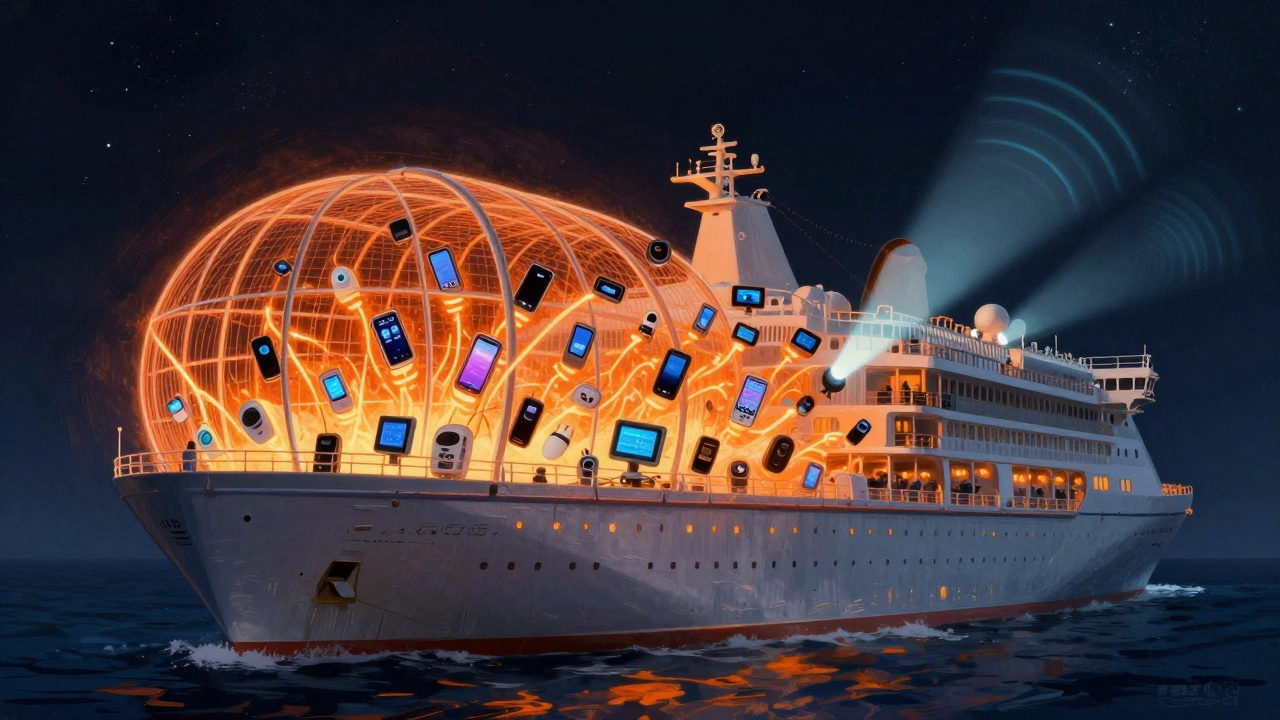
Baby monitors work using radio frequencies - usually between 49 MHz and 2.4 GHz. That’s the same range used by ships to communicate with each other and with coast guards. Critical systems like VHF radios (156-162 MHz), GPS, and the Automatic Identification System (AIS) rely on clean, uninterrupted signals to avoid collisions, navigate narrow channels, and dock safely.
One baby monitor might seem harmless. But on a cruise ship with thousands of passengers, hundreds could be running at once. Multiply that by the number of devices people bring - Wi-Fi cameras, Bluetooth speakers, smart toys - and you’ve got a crowded radio spectrum. The U.S. Coast Guard’s NVIC 03-16 regulation explicitly bans unauthorized radio transmitters within 100 meters of bridge equipment. Cruise lines follow this rule strictly.
Even if your monitor uses modern Frequency-Hopping Spread Spectrum (FHSS) tech to avoid interference, cruise lines don’t take chances. They can’t test every device. So they ban them all.
Disney Is the Only Exception - And Here’s Why
Disney Cruise Line is the only major line that allows baby monitors - but only after inspection. You can’t just pack one and hope for the best. You must bring it to the ship’s Chief Electrician, who checks its power draw (must be under 1500W for 110V), frequency output, and signal strength. Only then is it approved.
Even then, Disney warns you: it probably won’t work well. Cruise ships are giant metal boxes - a Faraday cage. Signals get blocked. One parent on Reddit said their Motorola monitor worked fine inside the cabin but died the moment they stepped into the hallway. Another said it lost signal in under 60 seconds. That’s not a flaw in the monitor - it’s the ship’s design.
Disney’s policy isn’t just about safety. It’s about managing expectations. They know these devices are unreliable on ships. So they don’t promise they’ll work. They just don’t confiscate them - if you jump through their hoops.
The TikTok Incident That Made the Ban Public
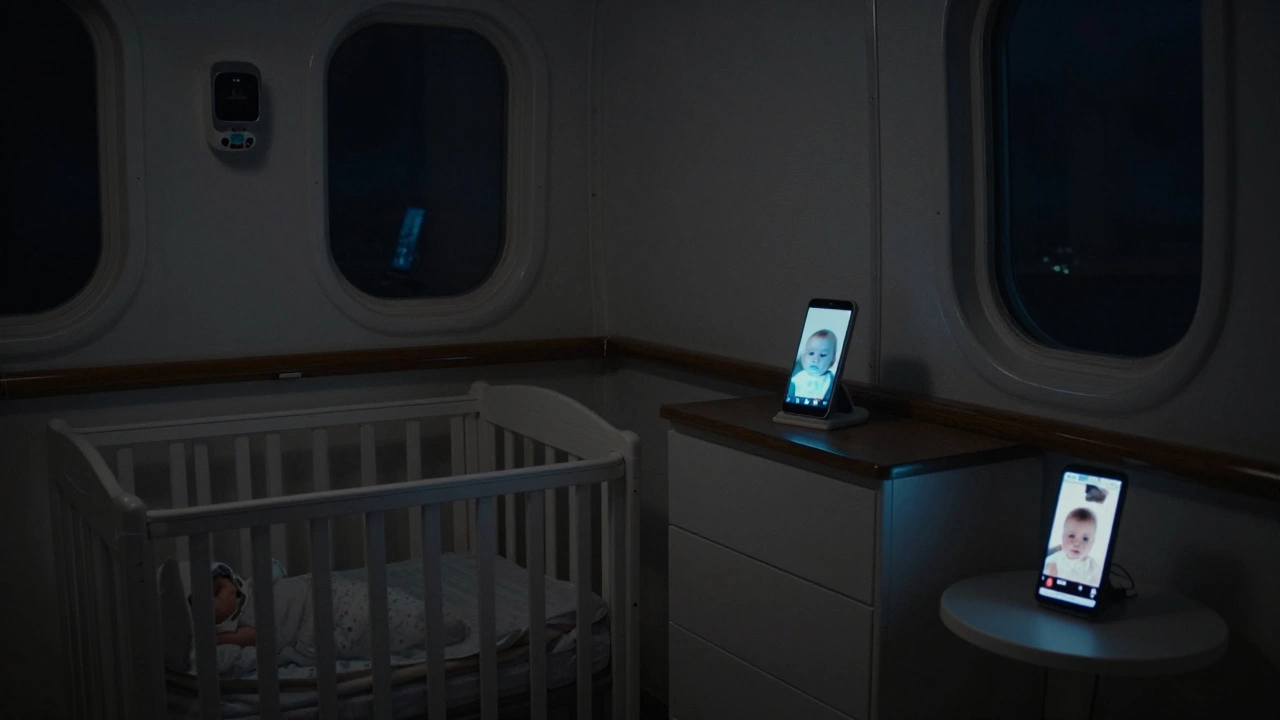
In January 2023, a couple named Matt and Abby Howard posted a TikTok video showing how they left their two toddlers alone in separate cabins while they ate dinner - using baby monitors and FaceTime to keep an eye on them. The video went viral, racking up 5 million views.
It wasn’t just the parenting choice that upset people. It was the implication that this was normal. Cruise lines had quietly enforced this ban for years. But this post forced them to respond publicly. Royal Caribbean quickly updated their website to clarify: “Baby monitors are not allowed onboard our vessels as their radio signal could interfere with ship communication and/or navigation systems.”
The incident also sparked a broader conversation about child safety on cruises. Critics pointed to the Madeleine McCann case - a child who vanished while parents dined out - and warned that even well-intentioned monitoring doesn’t replace physical presence.
What Happens If You Try to Bring One Anyway?
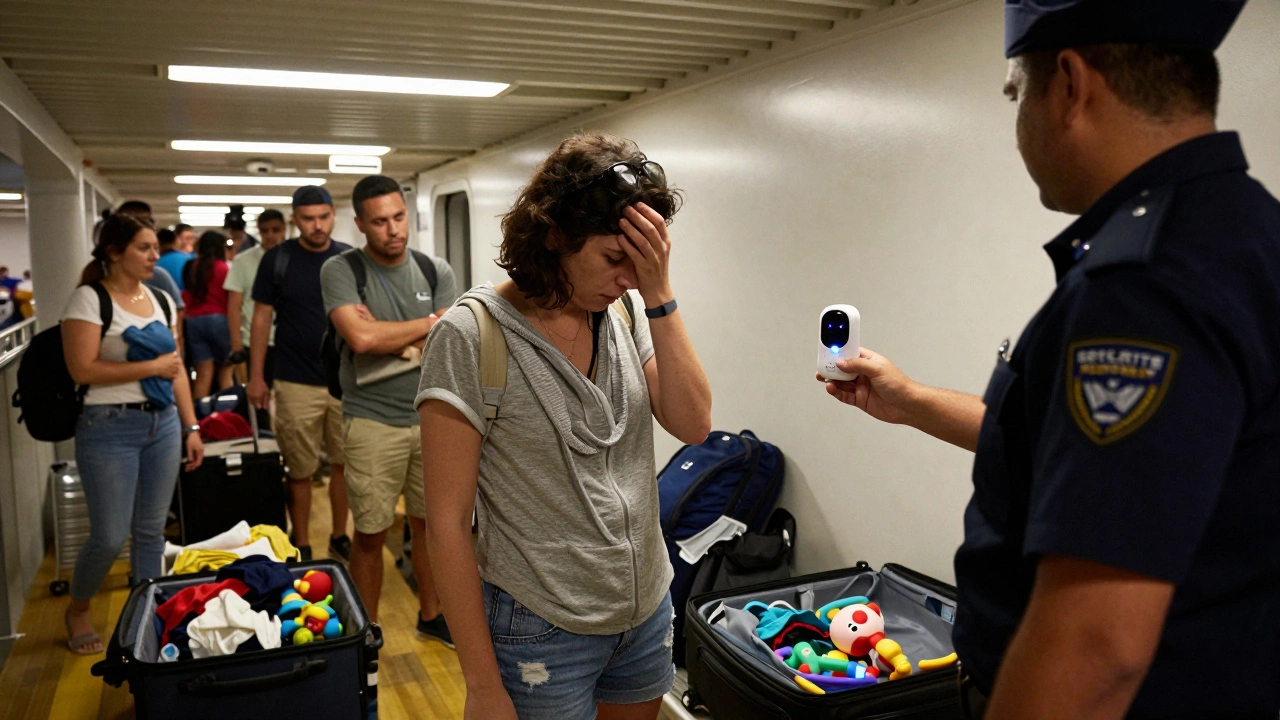
At check-in, security scans luggage. If they find a baby monitor, it gets confiscated. No warning. No second chance. You won’t get it back. Some passengers have reported being told they could mail it home - but that’s rare. Most just lose it.
One parent on DISboards.com shared that they spent $300 on a Nanit camera system, only to have it taken at the port. They were devastated. And they weren’t alone. Cruise Critic’s 2023 survey found that 78% of parents didn’t know about the ban until they arrived at the terminal - after they’d already packed.
It’s not just baby monitors. Walkie-talkies, baby video monitors, even smart cribs with wireless sensors are banned. The rule is broad: no unauthorized radio transmitters.
What Can You Do Instead?
You still want to keep an eye on your child. Here’s what actually works - and what doesn’t.
- Use two smartphones with FaceTime or Alfred Camera - This is the most popular workaround. One phone stays in the cabin, pointed at the crib. You use the other to watch. But you need Wi-Fi. Royal Caribbean’s Surf + Stream package costs $19.99 per day per device. Disney charges $24 per day for two devices. That adds up fast.
- Use connecting rooms - If you book two cabins next to each other, keep the door between them slightly open. Many parents do this. It’s low-tech, free, and reliable. But only 38% of staterooms offer connecting doors.
- Use the ship’s nursery - If your child is over 3, most lines offer supervised play areas. You can drop them off for a few hours while you eat, relax, or even sleep. No tech needed.
- Take turns - One parent eats while the other stays with the baby. Simple. Effective. No batteries, no Wi-Fi, no risk.
Some parents try Bluetooth low-energy (BLE) monitors - they use less power and are less likely to interfere. But as of February 2026, no cruise line has approved them. The technology is promising, but the rules haven’t caught up.
Why This Rule Exists Beyond Just Signals
It’s not just about radio waves. Cruise lines are legally responsible for children onboard. If a child gets hurt while unsupervised - burns from a hot coffee pot, choking on a toy, falling off a bed - the company could be sued. The 2021 incident where a 22-month-old suffered burns from cabin appliances while parents dined ashore is a real case that lawyers cite.
The ban isn’t just about technology. It’s about liability. It’s about culture. It’s about ensuring parents don’t assume a screen can replace a person.
The cruise industry follows the International Convention for the Safety of Life at Sea (SOLAS), which demands strict control over electronic interference. The Cruise Lines International Association (CLIA), which represents 95% of global cruise capacity, has guidelines that reinforce this. And while Disney is the only one allowing monitors under inspection, they’re the exception - not the rule.
What to Pack Instead
Leave the monitor at home. Instead, pack:
- Two old smartphones (or one old one and one you don’t mind using)
- A portable Wi-Fi hotspot (if allowed - check your cruise line’s policy)
- A baby carrier or sling - so you can keep your child close while eating or walking
- A small nightlight or sound machine - to help your child sleep without needing to check a screen
- A printed emergency contact list - in case you need help fast
And most importantly - plan ahead. Book connecting rooms. Use the nursery. Take turns. Don’t rely on tech you can’t control.
Will This Change in the Future?
Industry analysts think yes - but slowly. Bluetooth Low Energy devices, which use 10-100 milliwatts of power, are far less likely to interfere. If manufacturers design monitors specifically for cruise use - with certified low-power modes and no Wi-Fi - cruise lines might approve them by 2027.
For now, though, the rule stands. And it’s not going away. The safety of thousands of passengers - and the ships that carry them - depends on it.