
Baby Monitor Safety Distance Checker
Enter the distance from the crib rail to your monitor to see if it meets the recommended 3-foot (0.91m) safety buffer.
Safety Assessment
Result & Advice
Caution Required
The monitor is within the potential reach zone. Please adjust placement or secure cables strictly.
Current Distance: 1.5 ft
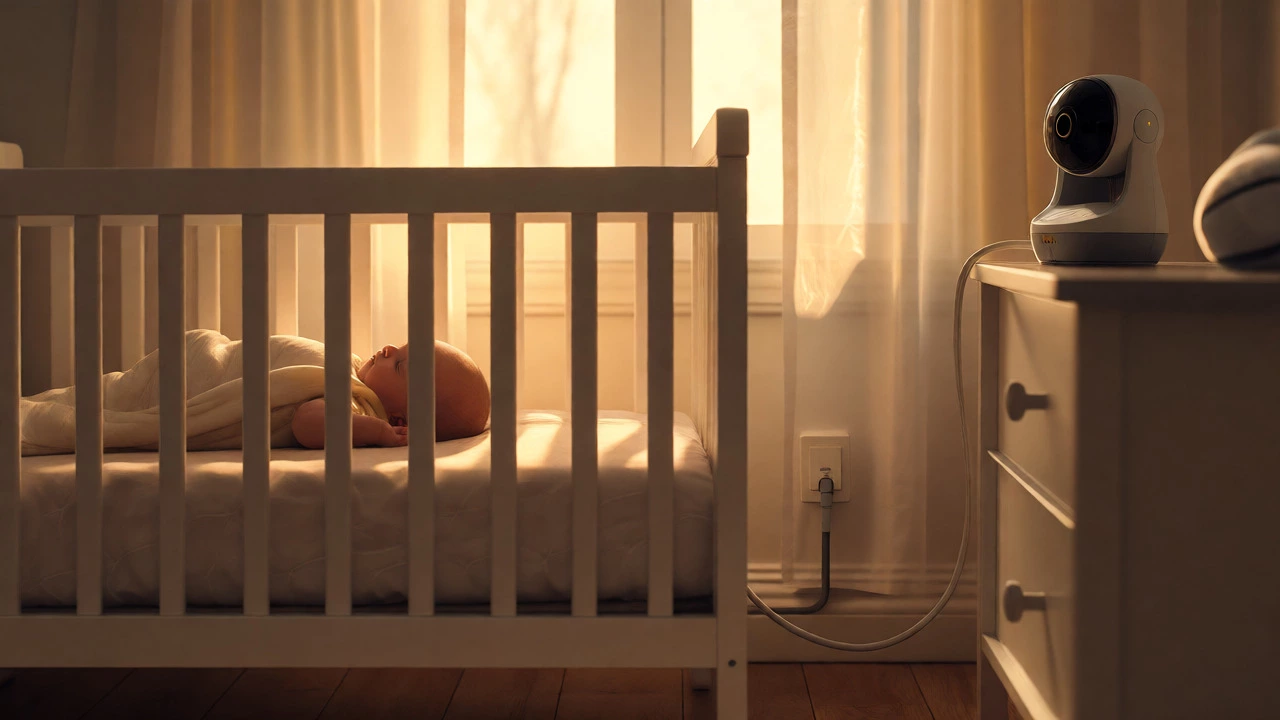
You just bought a high-definition baby monitor. You want the best view of your sleeping angel, so you place it on the dresser right next to the crib, maybe even clip it to the rail for that perfect angle. It feels safe. It looks tidy. But if you follow the strict guidelines from child safety experts, you might be creating a hidden danger zone.
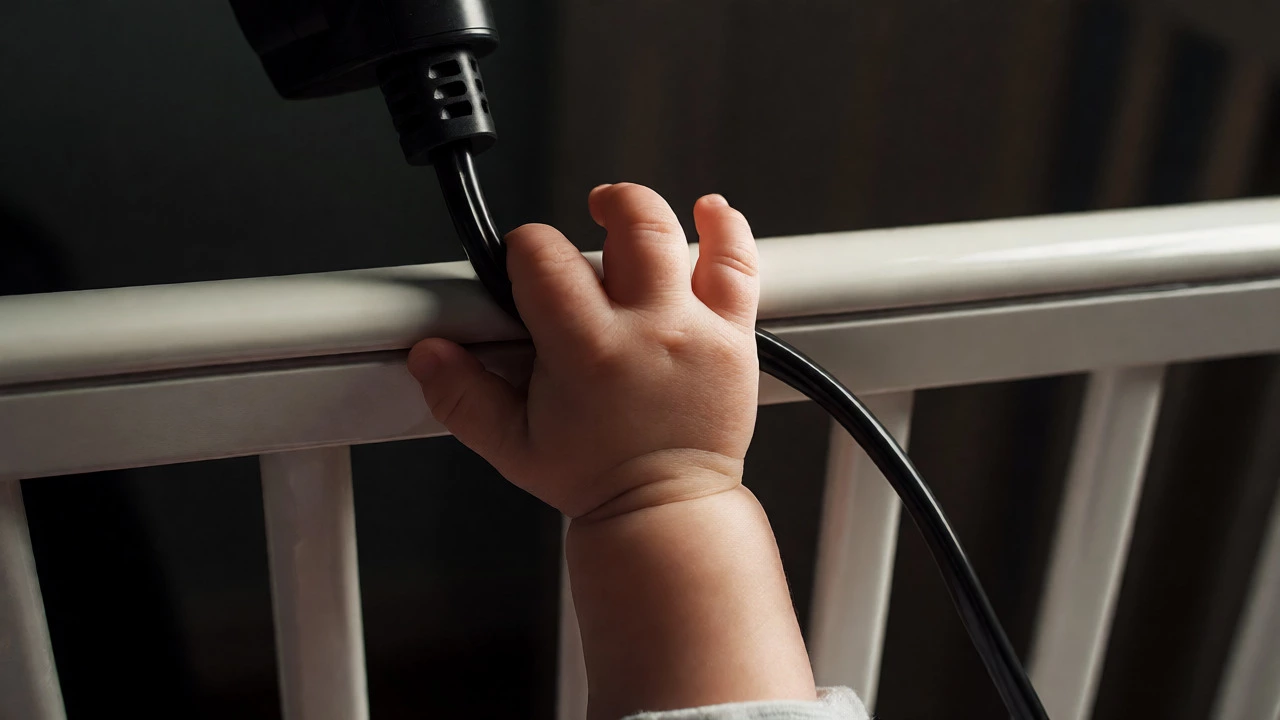
The rule is simple but non-negotiable: Baby monitors and their cords must stay at least 3 feet (0.91 meters) away from every part of the crib, bassinet, or play yard. This isn’t about radiation scares or Wi-Fi interference. It’s about physics and tiny hands. A dangling cable is a toy to an infant, and unfortunately, it can also be a noose.
The Real Reason Behind the 3-Foot Rule
Let’s cut through the noise. Many parents worry about electromagnetic fields (EMF) or screen time when they hear distance recommendations. That’s not what this is about. The U.S. Consumer Product Safety Commission (CPSC) issued this guidance in July 2012 after investigating tragic accidents involving infant strangulation. Since 2002, they documented seven deaths and three near-misses linked directly to monitor cords.
The hazard is mechanical. Babies are curious. They grab things. They pull up on furniture. If a camera sits on the crib rail, a baby can easily reach it. If there’s slack in the cable, they might wrap it around their neck. Unlike adults, infants cannot reliably untangle themselves from a loop around their throat. The 3-foot buffer creates a "reach-free" zone. It ensures that even if your baby stands up in the crib, stretches their arms out, or pulls on a loose thread, they still can’t touch the monitor or its power lead.
It’s Not Just About Radiation or Signal Strength
You might think, "But I read online that keeping electronics close affects sleep quality." While some studies debate EMF exposure, the CPSC’s warning is explicitly about strangulation hazards. The distance requirement applies to:
- Audio monitors: Even wireless units have charging cables and power bricks.
- Video cameras: Whether Wi-Fi or dedicated RF, the physical unit and cord pose risks.
- Movement sensors: These often sit under mattresses but connect via wires that run out of the crib.
If you move the monitor further away, yes, you might lose some image detail. You might need a wider-angle lens. But these are minor operational trade-offs compared to the catastrophic risk of accidental suffocation or strangulation. The primary goal is keeping the electrical and sensor components outside the baby’s foreseeable reach.
Historical Evidence: Why We Have This Rule
This isn’t theoretical fear-mongering. In February 2011, Summer Infant, a major manufacturer, recalled approximately 1.7 million video monitors due to strangulation risks. Two infants died within a year of each other. One was a 10-month-old girl in Washington, D.C., who strangled on a cord from a camera placed on top of her crib rail. Another was a 6-month-old boy in South Carolina, whose monitor sat on a changing table attached to the crib.
These cases highlight a critical misunderstanding: placing a monitor *near* the crib is different from placing it *in* the reach zone. A camera on a nearby dresser with a long, trailing cable can still create a fatal loop if the baby pulls it into the crib. The CPSC’s recent review covering incidents from 2018 to 2025 found ten fatalities related to monitor cords. Seven of those occurred after new safety standards were published, proving that product warnings alone don’t stop unsafe installation habits.
How to Measure Correctly (And Avoid Common Mistakes)
When parents ask, "Is 3 feet from my baby’s head enough?", the answer is no. The measurement starts from the nearest boundary of the sleep space. This includes the crib rails, the frame, and any attached accessories like a mobile or bumper.
| Placement Scenario | Risk Level | Why? |
|---|---|---|
| Camera clipped to crib rail | High Danger | Cord is immediately within reach; baby can pull camera down. |
| Monitor on dresser next to crib | Medium/High Danger | Cable may drape over edge; baby can pull slack into crib. |
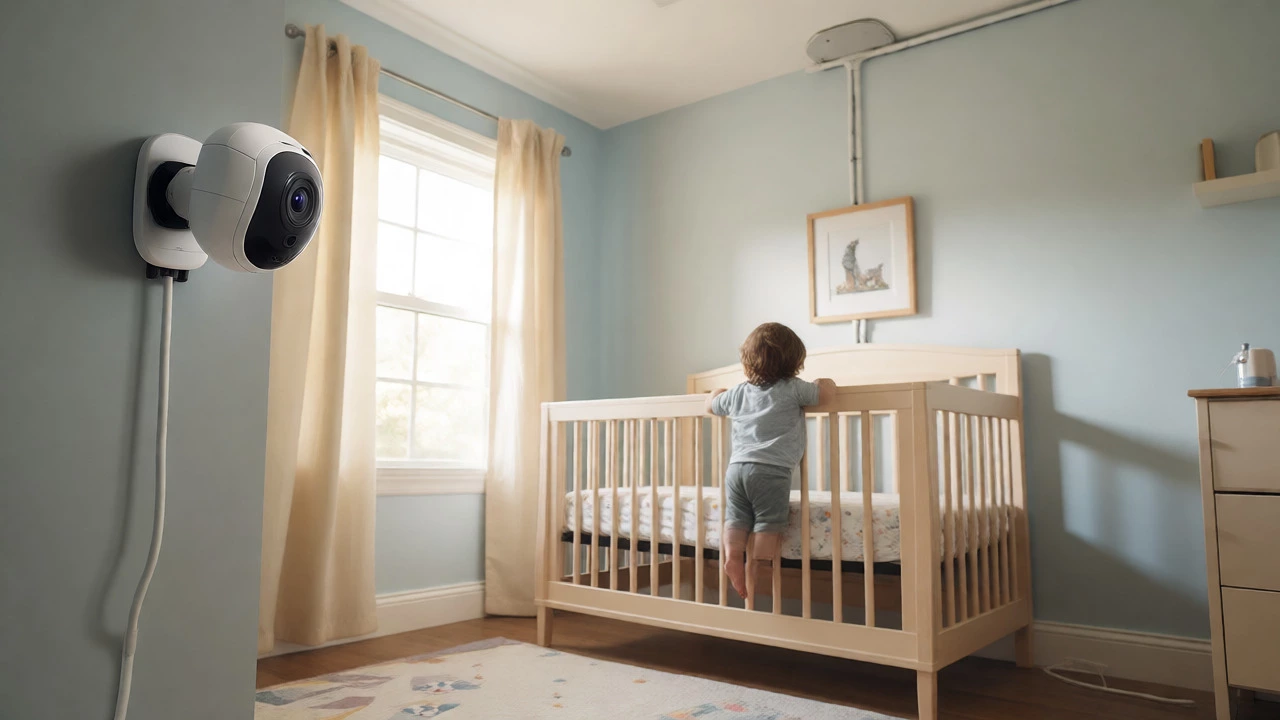
| Wall-mounted 4 feet away, cord secured | Low Danger | Outside reach zone; cord managed along wall. |
| On floor behind crib | Medium Danger | Tripping hazard for parents; cable may cross floor path. |
Here is the checklist for a safe setup:
- Measure from the rail: Place a tape measure against the crib slat. Extend it 3 feet outward. The monitor body must be beyond this line.
- Trace the entire cable: Don’t just look at the camera. Follow the wire all the way to the outlet. Does it hang down near the crib? Does it cross the floor where the baby could crawl to it later?
- Secure the slack: Use cord covers or clips to route the wire along the baseboard or wall. Never let excess cable pool on the floor beside the crib.
- Check mounting stability: If you mount the camera high on a wall, ensure it won’t fall. CPSC reports indicate that falling monitors can become entanglement hazards even if initially out of reach.
What About Wireless and Battery-Powered Monitors?
Some parents think, "I’ll buy a wireless camera with a battery pack. No cords! Problem solved." Not quite. While you eliminate the main power cable, you still have:
- Charging cables: When you plug it in to recharge, that temporary cable is a hazard.
- Mounting brackets: Small screws or plastic parts can loosen and fall into the crib.
- Secondary devices: If you use a separate audio receiver, keep that far away too.
Even with wireless tech, the principle remains: keep all electronic components and their accessories outside the 3-foot perimeter. As your child grows from an infant to a toddler, their reach extends dramatically. What was safe at 6 months might be dangerous at 12 months when they start standing up. Re-evaluate your setup every few months.
Common Myths Debunked
Myth 1: "The monitor blocks my view if it’s too far."
Modern lenses have wide angles. If your current camera doesn’t see well from 3 feet away, upgrade the camera rather than moving it closer. Safety trumps resolution.
Myth 2: "Wi-Fi signals are stronger closer to the router, so I need the monitor near the crib."
Signal strength depends on obstacles (walls, metal), not proximity to the baby. Move the router if needed, not the monitor.
Myth 3: "If I secure the cord with a cover, it’s safe inside the 3-foot zone."
Cord covers help prevent chewing, but they don’t stop pulling. A determined toddler can tug a covered cord hard enough to dislodge the camera or tighten a loop. Keep the distance anyway.
Action Plan for Parents
Don’t wait for an accident to check your setup. Do this today:
- Inspect now: Look at your nursery. Is any part of the monitor system within arm’s reach of the crib rails?
- Relocate if necessary: Move the camera to a shelf or wall mount that is clearly outside the 3-foot radius.
- Manage cables: Bundle excess length and secure it high on the wall or behind furniture.
- Recheck as baby grows: When your baby starts sitting up, crawling, or standing, re-measure the reach zone.
Remember, a baby monitor is a tool for supervision, not a substitute for safe-sleep practices. It won’t prevent SIDS, and it won’t make unsafe bedding safe. Its job is to give you peace of mind while you ensure the physical environment is free from strangulation hazards. By respecting the 3-foot rule, you’re protecting your child from a silent but serious risk.
Does the 3-foot rule apply to wireless baby monitors?
Yes. While wireless monitors lack a permanent power cord, they still require charging. During charging, the cable becomes a strangulation hazard. Additionally, the mounting hardware and any attached accessories should remain outside the 3-foot reach zone to prevent small parts from falling into the crib or being pulled by the baby.
Can I put the baby monitor on top of the crib rail?
No. Placing a monitor on the crib rail is one of the most dangerous positions. It puts the device and its cord directly within the baby's reach. Infants can easily grasp the camera or the dangling cable, leading to potential strangulation or injury if the device falls.
Is the 3-foot rule about radiation or EMF exposure?
No. The primary reason for the 3-foot recommendation is mechanical safety-specifically, preventing strangulation from cords and cables. While some parents worry about electromagnetic fields, regulatory bodies like the CPSC cite physical entanglement and suffocation risks as the basis for this distance guideline.
What if my room is small and I can't get 3 feet away?
If 3 feet isn't physically possible, the core principle is that no part of the monitor or its cords should be reachable by the baby. You may need to mount the camera high on a wall out of reach or use a shorter cable routed securely along the ceiling or high baseboards. Always prioritize keeping the cord completely inaccessible over hitting an exact numerical distance.
Do cord covers make it safe to keep the monitor close?
Cord covers protect against chewing and fraying, but they do not eliminate strangulation risk. A baby can still pull on a covered cord, potentially tightening a loop around their neck or dislodging the monitor. Maintaining the 3-foot distance remains the safest practice, regardless of whether the cord is covered.