
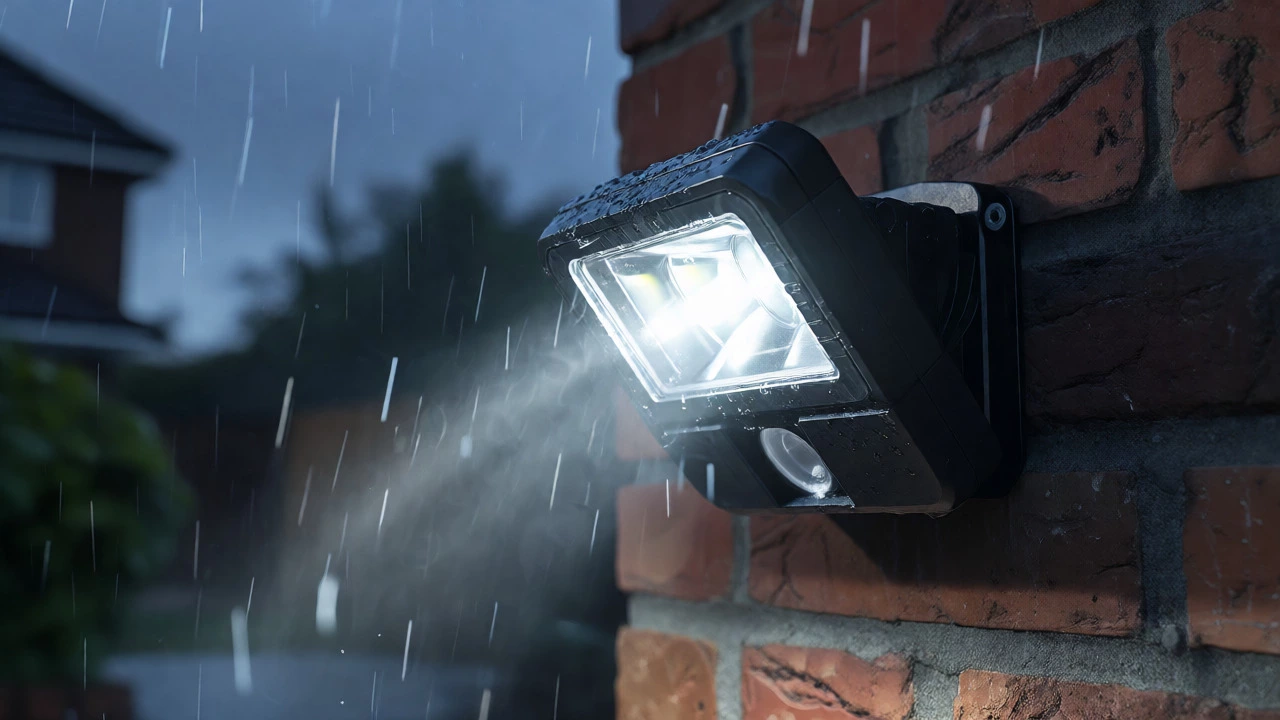
LED Security Light Troubleshooter
Is your security light acting up? Select the symptoms you are experiencing below to get a diagnosis, likely causes, and recommended fixes.
Diagnostic Results
You bought an LED security light because you were promised it would last for years. The box says "50,000 hours." You trust the math: that’s nearly six years of continuous operation. Yet, two winters later, your driveway is dark again. Or worse, the light flickers like a horror movie prop every time a branch moves in the wind.
Here is the frustrating truth: the LED chip itself rarely dies first. It’s almost always the supporting cast-the electronics, the seals, or the sensors-that quits on you. Understanding why these lights fail isn't just about curiosity; it saves you from buying cheap replacements repeatedly and helps you pick fixtures that actually survive your local climate.
The Driver Is Usually The Culprit
If your light goes completely dead but still has power, blame the LED driver. This small electronic component converts your home's high-voltage AC power into the low-voltage DC current LEDs need to shine. Think of it as the brain of the fixture. If the brain stops working, the body doesn't move, even if the muscles (the LEDs) are perfectly fine.
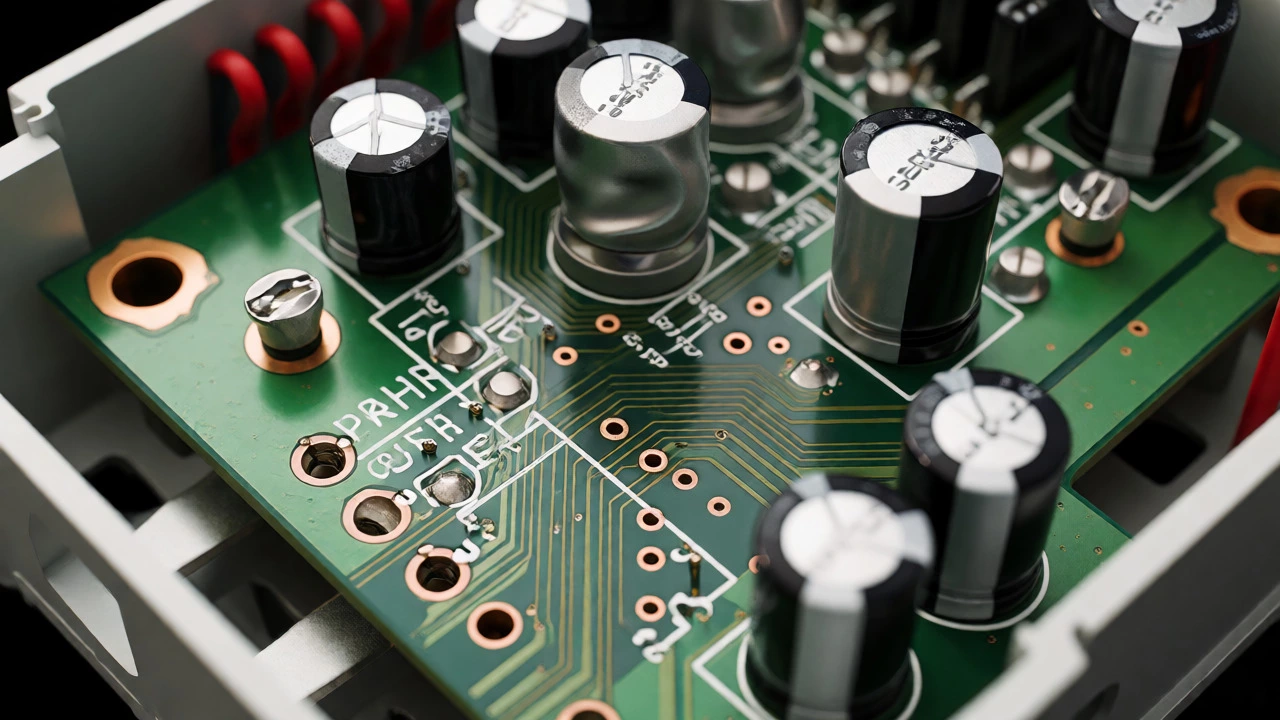
Field data from the U.S. Department of Energy suggests that drivers account for over 70% of all LED luminaire failures. Why do they break so often? Heat. Specifically, heat kills the electrolytic capacitors inside the driver. These capacitors smooth out the electrical current. Over time, especially in hot attics or direct sunlight, the liquid electrolyte inside them evaporates. When this happens, the driver can’t regulate current properly. You might see flickering, buzzing, or sudden shut-offs before total failure.
Most consumer-grade security lights use integrated drivers that aren't meant to be repaired. Once the capacitors dry out, you usually have to replace the whole unit. Higher-end commercial fixtures sometimes offer replaceable drivers, which is a huge plus for long-term maintenance.
Heat Management Matters More Than You Think
People often think LEDs run cool. They don't. While they emit less radiant heat than old incandescent bulbs, they generate significant internal heat at the semiconductor junction. If that heat isn't pulled away efficiently, the components degrade rapidly.
Thermal management relies on a metal heat sink attached to the back of the LED board. If this heat sink is blocked by insulation, painted over, or covered in thick dust, the temperature spikes. A general rule of thumb in electronics engineering is that for every 10°C increase in operating temperature, the lifespan of electrolytic capacitors halves. So, mounting a fixture flush against a brick wall without airflow gaps can significantly shorten its life compared to one mounted with proper ventilation.
- Dust and Debris: Accumulated dirt acts as an insulator, trapping heat.
- Poor Design: Cheap fixtures often use undersized heat sinks to cut costs.
- Enclosed Fixtures: Putting an open-design LED bulb into a fully enclosed lantern traps heat, leading to early failure.
Moisture And Corrosion Are Silent Killers
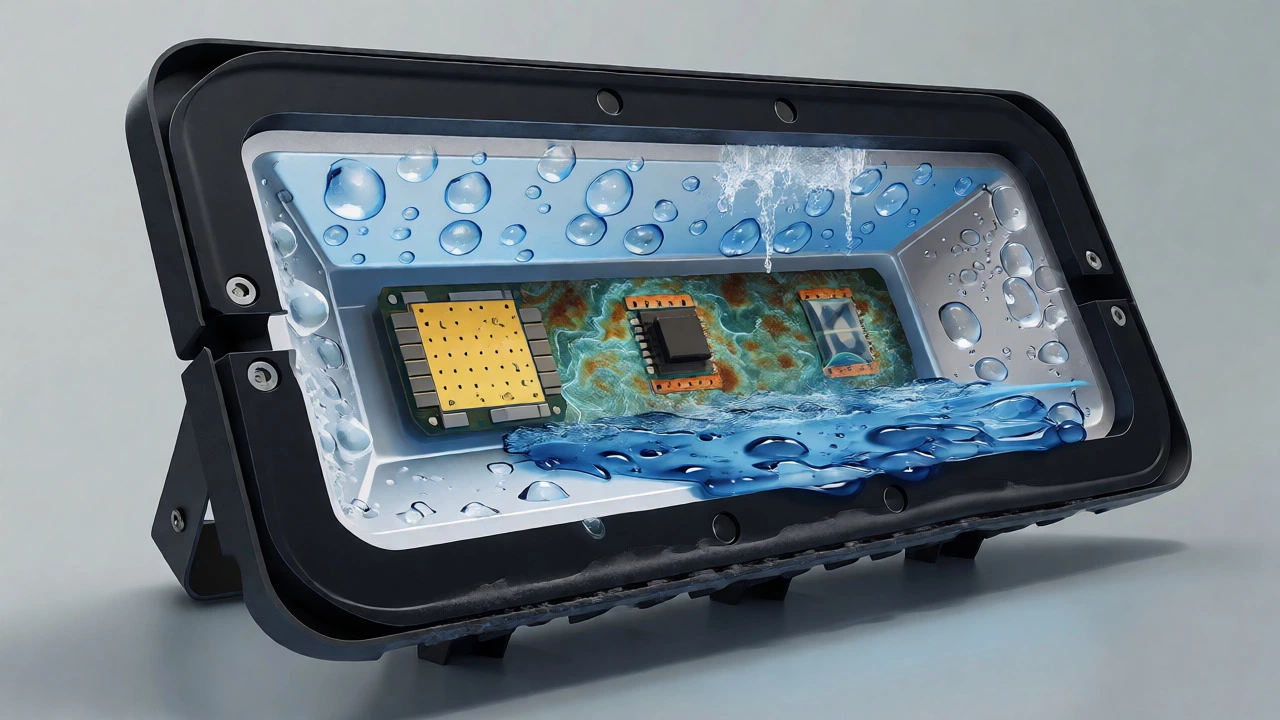
Outdoor environments are hostile. Rain, snow, humidity, and irrigation sprinklers constantly attack your fixture. Water ingress is a primary cause of intermittent faults and permanent shorts. Even if a light is rated IP65 (dust-tight and protected against water jets), improper installation can compromise its seal.
Check the gaskets around the lens and the cable entry points. If water gets inside, it corrodes the printed circuit board (PCB). Corrosion creates resistance, which generates more heat, creating a vicious cycle. In coastal areas, salt air accelerates this process dramatically. If you live near the ocean, look for fixtures specifically designed for marine environments with extra corrosion-resistant coatings.
Condensation is another sneaky issue. Temperature swings between day and night can cause moisture to form inside the housing if the venting isn't adequate. This trapped water can short out the driver or fog up the lens, reducing light output until it dries out.
Sensor And Photocell Glitches
Sometimes the light works, but it behaves strangely. It turns on during the day, stays on all night, or fails to detect motion. This is rarely an LED failure; it’s a control system problem. Most security lights combine a photocell (to detect daylight) and a Passive Infrared (PIR) sensor (to detect motion).
The photocell can be fooled by nearby streetlights, reflections from windows, or accumulated dirt on its surface. If the photocell thinks it's daytime, the light won't turn on when motion occurs. Conversely, if it's dirty or damaged, it might keep the light on all day, draining energy and overheating the driver unnecessarily.
PIR sensors detect changes in infrared radiation (heat). Common false triggers include:
- Wind-blown vegetation: Moving leaves change the thermal pattern seen by the sensor.
- Warm surfaces: Cars driving past or heaters blowing on the sensor.
- Insects or small animals: Depending on sensitivity settings.
Troubleshooting here involves cleaning the sensor lens, adjusting the sensitivity dial, and re-aiming the fixture to avoid obstructed sightlines. Many users leave the switch in "Test" mode accidentally, which overrides the photocell entirely.
Voltage Fluctuations And Surges
Your home's electrical grid isn't perfect. Lightning strikes, power outages, and heavy appliance cycling can cause voltage spikes. LED drivers are sensitive to these fluctuations. A massive surge from a nearby lightning strike can instantly destroy the driver's input stage. Even smaller, repeated transients can stress components over time.
If you live in an area prone to thunderstorms, consider installing a surge protector at the breaker panel or using a plug-in surge suppressor if the fixture allows. Additionally, loose wiring connections can cause arcing and inconsistent voltage delivery, leading to flickering and premature component fatigue. Always ensure wire nuts are tight and connections are secure.
Solar-Specific Failure Modes
If you use solar-powered security lights, the failure profile shifts. The LED and driver might be fine, but the battery or charging circuit is likely at fault. Rechargeable batteries (usually NiMH or Li-ion) have a limited number of charge cycles. After 1-3 years, depending on quality and depth of discharge, they lose capacity.
A light that dims quickly after sunset or fails to stay on through the night usually indicates a degraded battery. Dirty solar panels also reduce charging efficiency. Winter months with shorter days and cloudier skies exacerbate this issue. Cleaning the panel with glass cleaner and replacing the battery with the correct type and size can often revive these units.
| Symptom | Most Likely Cause | Quick Check |
|---|---|---|
| Light is completely dead | Driver failure or blown fuse | Check breaker; test outlet with lamp |
| Flickering or strobing | Failing driver capacitors or loose connection | Inspect wiring; listen for buzzing |
| On during the day | Dirty/blocked photocell or wrong mode | Clean sensor; check switch setting |
| No motion detection | Obstructed PIR sensor or low sensitivity | Clear debris; adjust sensitivity knob |
| Dimming prematurely (Solar) | Aged battery or dirty panel | Clean panel; replace battery |
How To Prevent Early Failure
You can't stop entropy, but you can slow it down. Choosing the right product and maintaining it correctly makes a difference.
First, ignore the "50,000-hour LED" claim as a guarantee for the whole fixture. Look instead for a warranty on the entire luminaire. A 5-year warranty suggests the manufacturer trusts their driver and thermal design. Second, check the IP rating. For most outdoor applications, IP65 is the minimum standard. If you're in a rainy or snowy region, IP66 or higher provides better protection against water jets.
Installation matters too. Don't mount the fixture where it will be directly blasted by lawn sprinklers. Ensure there is some airflow around the heat sink. If possible, choose fixtures with replaceable drivers or modules. While harder to find in big-box stores, they exist and save money in the long run.
Finally, perform annual maintenance. Clean the lens and sensor covers. Check for cracked gaskets. Tighten any accessible screws. These simple steps catch minor issues before they become major failures.
Can I fix a failed LED security light myself?
It depends on the fixture. If it's a modular system with replaceable drivers, yes. However, many consumer-grade integrated units are sealed. Opening them voids warranties and risks electric shock. If the driver is soldered onto the main board, replacement is difficult without specialized tools. For most homeowners, replacing the entire fixture is faster and safer than repairing the electronics.
Why does my LED light flicker even when it's new?
Flickering in new lights often points to incompatible dimmer switches or poor wiring connections. Standard dimmers designed for incandescent bulbs may not work well with LED drivers. Ensure you are using an LED-compatible dimmer if applicable. Loose neutral wires in the junction box can also cause erratic behavior.
Do expensive LED security lights last longer?
Generally, yes. Higher-priced fixtures typically use better-quality drivers with larger, more robust capacitors and superior heat sinks. They also tend to have better sealing against moisture. While no product lasts forever, premium brands often provide real-world lifespans closer to their advertised ratings due to stricter quality control and better component sourcing.
What does IP65 mean on my light fixture?
IP stands for Ingress Protection. The first digit (6) means it is dust-tight. The second digit (5) means it is protected against low-pressure water jets from any direction. It is suitable for most outdoor installations but should not be submerged. For areas with heavy rain or hose-down cleaning, IP66 offers higher protection.
Why does my solar light stop working in winter?
Winter brings shorter days and lower sun angles, reducing charging time. Snow cover blocks the panel. Cold temperatures also temporarily reduce battery efficiency. If the light works briefly then dies, the battery may be aging. Try cleaning the panel and ensuring it receives maximum direct sunlight during the day.