
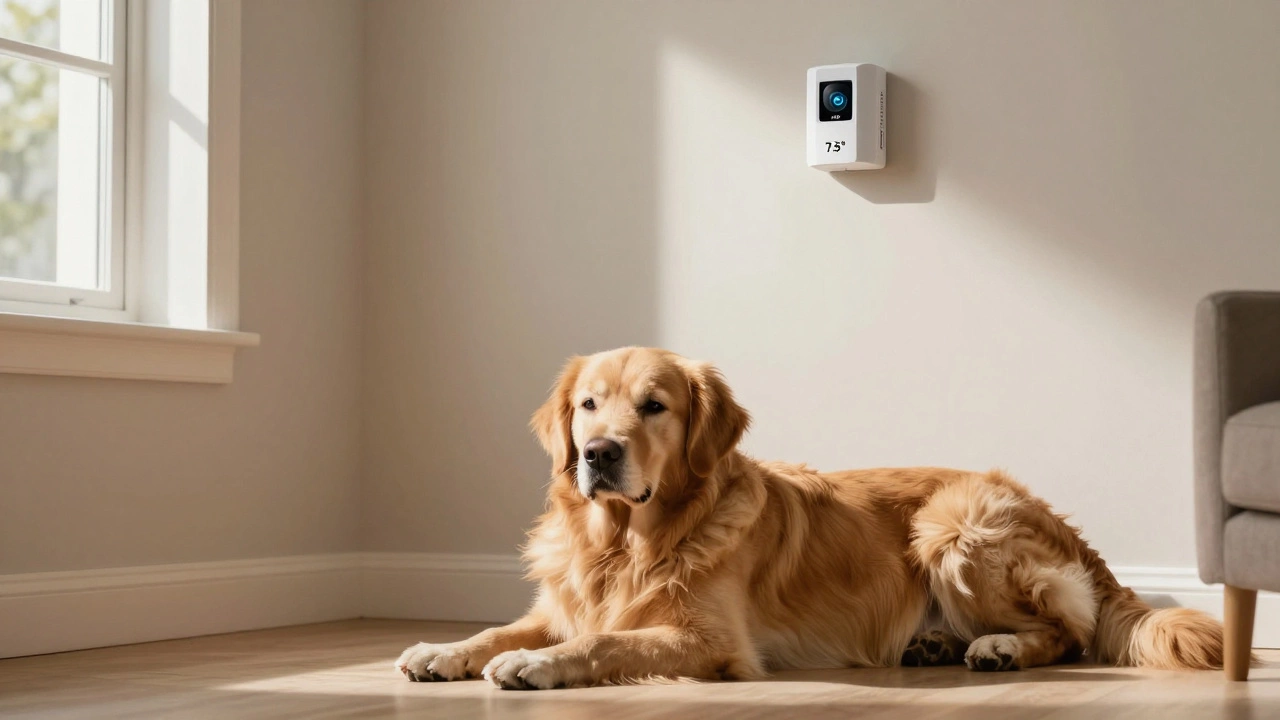
ADT Sensor Placement Calculator
Check Your Setup
Calculate if your dog will trigger an ADT motion sensor based on your dog's weight and the sensor height.
Enter your dog's weight and sensor height to see if alarms will trigger.
Every dog owner worries about this: Will my dog set off my ADT alarm? You love your pup, but you also want your home to stay safe. The last thing you need is a false alarm at 3 a.m. because your Labrador jumped on the couch. The good news? ADT’s pet-immune motion sensors were built exactly for this problem. But it’s not magic. It’s science-and placement matters more than you think.
How ADT’s Pet-Immune Sensors Actually Work
ADT doesn’t just say their sensors ignore pets. They’ve spent years studying how dogs move. In 2008, engineers analyzed over 5,000 real-life animal and human movements to build algorithms that tell the difference. Today’s sensors use passive infrared (PIR) tech to detect heat and motion together. They don’t just see movement-they analyze how it moves. Here’s what the sensor checks:- Body heat: Dogs run cooler than humans. Sensors look for temperatures between 92-100°F for pets versus 97-100°F for people.
- Movement speed: Dogs move slower on average-2-5 feet per second-while humans walk at 3-6 feet per second.
- Height and mass: Dogs are lower to the ground. Their center of gravity is closer to the floor. Sensors are designed to ignore anything below a certain vertical profile.
- Movement pattern: Pets zigzag. Humans walk in straighter lines. The algorithm notices the difference.
Weight Limits: What’s Too Big?
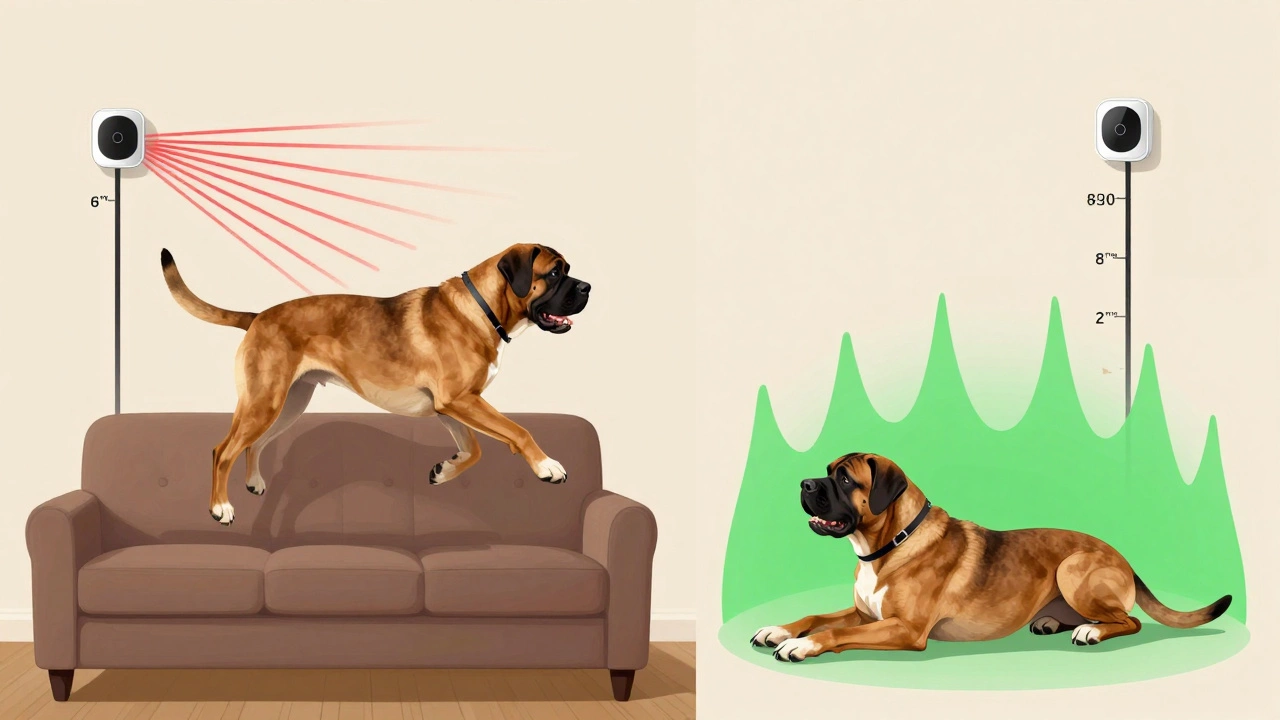
If your dog weighs less than 60 pounds, you’re in the sweet spot. Most owners of Golden Retrievers, Labs, and German Shepherds report zero false alarms when sensors are installed correctly. But if your dog is 70 pounds or heavier? You’re on the edge. ADT’s sensors can technically handle up to 80 pounds, but real-world performance drops. In a 2023 ConsumerAffairs survey of 1,247 ADT customers with dogs, satisfaction fell from 82% for dogs under 70 lbs to just 63% for dogs over 70 lbs. Why? Because larger dogs often jump. They stretch. They leap onto couches or beds. And when they get within 1.8 meters (5.9 feet) of the sensor, the system can’t tell if it’s a pet-or an intruder. For dogs over 80 pounds, ADT’s technicians don’t even recommend relying on motion sensors alone. They suggest adding door/window sensors and glass break detectors instead. No sensor on the market can reliably ignore a 100+ pound Mastiff or Great Dane when they’re moving around the room.Placement Is Everything
You can have the best sensor in the world, but if it’s mounted wrong, your dog will set it off. ADT’s installation guide is clear:- For dogs under 50 lbs: Mount sensors at least 7 feet high.
- For dogs 50-70 lbs: Mount at 7.5 feet.
- For dogs 70-80 lbs: Mount at 8 feet.
Breeds That Cause Trouble
It’s not just size. It’s behavior. Breeds like Border Collies, Australian Shepherds, and Huskies are notorious for jumping. They’re agile, energetic, and love to leap. A 50-pound Husky on a sofa can easily trigger an alarm-even if the sensor is set for 60 pounds. Security expert Lisa Marie Johnson, author of Home Security for Pet Owners, says: “If your dog jumps on furniture, don’t rely on height alone. Block access.” Pet gates are one of the most effective, low-cost fixes. Install them to keep your dog out of the living room or bedroom when you’re away. Or use ADT’s scheduling feature to turn off motion sensors in those rooms during your dog’s playtime.DIY vs Professional Installation
You can buy ADT equipment and install it yourself. But if you want pet immunity to work right? Go professional. A 2023 SafeWise report found that DIY installations had a 37% higher false alarm rate than professional ones. Why? Because placement, angle, and calibration matter. ADT’s 3,500 certified installers are trained specifically to adjust sensors for pet size, breed behavior, and home layout. If you’re doing it yourself, use ADT’s new “PetSmart Setup” app feature. It uses augmented reality to show you where to place sensors based on your dog’s weight and your floor plan. It’s not perfect-but it’s better than guessing.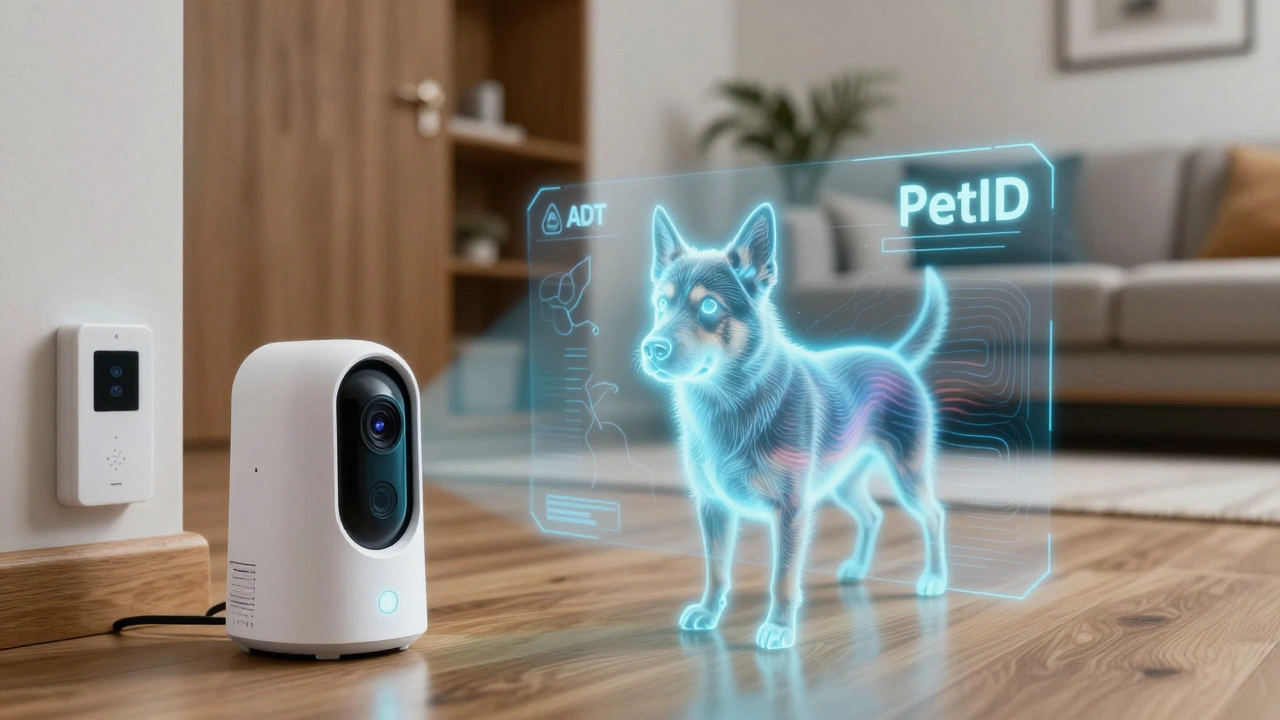
What If My Dog Still Sets Off the Alarm?
Even with perfect setup, some dogs still trigger alarms. Here’s what to do:- Check sensor height. Is it at least 7.5 feet for a 60-pound dog? If not, raise it.
- Look at furniture. Does your dog jump on the couch? Block it with a gate or use ADT’s room scheduling to disable motion detection there.
- Adjust the weight setting. In the ADT Control app, you can set the sensor to 40, 60, or 80 pounds. If your dog is 68 pounds, don’t set it to 60. Go to 80.
- Check for heat sources. Radiators, heaters, or direct sunlight can confuse sensors. Move the sensor away from windows or vents.
- Use secondary sensors. Install door/window sensors on entry points. Glass break detectors on large windows. These don’t care if your dog is running around-they only trigger if someone breaks in.
What’s Next for Pet-Immune Tech?
ADT isn’t stopping. In early 2024, they’re launching “PetID” technology-a system that uses camera integration to recognize your specific dog. Instead of just guessing weight, it learns your dog’s face and movement style. Beta tests showed a 42% drop in false alarms. By 2025, experts predict all major brands will offer pet immunity as standard-not premium. Weight limits will rise to 100 pounds. But even then, the biggest dogs will need backup sensors. For now, ADT’s system is one of the most reliable on the market. But it’s not foolproof. It’s a tool. And like any tool, it works best when used correctly.Bottom Line: Yes, Your Dog Can Set Off the Alarm-But It Doesn’t Have To
Your dog won’t set off your ADT alarm if you do three things:- Install sensors high enough (7.5-8 feet for large dogs)
- Set the weight limit correctly (match your dog’s actual weight)
- Block access to furniture or high-traffic zones when you’re away
Can a small dog set off an ADT alarm?
Yes, but it’s rare. ADT’s sensors are designed to ignore pets under 40 pounds. However, if a small dog jumps on a counter or table directly in front of the sensor, it can trigger an alarm. Always mount sensors at least 7 feet high, even for small dogs, to avoid this.
Do ADT sensors work with multiple dogs?
Yes. ADT’s pet-immune sensors can handle multiple dogs as long as all of them are under the weight limit you’ve set (40, 60, or 80 lbs). If you have one 70-pound Lab and one 15-pound Chihuahua, set the sensor to 80 pounds. The system ignores both.
Will my dog’s barking set off the alarm?
No. ADT motion sensors detect movement and heat-not sound. Barking won’t trigger them. However, if your dog runs around while barking and jumps on furniture near a sensor, the motion could set it off. It’s the movement, not the noise.
How long do ADT pet-immune sensors last?
The batteries last about five years with normal use. ADT uses Energizer L92 AA batteries, which are tested for long-term performance. When the battery is low, the ADT Control app will send you a notification.
Is ADT better than Ring or SimpliSafe for dogs?
For dogs over 60 pounds, ADT is better. SimpliSafe only supports up to 50 pounds. Ring doesn’t have weight settings-you just turn on “pet mode,” which reduces sensitivity but doesn’t guarantee accuracy. ADT lets you pick exact weight thresholds (40, 60, 80 lbs) and offers professional installation to fine-tune placement. That precision makes the difference.
What if I have a very large dog over 80 pounds?
Don’t rely on motion sensors alone. ADT recommends adding door/window sensors and glass break detectors. These don’t care about pets-they only trigger if someone forces entry. For dogs over 85 pounds, motion sensors can’t reliably distinguish them from humans. Layered security is your best bet.