
Pet Alarm Compatibility Checker
Enter details above to check risk
Input your dog's weight and select your sensor type to see if it might trigger a false alarm.
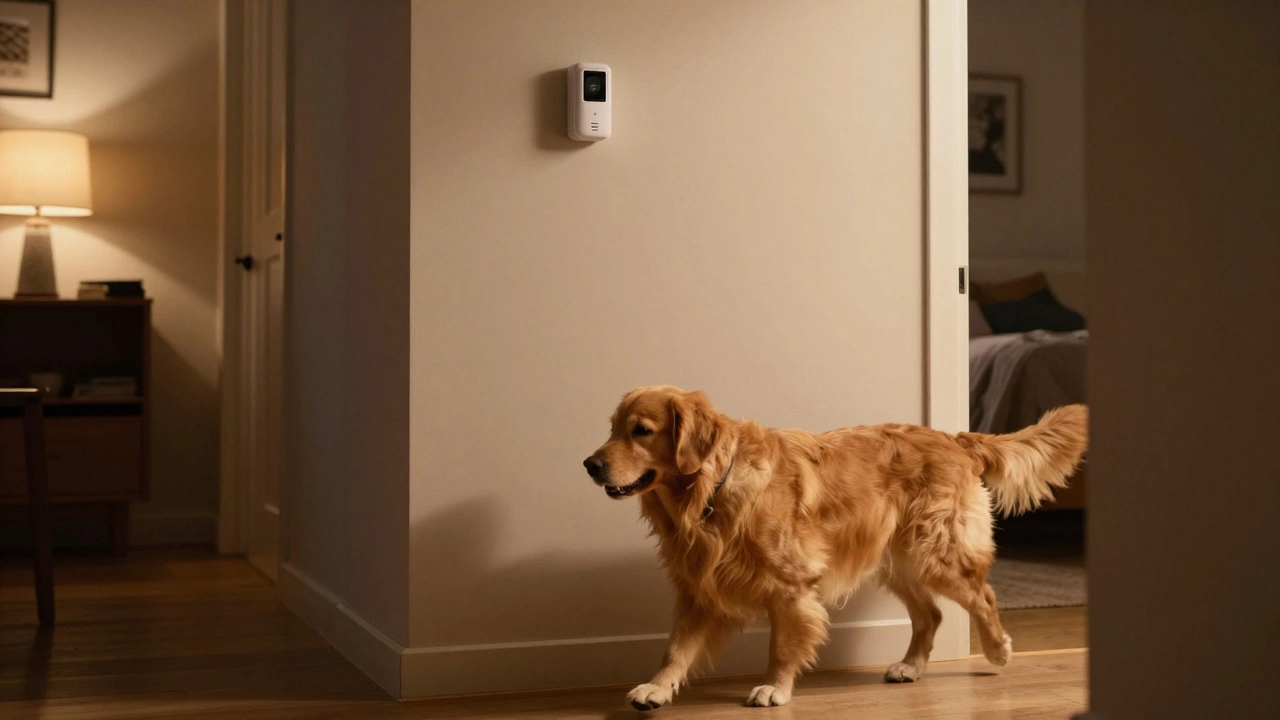
It is 2 AM. You are fast asleep when your house alarm screams into life. Your heart hammers against your ribs. You grab your phone, expecting a break-in, only to see the live feed: it’s just Buster, your Golden Retriever, trotting past the hallway sensor to check his water bowl.
This scenario plays out in thousands of homes every week. The short answer to "will my dog set off my house alarm?" is yes, but not if you have the right equipment and configuration. Standard motion detectors treat any heat signature moving across their field of view as an intruder. They cannot tell the difference between a burglar and a Beagle. However, modern security technology has evolved significantly to address this exact problem.
By understanding how pet-immune motion sensors work, knowing your dog's specific weight class, and placing devices correctly, you can secure your home without turning your pet into a false-alarm generator. Let's look at why this happens and how to fix it.
Why Standard Motion Sensors Trigger on Dogs
To understand why your dog sets off the alarm, you need to know what the sensor is actually looking for. Most residential alarms use PIR (Passive Infrared) sensors. These devices do not "see" images like a camera does. Instead, they detect changes in infrared radiation-essentially body heat.
When a warm object moves across the sensor's detection zone, the PIR unit registers a change in temperature patterns. If that pattern matches the algorithm for human movement, the alarm triggers. A standard PIR sensor is designed to be hyper-sensitive. It assumes that any significant heat source moving through your living room is a threat. Since dogs generate body heat and move frequently, they fit the profile perfectly.
The problem with standard sensors is that they lack context. They do not measure mass, speed, or height relative to the floor. To a basic detector, a 5-pound Chihuahua running across the carpet looks just as suspicious as a human walking slowly toward the front door. This leads to frequent false alarms, which can result in fines from local authorities and desensitizes you to the sound of the alarm itself.
How Pet-Immune Technology Works
Security companies realized that false alarms were a major pain point for customers. In response, manufacturers developed pet-friendly motion detectors. These advanced sensors use more complex algorithms to distinguish between humans and animals.
Instead of just detecting heat, pet-immune sensors analyze multiple data points simultaneously:
- Mass and Size: The sensor estimates the size of the heat signature. Humans generally have a larger thermal footprint than most pets.
- Movement Pattern: Algorithms track the trajectory and speed. Animals often move erratically or stay low to the ground, while humans tend to walk upright at a consistent pace.
- Body Temperature: Some systems differentiate based on slight variations in heat signatures, though this is less reliable than mass detection.
Companies like ADT Security Australia and Brinks Home have spent hundreds of hours recording animal and human movements to train these algorithms. The goal is to create a filter that ignores anything below a certain weight threshold while remaining sensitive enough to catch an intruder.
The Weight Threshold: Does Your Dog Qualify?
The most critical factor in whether your dog will trigger the alarm is its weight compared to the sensor's immunity rating. There is no universal standard, so you must check the specifications of your specific system.
| Provider / System Type | Typical Weight Limit | Notes |
|---|---|---|
| Standard PIR Sensor | 0 kg / 0 lbs | No immunity. Any movement triggers alarm. |
| Basic Pet-Friendly Sensor | 18 kg / 40 lbs | Covers small to medium breeds (e.g., Cocker Spaniel). |
| ADT Security Australia | 20 kg / 44 lbs | May still trigger if pet is within 1.8m of sensor. |
| High-End US Models (e.g., ADT US) | 38 kg / 85 lbs | Covers large breeds (e.g., Labrador, Husky). |
| SimpliSafe | Variable | Adjustable sensitivity; effective up to ~40-60 lbs depending on placement. |
If your dog weighs less than the stated limit, the sensor should ignore them under normal conditions. For example, if you have a 10kg Terrier and a sensor rated for 20kg, you are likely safe. However, if you have a 30kg German Shepherd and a sensor rated for 18kg, the alarm will almost certainly go off. Always choose a sensor with a weight limit comfortably higher than your dog's actual weight.

Placement Matters: Why Small Dogs Still Trigger Alarms
Even with a high-quality pet-immune sensor, incorrect installation can lead to false alarms. Weight thresholds are not magic shields. They rely on the sensor viewing the pet from a distance where the heat signature appears small enough to be filtered out.
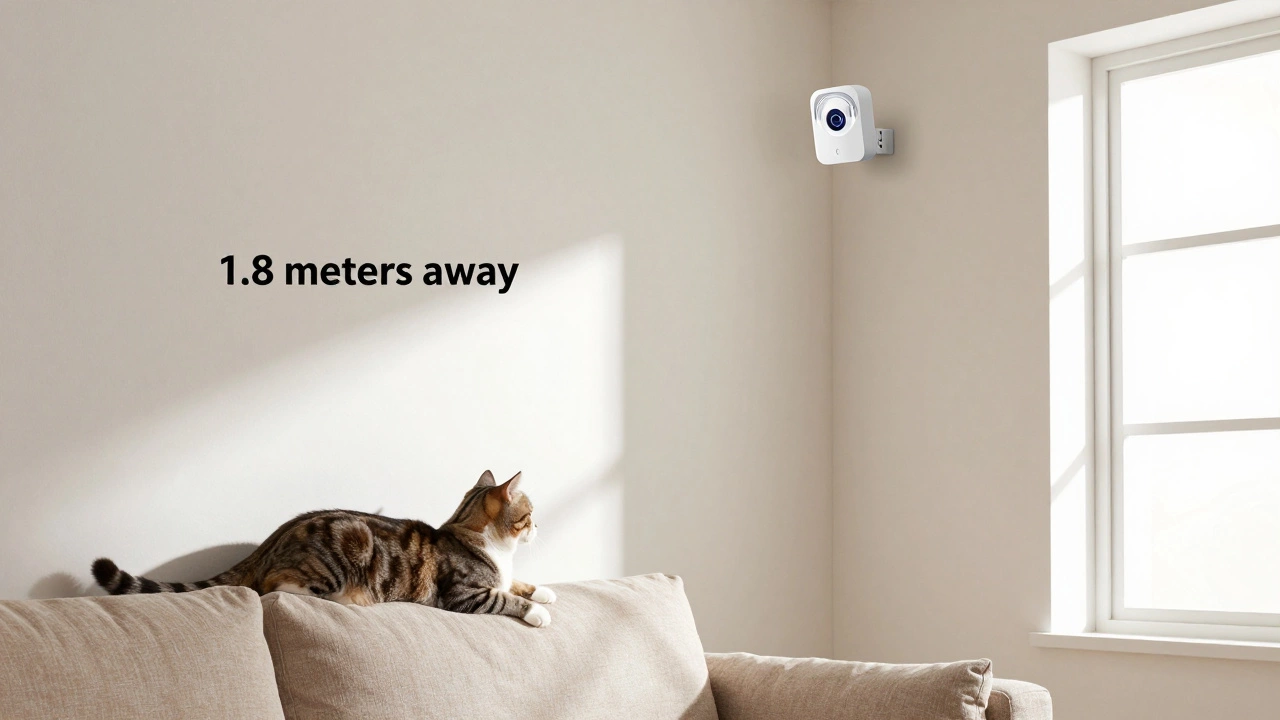
Consider this scenario: A 5-pound cat jumps onto a bed. If the motion sensor is mounted on the wall above that bed, the cat is now directly in front of the lens, close enough that its heat signature fills the detection zone. The sensor may interpret this as a human torso. Similarly, if your dog climbs onto a sofa near the sensor, it bypasses the "floor-level" assumption built into the algorithm.
To prevent this, follow these placement rules:
- Mount High: Install motion sensors near the ceiling or high on walls. This ensures the detection cone covers human-height areas rather than the floor where pets roam.
- Avoid Jumping Zones: Keep sensors at least 1.8 meters away from beds, couches, or tables where pets might climb. ADT Security Australia specifically warns that pets within 1.8 meters of the sensor may trigger it regardless of weight.
- Angle Away from Windows: Sunlight heating up a floor or wall can create heat shadows that confuse PIR sensors, potentially causing false triggers even without a pet present.
Indoor vs. Outdoor Sensors
There is a crucial distinction between indoor and outdoor motion detection. Indoor pet-friendly sensors are designed to ignore small animals inside your home. Outdoor sensors, however, operate differently.
Outdoor motion detectors are typically calibrated to detect any movement in their field of view. As noted by security providers, "anything that crosses the outdoor sensors will set them off, whether a dog, cat, raccoon, or another animal." This is intentional because outdoor threats vary widely, and missing an intruder is a higher risk than a false alarm from a squirrel.
If your dog runs loose in the backyard, an outdoor motion sensor will likely trigger the alarm. Some systems allow you to adjust the sensitivity of outdoor sensors to ignore smaller objects, but this reduces their effectiveness against human intruders. For yards, consider using perimeter fencing sensors or cameras with AI-based animal filtering instead of traditional PIR motion detectors.
Alternative Strategies for Large Dogs
What if you have a Great Dane or a Saint Bernard? Even the best pet-immune sensors struggle with dogs over 35-40 kg (80-90 lbs). At that size, the dog's heat signature and movement pattern closely mimic a human. Here are three strategies to manage security for homes with very large dogs:
- Perimeter-Only Arming: Use door and window contact sensors instead of interior motion detectors. This allows your dog to roam freely inside the house while still alerting you if someone enters through a door or window. This is often called "Stay Mode" or "Night Mode" in many systems.
- Glass-Break Detectors: These sensors listen for the specific frequency of shattering glass. They provide coverage for windows without relying on motion detection, eliminating the risk of pet-triggered alarms in those rooms.
- Camera-Based Detection: Modern smart cameras with AI can distinguish between people and pets. While not always integrated directly into traditional alarm panels, they can provide visual verification before triggering a loud siren, reducing unnecessary panic.
Testing Your System
Before fully trusting your new setup, perform a test. SimpliSafe recommends a practical approach: temporarily set your motion sensors to "secret alert" mode or lower their sensitivity to the minimum setting. Then, let your dog roam naturally around the house for a few days.
Monitor the app to see if any alerts are generated. If your dog triggers the sensor, try adjusting the angle or moving the device slightly. If the problem persists, consider replacing that specific sensor with a higher-rated pet-immune model or switching to a door/window sensor for that room.
Can a 50lb dog set off a pet-friendly alarm?
It depends on the sensor's rating. Many basic pet-friendly sensors have a limit of 40lbs (18kg), so a 50lb dog would likely trigger them. However, high-end models from providers like ADT US can ignore pets up to 85lbs (38kg). Check your specific sensor's manual for its weight threshold.
Do outdoor motion sensors detect dogs?
Yes, most outdoor motion sensors are not pet-immune by default. They are designed to detect any movement, including animals, to ensure no intruders are missed. You may be able to adjust sensitivity, but this risks missing human threats.
How do I stop my dog from triggering the alarm?
First, ensure you have pet-immune sensors rated for your dog's weight. Second, mount sensors high on walls, away from furniture where dogs jump. Third, use "Stay Mode" to arm only doors and windows, disabling interior motion detectors while you are home.
Are all motion detectors pet-friendly?
No. Standard PIR motion detectors are not pet-friendly and will trigger on any moving heat source. You must specifically purchase and install "pet-immune" or "pet-friendly" sensors to avoid false alarms from dogs and cats.
Does SimpliSafe work with dogs?
Yes, SimpliSafe offers pet-friendly motion sensors. They recommend lowering sensitivity and testing the system to ensure your specific dog does not trigger the alarm, especially if the dog is close to the sensor or jumps on furniture.