
Pet-Immune Sensor Selector
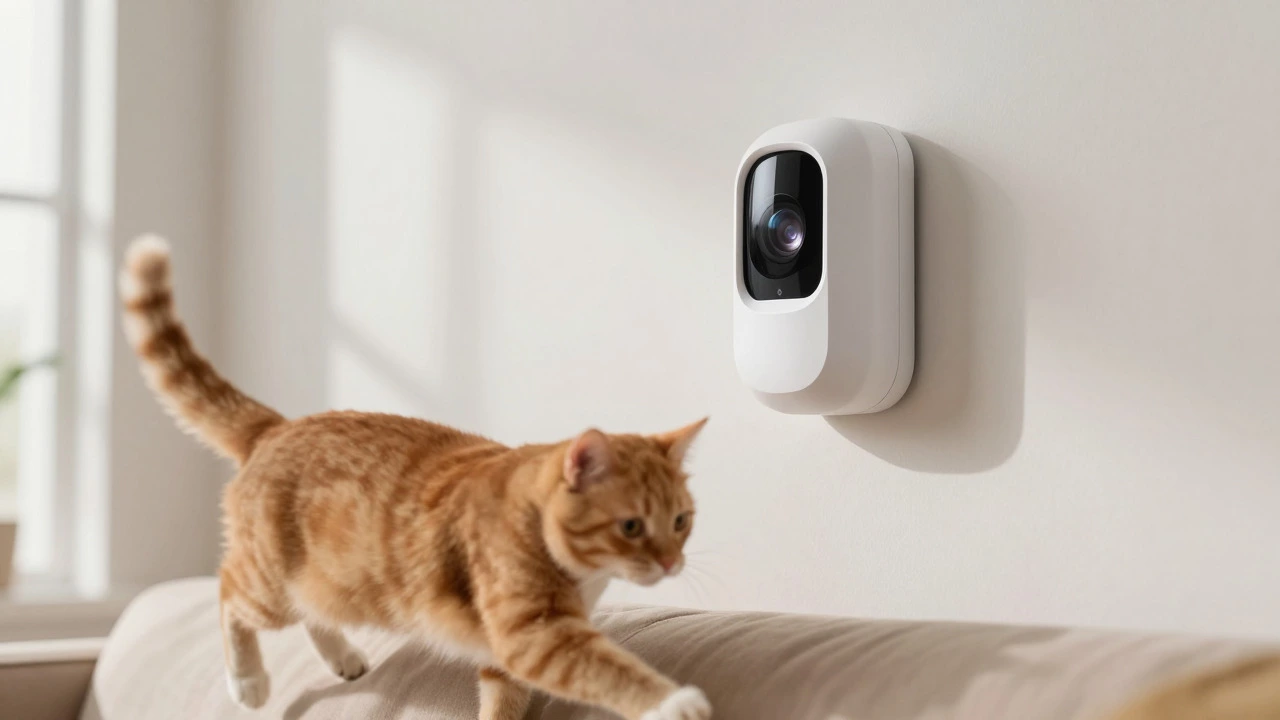
Your cat just leaped onto the sofa, and suddenly your phone buzzes with an alert. You rush over, only to find no intruder-just your pet. If you own a dog or cat and have installed a home security system, this scenario is likely familiar. The short answer to whether pets will set off motion detectors is: it depends on the sensor type, the animal's size, and how well the system is installed.
Modern security systems are designed to handle household animals, but "pet-immune" does not mean "pet-proof." It means the sensor is engineered to ignore most movements from smaller animals while still detecting humans. Understanding how these devices work can help you stop those annoying false alarms before they start.
How Motion Detectors Actually Work
Most residential motion detectors use passive infrared (PIR) technology. These sensors don't "see" images; instead, they detect changes in heat patterns. When a warm body moves across the sensor's field of view, it disrupts the infrared energy balance, triggering an alarm.
The challenge for pet owners is that cats and dogs also emit heat. A standard PIR sensor cannot easily distinguish between a 4.5 kg (10 lb) cat and a human if both move quickly through the same zone. This is why older or cheaper models often trigger alarms every time a pet walks by.
Pet-immune sensors solve this using two main strategies:
- Optical Shaping: The lens is designed so that detection beams intersect at human torso height (around 1.2 to 1.5 meters). Since pets usually stay close to the floor, their movement produces a weaker signal than a standing human.
- Signal Processing: Digital algorithms analyze the size and speed of the heat signature. Small, fast-moving objects near the floor are filtered out as "noise," while larger, slower movements are flagged as potential intruders.
The Weight Limit Myth: What "Pet-Immune" Really Means
You will see labels like "immune to pets up to 18 kg" or "works with dogs up to 36 kg." These numbers are guidelines, not guarantees. Manufacturers test these limits under specific conditions: a single pet moving slowly on a flat surface, away from direct sunlight or air vents.
In real homes, conditions are messier. Here is why a pet under the weight limit might still trigger an alarm:
- Height Matters: Many sensors have reduced immunity above 1 meter (3 feet). If your cat climbs a bookshelf or your dog jumps on a bed, they enter the high-sensitivity zone where the sensor expects humans.
- Combined Heat Signatures: If multiple cats play together or roll on the floor, their combined heat pattern can look like a single large object to the detector.
- Proximity to Sensor: The closer a pet gets to the device, the larger its heat signature appears. A small dog right next to the sensor may register as a threat even if it weighs half the limit.
- Environmental Factors: Sunlight hitting the wall or warm air from an HVAC vent can create thermal fluctuations. When a pet moves through these zones, the composite signal can exceed the detection threshold.
Cats vs. Dogs: Which Are More Likely to Trigger Alarms?
Both species cause issues, but for different reasons.
Cats are notorious for climbing. A 4.5 kg cat is well below most pet-immunity thresholds, but if it jumps onto a table near the sensor, it effectively doubles its apparent height. Technical specifications often show that pet immunity drops significantly when animals move above 1 meter. For example, a sensor rated for 36 kg pets at floor level might only be reliable for 18 kg pets at higher elevations.
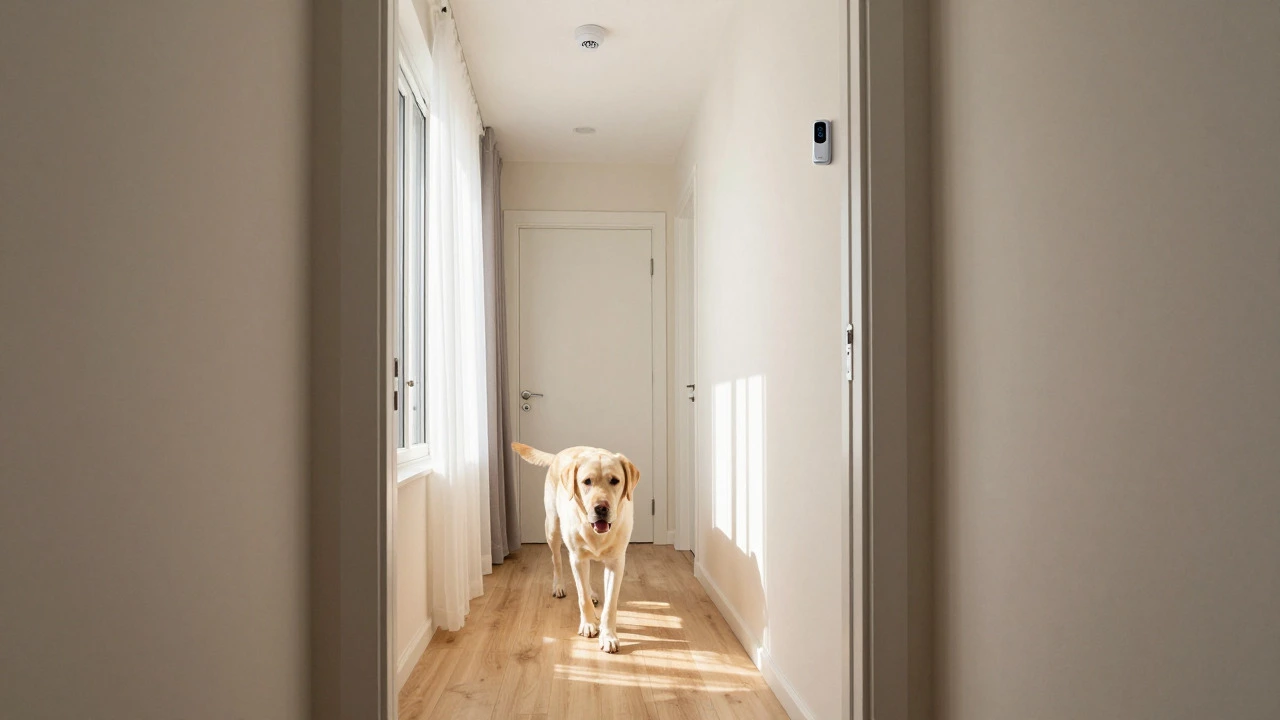
Dogs present a weight challenge. Medium and large breeds often approach or exceed the 18 kg (40 lb) standard found in many entry-level systems. If you have a Labrador or a German Shepherd, a basic pet-immune sensor might not be enough. You need a model specifically rated for heavier animals, such as those supporting up to 30 kg or 38 kg.
| Sensor Type / Rating | Typical Pet Limit | Best For | Key Limitation |
|---|---|---|---|
| Standard Entry-Level | Up to 18 kg (40 lb) | Cats, small dogs (Chihuahuas, Terriers) | Fails with medium dogs or climbing cats |
| Mid-Range Pet-Immune | Up to 27-30 kg (60-66 lb) | Medium dogs (Beagles, Corgis), active cats | May struggle with multiple pets or large jumps |
| High-Capacity / Advanced | Up to 36-38 kg (80-85 lb) | Large dogs (Labradors, Shepherds), multi-pet households | Higher cost; requires precise installation |

Installation Tips to Prevent False Alarms
Even the best sensor will fail if installed poorly. Follow these practical steps to maximize pet immunity:
- Mount at the Correct Height: Most manufacturers recommend mounting indoor sensors between 2.1 and 2.3 meters (7 to 7.5 feet) from the floor. This ensures the primary detection beams cross at human chest height, leaving the floor area less sensitive.
- Avoid Tall Furniture in the Field of View: If a cat can climb a wardrobe or a dog can jump on a couch directly facing the sensor, you are inviting false alarms. Try to angle the sensor away from furniture that pets frequently access.
- Keep Away from Air Vents and Windows: Direct sunlight and forced air create heat variations that confuse PIR sensors. Install the detector away from windows and HVAC outlets.
- Test With Your Actual Pets: Don't trust the box alone. After installation, arm the system and let your pets roam their usual paths. Watch for alerts. If your cat triggers the alarm on the sofa, consider moving the sensor or adjusting its angle.
When to Use Layered Security Instead
If you have very active pets, multiple animals, or a layout with lots of tall furniture, relying solely on interior motion detectors might be frustrating. Consider a layered approach:
- Perimeter Sensors First: Use door and window contacts as your primary intrusion detection. These are unaffected by pets inside the house.
- Glass-Break Detectors: These listen for the sound of breaking glass and are completely blind to pet movement.
- Partial Arming Modes: Many systems allow you to disable interior motion sensors when you are home or when pets are roaming freely, while keeping perimeter sensors armed.
- Dual-Technology Sensors: Some advanced units combine PIR with microwave radar. While more expensive, they can offer better filtering, though they are not immune to all pet behaviors.
By combining these methods, you reduce the reliance on any single point of failure. If a cat does trigger a motion sensor, the system can verify the event against other data points, reducing the likelihood of a full-blown alarm siren going off.
Choosing the Right Sensor for Your Home
Before buying, assess your specific situation. Ask yourself:
- What is the heaviest pet I have?
- Do my pets climb furniture?
- How many pets do I have?
- Are there rooms where pets are restricted (e.g., baby room, office)?
If you have a 20 kg dog that loves jumping on the bed, aim for a sensor with at least a 30 kg rating. If you have three cats that play on the floor, a standard 18 kg sensor might work, but a higher-rated unit gives you more margin for error. Remember, the goal is to select a limit *higher* than your actual pet needs to account for dynamic movements.
Frequently Asked Questions
Can a cat set off a motion detector rated for 40 lb pets?
Yes. While the average cat weighs about 10 lb, they can trigger sensors if they climb onto furniture, get too close to the device, or if multiple cats move together creating a larger heat signature. The weight rating is a guideline, not an absolute guarantee.
What is the best mounting height for pet-immune motion detectors?
The ideal height is typically between 2.1 and 2.3 meters (7 to 7.5 feet). This position allows the sensor's beams to focus on human torso height while making the floor area less sensitive to pet movement.
Do pet-immune sensors work for large dogs like Labradors?
Only if the sensor is specifically rated for their weight. Standard sensors often cap out at 18 kg (40 lb), which is too low for a Labrador. Look for models with ratings of 30 kg (66 lb) or higher, such as those supporting up to 38 kg (85 lb).
Why does my motion detector go off when the sun hits the wall?
Sunlight creates rapid temperature changes on surfaces. PIR sensors detect heat shifts, so a patch of moving sunlight can mimic the movement of a warm body. Installing sensors away from windows and direct sunlight helps prevent this.
Is it better to use door sensors or motion detectors if I have pets?
For pet-heavy households, relying primarily on door and window sensors is often more reliable. They are unaffected by internal pet movement. Use motion detectors as a secondary layer in areas where pets are restricted or unlikely to climb.