
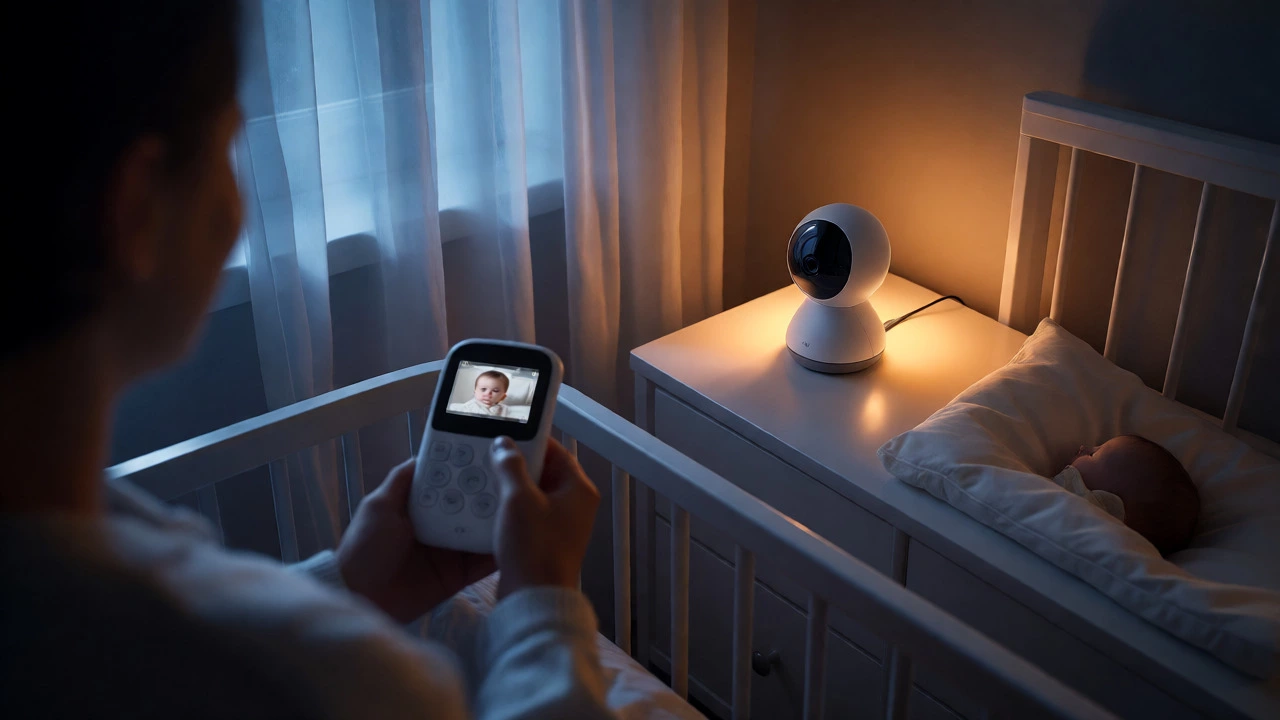
Baby Monitor Safety & Security Evaluator
Select your preferred monitor type to see a detailed breakdown of its security profile, radiation characteristics, and practical implications based on recent data.
1. Choose Technology
Select options and click "Evaluate" to see results.
You plug in the camera, pair it with the handheld screen, and breathe a sigh of relief. No app to download, no password to create, no cloud server storing your baby’s first steps. It feels secure. But are non-Wi-Fi baby monitors actually safe, or is this just marketing fluff designed to soothe anxious parents?
The short answer: yes, they are generally safer for privacy than their internet-connected counterparts, but "safe" is a loaded term here. We need to unpack three distinct layers of safety: hacking risk, radiation exposure, and medical reliability. If you’re worried about strangers watching your nursery or wondering if that little blinking light is frying your infant’s brain, keep reading. We’ll cut through the noise with data from recent tests and expert opinions.
Hacking Risk: The Closed-Circuit Advantage
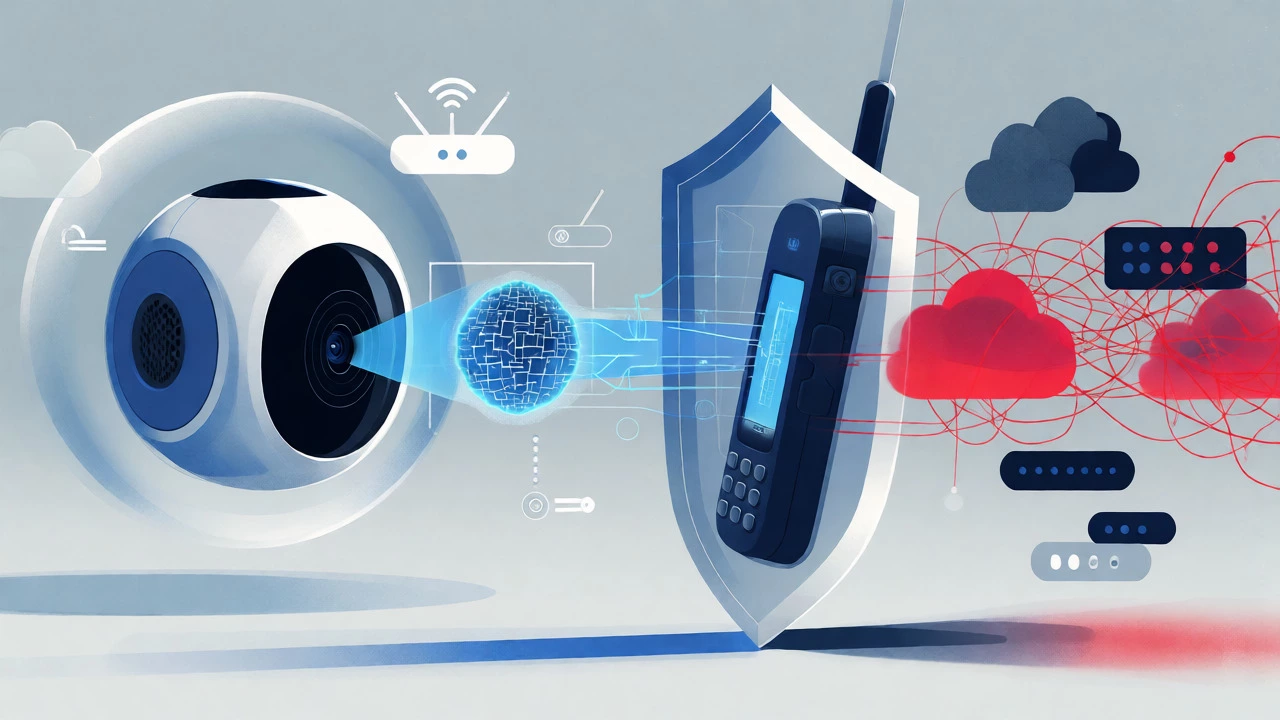
Let’s tackle the biggest fear first: hackers. With Wi-Fi monitors, your video feed travels from the camera to your router, then potentially to a cloud server, and finally to your phone. That’s multiple touchpoints where things can go wrong. Remember the horror stories from a few years ago when unsecured cameras were being watched by random people online? Those breaches happened because devices were exposed to the open internet.
Non-Wi-Fi monitors bypass this entirely. They use a direct radio link between the camera and the parent unit. Think of it like a walkie-talkie system rather than a live stream. Because there is no connection to your home network or the internet, remote attackers cannot access the feed from halfway across the world. As Caitlin Fennessy, Vice President at the International Association of Privacy Professionals (IAPP), noted in a 2026 Forbes report, using non-connected devices is one of the simplest ways to limit data collection and sharing.
Does this mean they are unhackable? Not exactly. But the attack surface shrinks dramatically. To hack a non-Wi-Fi monitor, an attacker typically needs to be physically close to your home-usually within 300 meters (about 1,000 feet). This local constraint makes large-scale, automated cyberattacks nearly impossible. You aren’t fighting off bots scanning IP addresses; you’re only vulnerable if someone with specialized radio equipment is sitting in a car outside your house. For most families, that’s a negligible risk compared to the global threat facing Wi-Fi devices.
Technology Matters: FHSS vs. DECT vs. Analog
Not all non-Wi-Fi monitors are created equal. The term "non-Wi-Fi" covers a few different technologies, and understanding them helps you gauge actual security.
- FHSS (Frequency Hopping Spread Spectrum): This tech rapidly switches frequencies in a predetermined pattern. Imagine two people talking while constantly changing channels on a TV; unless you know the exact sequence, you just hear static. This makes interception difficult without sophisticated gear.
- DECT (Digital Enhanced Cordless Telecommunications): Originally designed for cordless phones, DECT operates on specific digital bands. It offers strong encryption and clear audio/video quality over short distances. Like FHSS, it requires physical proximity to intercept.
- Analog Monitors: These are older models. They transmit raw signals without encryption. While they don’t have internet vulnerabilities, neighbors with similar analog devices could technically pick up your audio if frequencies overlap. Modern digital standards (FHSS/DECT) largely solve this interference issue.
If you buy a new non-Wi-Fi monitor today, ensure it uses digital transmission (FHSS or DECT). Avoid cheap, unbranded analog units if privacy is your top concern. Digital encryption ensures that even if someone is nearby, they won’t get a clear picture or sound without significant effort.
The Radiation Myth: What Do Tests Actually Say?
This is where things get counterintuitive. Many parents assume non-Wi-Fi equals low radiation. After all, Wi-Fi is everywhere, so avoiding it must be better, right? Not necessarily.
Recent hands-on tests challenge this assumption. In June 2026, Fathercraft tested eight baby monitors, measuring electromagnetic field (EMF) levels at a distance of two feet from the crib. The results were surprising:
| Monitor Type | Example Device | Peak EMF Reading (mW/m²) | Relative Risk |
|---|---|---|---|
| Wi-Fi Camera | Nanit Pro | 0.35 | Low |
| Non-Wi-Fi Monitor | BabySense Unit | 12.64 | Moderate-High* |
*Note: Both readings are well below regulatory limits set by the FCC and WHO, which consider these levels safe for human exposure. However, the non-Wi-Fi unit emitted significantly more energy in this specific test setup.
Why does this happen? Some non-Wi-Fi monitors push stronger continuous radio signals to maintain a stable connection without the help of a robust Wi-Fi network infrastructure. Meanwhile, modern Wi-Fi cameras often use efficient protocols that burst data rather than broadcasting continuously.
So, what should you do? Don’t panic. The World Health Organization (WHO) and the U.S. Federal Communications Commission (FCC) state that RF-EMF exposure from baby monitors, regardless of type, poses no known health risks when used according to guidelines. The key isn’t just the technology-it’s placement. Keep any monitor at least 3-6 feet away from the crib. Use optical zoom instead of moving the camera closer. And if available, enable VOX (voice-activated) mode so the device only transmits when your baby cries, reducing overall emission time.
Privacy Beyond Hacking: Data Ownership
Safety isn’t just about keeping out bad guys; it’s about keeping your data private. Wi-Fi monitors often come with apps that store clips in the cloud. Who owns those videos? Where are they stored? Can employees of the company view them? There have been instances where third-party contractors reviewed user footage for quality assurance, raising eyebrows among privacy advocates.
Non-Wi-Fi monitors offer a stark contrast. Your video stays inside your home. It goes from the camera to your handheld receiver. Period. No uploads, no cloud accounts, no terms of service updates that change how your data is used. For families who value digital minimalism or distrust big tech data harvesting, this closed-loop system provides peace of mind that software updates simply can’t match.
Furthermore, you avoid the risk of vendor lock-in. If a Wi-Fi monitor company goes bankrupt or discontinues its cloud service, your expensive camera might become a brick. A non-Wi-Fi unit works as long as the hardware functions. It’s a simpler, more durable ecosystem.
Medical Safety: What Monitors Can’t Do
We must address a critical misconception: baby monitors are not medical devices. Neither Wi-Fi nor non-Wi-Fi monitors are approved by the FDA to prevent Sudden Infant Death Syndrome (SIDS) or Sudden Unexpected Infant Death (SUID).
In September 2025, the FDA issued a safety communication clarifying that consumer monitors are observation tools, not life-saving interventions. Relying solely on a monitor’s alarm can give a false sense of security. If your baby stops breathing silently, many standard audio/video monitors won’t trigger an alert until movement ceases completely or sounds stop. Even advanced pulse-oximetry socks (which are sometimes non-Wi-Fi) are not substitutes for professional medical care.
Use the monitor to assist supervision, not replace it. Follow safe sleep practices: back to sleep, firm mattress, no loose bedding. The monitor is there to help you respond quickly, not to guarantee survival on its own.
Practical Trade-offs: Convenience vs. Security
Choosing a non-Wi-Fi monitor means accepting certain limitations. You lose the ability to check in on your baby from the grocery store or while traveling. You carry a dedicated handheld unit, which adds bulk to your diaper bag. Battery life depends on the handheld screen usage, whereas Wi-Fi monitors let you use your phone’s larger battery.
However, you gain simplicity. Setup takes minutes, not hours. There are no firmware update headaches that break connectivity mid-night. The signal is less prone to interference from other smart home devices like microwaves or streaming boxes, provided you choose a high-quality DECT or FHSS model.
For parents who prioritize immediate, reliable, private monitoring within the home, the trade-off is worth it. For those who need remote viewing for nannies or grandparents, Wi-Fi remains the practical choice-but with stricter security hygiene.
Frequently Asked Questions
Can anyone hack a non-Wi-Fi baby monitor?
It is highly unlikely for a remote hacker. Because non-Wi-Fi monitors do not connect to the internet, attackers must be physically close (within ~300 meters) and use specialized radio equipment to intercept the signal. Digital models using FHSS or DECT encryption make this even harder, effectively preventing casual eavesdropping by neighbors.
Do non-Wi-Fi monitors emit less radiation than Wi-Fi ones?
Not always. Recent tests show some non-Wi-Fi monitors emit higher EMF levels than Wi-Fi cameras due to continuous signal transmission. However, both types emit levels far below safety limits set by the FCC and WHO. Placement matters more than technology: keep the camera at least 3-6 feet from the crib.
Is it safe to use a baby monitor overnight?
Yes, provided it is placed correctly. Ensure the camera is secured out of reach of the baby (no cords in the crib) and positioned at a safe distance. Using VOX (sound-activated) mode can reduce continuous transmission and heat generation, adding another layer of comfort for concerned parents.
What happens if my non-Wi-Fi monitor loses power?
Most non-Wi-Fi systems rely on AC power for the camera and battery for the parent unit. If the house loses power, the camera will stop transmitting unless it has a backup battery. Unlike Wi-Fi monitors that might buffer to the cloud, non-Wi-Fi units usually do not record history during outages. Always check if your model supports battery backup for the camera unit.
Are analog monitors safe?
Analog monitors are safe from internet hackers but lack encryption. Neighbors with similar devices might experience interference or accidentally pick up audio. For better privacy and clarity, choose digital non-Wi-Fi monitors (FHSS or DECT) over older analog models.