
Barking Solution Finder
Describe Your Situation
Answer these questions to find the right tool.
Recommended Solution
Description goes here.
Select your options above to see a recommendation.
That high-pitched yapping from the neighbor’s yard or your own dog’s alarm at every leaf that falls can drive you crazy. You want a quick fix, so you look for a device that stops the noise instantly. But here is the hard truth: there is no magic button that works for every dog. The "most effective" device depends entirely on why the dog is barking and where it is located.
If you are looking for a humane way to reduce nuisance barking without causing pain or fear, the answer usually lies in combining technology with basic training. Below, we break down the top devices available in 2026, how they actually work, and which one fits your specific situation.
Quick Summary / Key Takeaways
- No universal winner: Effectiveness depends on the dog's trigger (boredom vs. anxiety) and distance.
- Ultrasonic devices: Best for short-range correction (<15m) and neighbor dogs; requires line-of-sight.
- Bark collars: Vibration and spray collars are safer than shock collars but require proper fitting.
- Training is key: Devices only interrupt behavior; positive reinforcement teaches the dog what to do instead.
- Avoid shock collars: Major veterinary organizations warn against static electric collars due to welfare risks.
How Bark-Control Devices Actually Work
To pick the right tool, you need to understand the mechanism. Most commercial bark-control devices are tools designed to interrupt barking by delivering an aversive or distracting stimulus when sound or vibration is detected. They fall into three main categories based on the type of correction they deliver.
- Ultrasonic Sound: Emits a high-frequency tone (around 25 kHz) that is annoying to dogs but mostly inaudible to humans. It acts as a startle or interruption.
- Vibration/Spray: Delivers a physical sensation (buzzing) or a scent blast (citronella/air) directly to the dog wearing the collar.
- Static Stimulation: Sends a mild electric pulse. While often marketed as "corrective," this method is controversial and increasingly restricted.
The goal isn't to punish the dog, but to break the cycle of barking long enough for you to redirect their attention. However, if the device is too harsh or poorly timed, it can cause anxiety rather than solve the problem.
Top Choice for Distance: Ultrasonic Anti-Barking Units
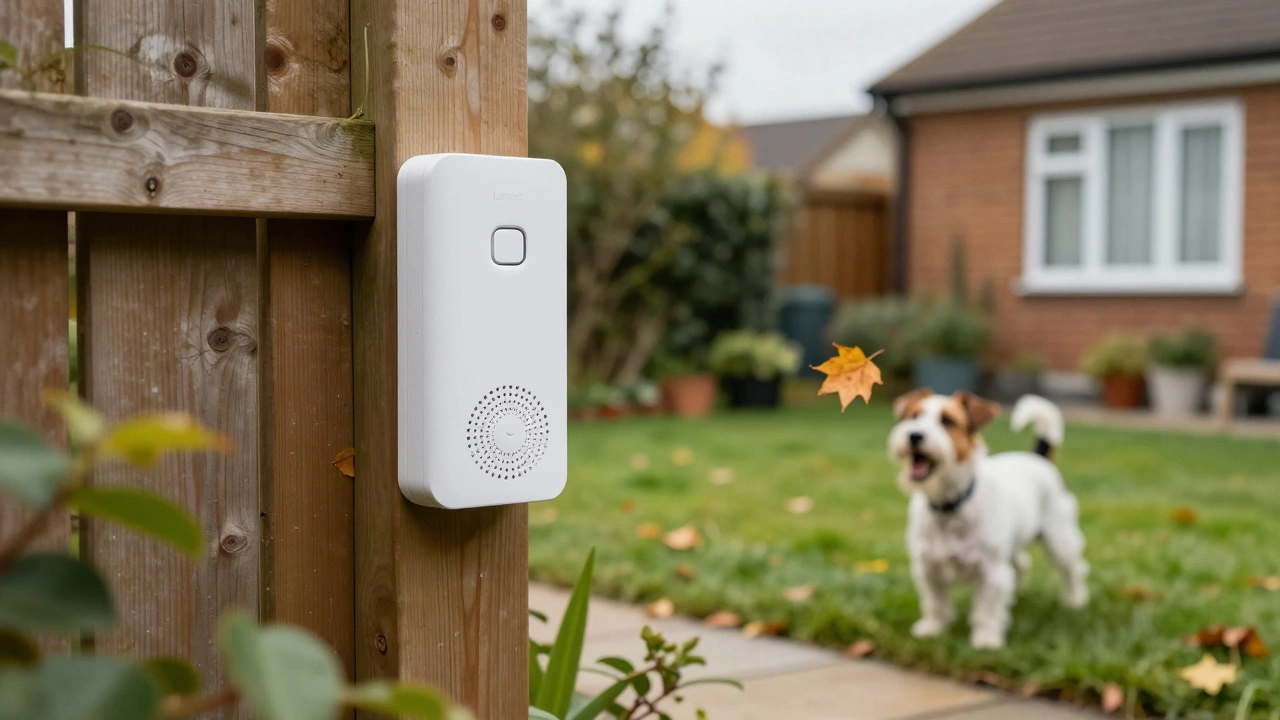
If you cannot put a collar on the dog-such as when dealing with a neighbor’s pet or a stray-ultrasonic units are your primary option. These devices use a microphone to detect barking and emit a directional sound wave.
| Device Model | Effective Range | Key Feature | Best Use Case |
|---|---|---|---|
| DAZER II | Up to 7 meters | Compact, handheld | Indoor training, close proximity |
| HUSH UB122 | Up to 15 meters | Fixed outdoor unit | Yard perimeter, fence-line barking |
| Dog Silencer MAX | Up to 90 meters (claimed) | Long-range, remote activation | Neighbor disputes, large properties |
Here is the catch with ultrasonic tech: physics matters. Sound waves travel in straight lines and are blocked by walls, fences, and even thick foliage. If you are trying to stop a dog 30 meters away through a wooden fence, the signal will likely be too weak. For best results, position the speaker facing the dog with a clear line of sight.
Also, beware of habituation. Dogs are smart. If the sound plays continuously or randomly, they will eventually ignore it. Experts recommend using short bursts (1-2 seconds) triggered at the very first sign of barking, then immediately rewarding silence.
Best for Direct Control: Bark-Deterrent Collars
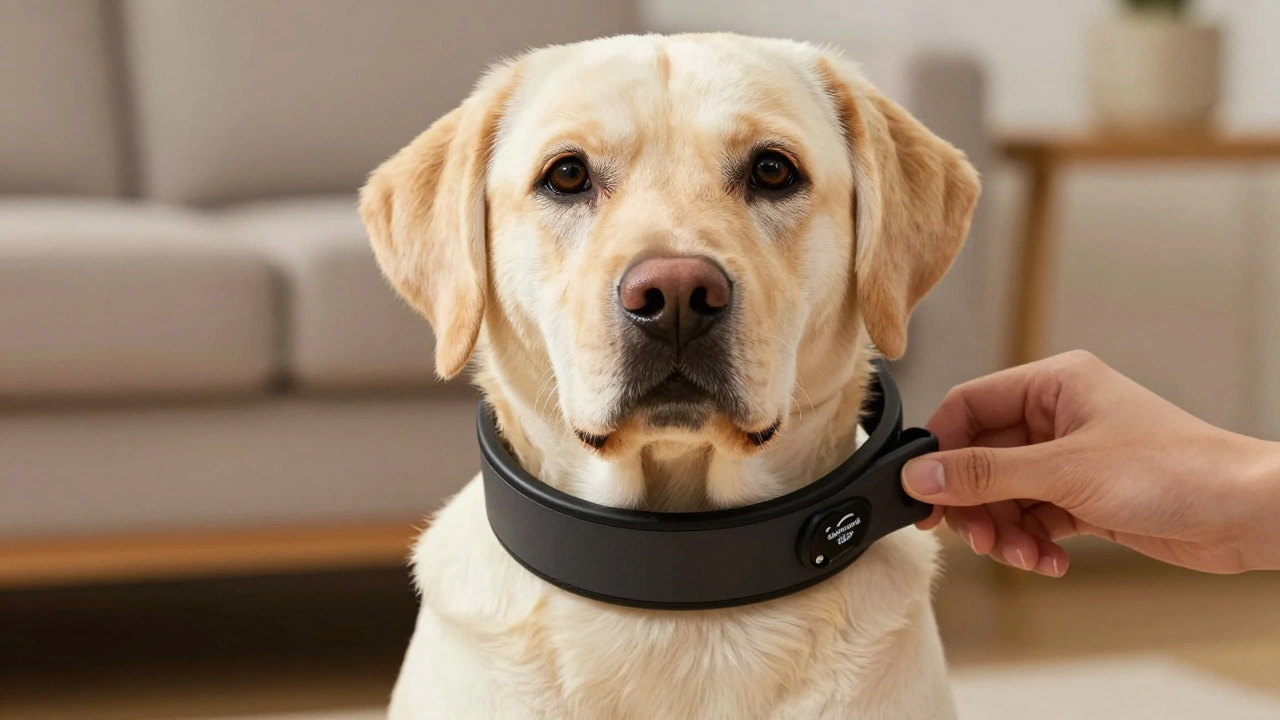
If the dog is yours and you can fit a collar, these devices offer more precise targeting because they detect both sound and throat vibrations. This means they won’t accidentally correct another dog in the house.
Vibration Collars
These are widely considered the most humane electronic option. When the dog barks, the collar vibrates. It’s a distraction, not a punishment. The American Kennel Club suggests adjusting the intensity so it’s just strong enough to get the dog’s attention. Fit is crucial: you should be able to slip one finger under the collar comfortably.
Spray Collars (Citronella or Air)
These release a puff of air or citronella scent toward the dog’s muzzle. The sudden hiss and smell are startling and annoying, which interrupts the bark. They are effective for many dogs but come with a downside: maintenance. You have to refill the cartridges regularly, and heavy barkers can drain them quickly. Plus, some dogs learn to only bark when the collar is off.
Why You Should Avoid Shock Collars
Static electric collars might stop barking faster in the short term, but the cost is high. Organizations like the American Veterinary Society of Animal Behavior (AVSAB) explicitly caution against them. They can increase fear, aggression, and stress in dogs. In places like Wales and Scotland, their use is heavily restricted or banned. Unless directed by a professional behaviorist for severe cases, skip the shock collar.
The Hidden Factor: Why Your Dog Is Barking
A device is only a tool, not a cure. If you don’t address the root cause, the barking will return once you turn the device off. Ask yourself why the dog is vocalizing:
- Boredom: The dog has excess energy. Solution: More exercise and puzzle toys.
- Anxiety/Fear: Thunderstorms, separation, or strangers. Solution: Desensitization training; devices may make this worse.
- Alert/Territorial: Reacting to sights/sounds outside. Solution: Block visual triggers (close blinds) and train a "quiet" command.
For example, if your dog barks out of separation anxiety, an ultrasonic device will just add more stress to an already anxious animal. In these cases, enrichment tools like interactive food-dispensing toys are far more effective than any aversive device.
How to Use Devices Effectively (Without Hurting Your Dog)
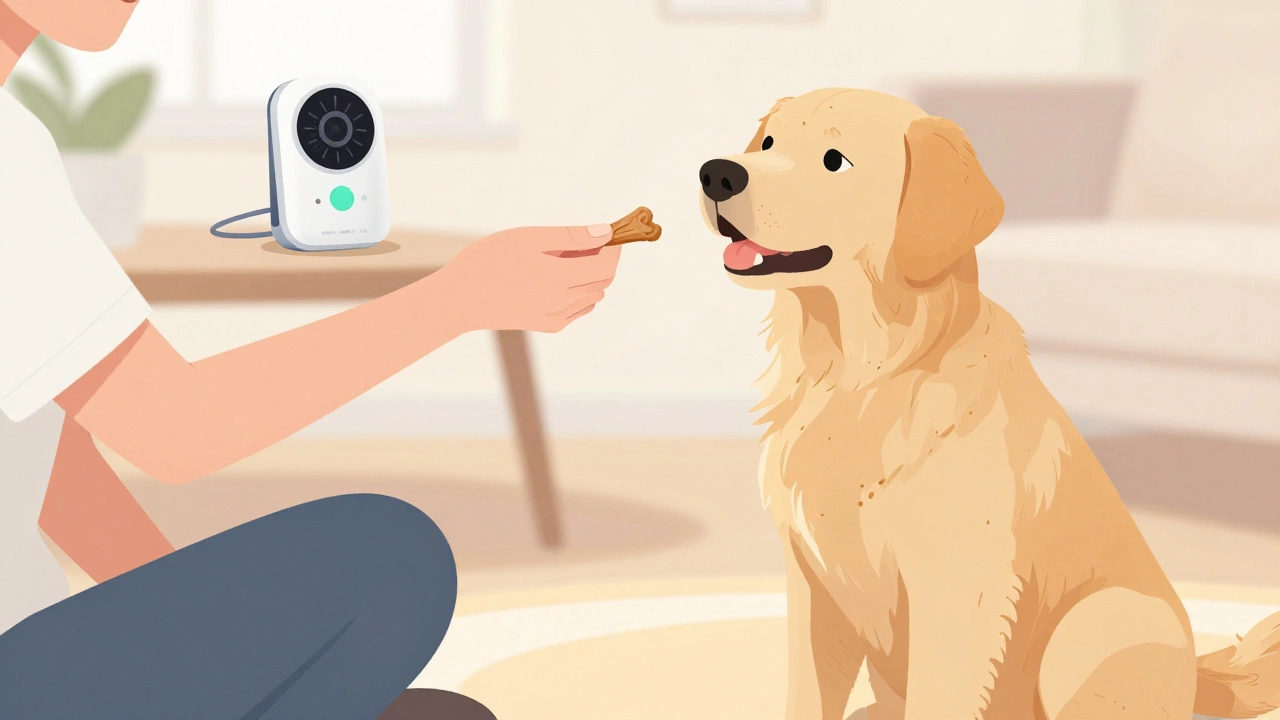
To get real results, follow this step-by-step approach. This method combines the device with positive reinforcement, which is the gold standard in modern training.
- Identify the Trigger: Watch when the barking happens. Is it the mail carrier? A squirrel? Boredom?
- Choose the Right Tool: For your own dog indoors, try a vibration collar or handheld ultrasonic. For a neighbor’s dog, try a fixed outdoor ultrasonic unit.
- Time It Perfectly: Activate the device at the *first* bark. Do not wait until they’ve been yelling for five minutes.
- Reward the Silence: As soon as the barking stops, mark the behavior (say "Yes!") and give a high-value treat. This teaches the dog that being quiet pays off.
- Fade Out the Device: Over several weeks, rely less on the device and more on verbal cues and rewards. The goal is for the dog to choose quiet voluntarily.
Never leave a bark collar on 24/7. It can chafe the skin, malfunction, or teach the dog that barking is only bad when the collar is on. Use it during active training sessions only.
Realistic Expectations: What Works and What Doesn’t
Marketing claims often promise "instant results up to 300 feet." Real-world experience tells a different story. Here is what users and trainers report:
- Success Rate: Ultrasonic devices work well for about 50-60% of dogs, particularly those who are easily startled or motivated by attention. Stubborn or deaf dogs may ignore them completely.
- Range Limitations: Even "long-range" devices struggle beyond 15-20 meters in windy conditions or through obstacles. Don’t expect a backyard unit to silence a dog two houses down reliably.
- Habituation Risk: If the device fires too often or incorrectly (e.g., triggered by wind noise), the dog will tune it out. Turn the device off when you aren’t actively training.
If you’ve tried a device for two weeks with consistent timing and rewards and see no change, the issue is likely behavioral, not technical. At that point, consult a certified professional trainer or a veterinary behaviorist.
Is an ultrasonic bark control device safe for dogs?
Yes, when used correctly. Ultrasonic sounds are generally harmless and do not cause physical pain. However, they can be stressful for some dogs, especially those with existing anxiety. Always monitor your dog for signs of distress like cowering or panting, and keep usage to short, targeted bursts.
Can I use a bark control device on my neighbor’s dog?
You can try an outdoor ultrasonic unit aimed at their property, but effectiveness varies greatly due to distance and barriers. It is often better to discuss the issue with your neighbor first, as they may be unaware of the problem. Some local laws restrict the use of devices on non-owned animals, so check your local regulations.
Do shock collars work better than vibration collars?
Shock collars may suppress barking faster in the short term, but they carry significant risks of increasing fear and aggression. Vibration and spray collars are considered more humane and effective for long-term behavior change when combined with positive reinforcement. Many experts and veterinarians advise against shock collars entirely.
How long does it take to stop a dog from barking with a device?
There is no instant fix. With consistent daily training sessions pairing the device with rewards for silence, you may see improvement in 1-2 weeks. Full behavioral change often takes several weeks to months. Devices alone, without training, rarely provide permanent results.
What if my dog doesn’t respond to ultrasonic sounds?
Some dogs are simply desensitized to high-frequency noises or are too focused on their trigger. If an ultrasonic device fails after a few days of proper use, switch to a different method like a vibration collar or focus on environmental management (blocking views, adding white noise) and professional training.