
When you think about a dog and security system, a home security setup designed to coexist with pets without false alarms. Also known as pet-immune alarm system, it’s not just about keeping burglars out—it’s about making sure your dog doesn’t accidentally sound the alarm every time they jump on the couch. Most traditional alarms treat movement or noise as a threat, which means a wagging tail, a leap for a treat, or even a loud bark can set off a false alert. That’s not just annoying—it can make you ignore real threats, waste police time, and even get you fined in some areas.
That’s where pet-friendly alarms, security systems that use motion sensors and sound filters to ignore pets under a certain weight or height. Also known as pet immune alarm system, they’re built to tell the difference between your golden retriever and an intruder. These systems use weight sensors, height thresholds, and AI-powered sound analysis to focus on human-sized movement and unusual noises—like breaking glass or forced entry—not the usual chaos of a dog chasing its tail. Brands like ADT and Ring now offer models that can ignore pets up to 80 pounds, so even big dogs won’t set off alarms. But here’s the catch: not all "pet-friendly" systems are created equal. Some just lower sensitivity, which means your dog’s movements might still trigger false alarms. The best ones use dual-tech sensors that combine motion and heat detection, so they only react to human body heat moving in patterns that match walking, not hopping or running.
And it’s not just about motion. A dog barks trigger alarm, a common problem where a dog’s vocalizations activate audio-based security triggers. Also known as false alarm from dogs, this happens when your alarm listens for sounds like breaking glass or shouting, and your pup’s howl sounds similar to a human scream. That’s why newer systems now include sound filtering that learns your dog’s vocal patterns and ignores them. You can even train your alarm to recognize your dog’s specific barks and tune out the noise—something you can’t do with basic systems.
There’s also the issue of outdoor cameras and lighting. If your dog spends time in the yard, you need cameras that can tell the difference between a moving shadow and a real threat. Thermal cameras don’t help here—they see heat, so your dog will still show up as a warm blob. But smart cameras with AI detection can now label what’s moving: dog, cat, car, person. That means you only get alerts when it matters.
What you’ll find in the posts below are real, tested solutions from homeowners who’ve been there. You’ll learn which alarm systems actually work with big dogs, how to stop your dog from crying at the alarm, why some "pet-proof" systems still fail, and what to look for when upgrading your setup. No fluff. No marketing buzzwords. Just what works.
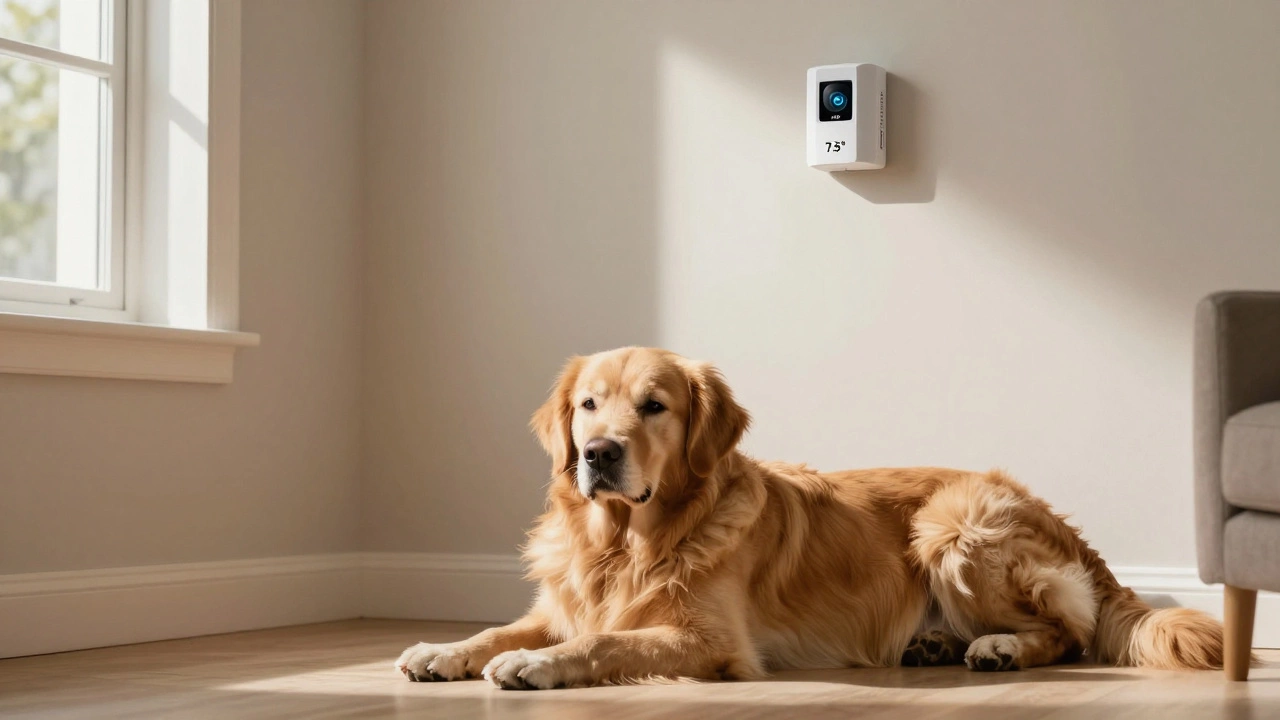
ADT's pet-immune alarms can ignore dogs up to 80 pounds-but only if sensors are installed correctly. Learn how weight, height, and breed affect false alarms-and what to do if your dog still triggers the system.