
When your dog triggers alarm, a common issue in homes with pets where motion or sound sensors misinterpret animal activity as a threat. Also known as false alarm from dogs, this happens because most traditional systems can’t tell the difference between a burglar and your golden retriever pacing the living room. It’s not your dog being naughty—it’s the alarm being dumb.
Modern pet-friendly alarm, a security system designed to ignore pets under a certain weight while still detecting human intruders. Also known as pet immune alarm system, these use advanced motion filtering, AI-based sound analysis, and height-sensitive sensors to avoid false triggers. Brands like ADT and Ring now offer these as standard, but not all systems are built the same. A system that works for a 10-pound cat might still scream when your 80-pound Labrador walks by. The key isn’t just having a "pet-friendly" label—it’s knowing how the system filters out your dog’s movements and barks. Many cheaper models only adjust sensitivity, which means your dog still sets it off—or worse, the system ignores real intruders too.
Here’s what actually breaks these systems: high-pitched alarms, old motion sensors placed too low, and cameras that don’t distinguish between heat signatures. Your dog’s barking can trigger a sound sensor if it’s tuned too tightly. Their body heat can set off infrared motion detectors if the sensor isn’t mounted high enough. And if the system doesn’t use AI to learn your pet’s patterns, it’ll keep reacting the same way every time. That’s why systems with dog barks trigger alarm, a specific type of false alarm caused by canine vocalizations that overwhelm basic audio sensors. Also known as barking dog alarm, this problem is solved by systems that analyze tone, duration, and frequency—not just volume. You don’t need to silence your dog. You need a smarter alarm.
Some people try to fix this by moving the alarm, taping down the dog, or turning off the system at night. None of that works long-term. The real fix is upgrading to a system that sees your pet as part of the home—not a threat. That means looking for features like weight-based pet zones, dual-technology sensors (motion + heat), and AI that learns your dog’s routine. You want something that adapts, not just ignores.
And if you’re wondering whether your alarm even needs to detect your dog in the first place—think again. A system that can’t tell your pet from a burglar isn’t protecting you. It’s just making noise. The goal isn’t to stop your dog from barking. It’s to make sure your alarm only reacts to what actually matters.
Below, you’ll find real-world guides on how to choose the right system, why some "pet-proof" alarms still fail, and what to ask before you buy. No fluff. Just what works.
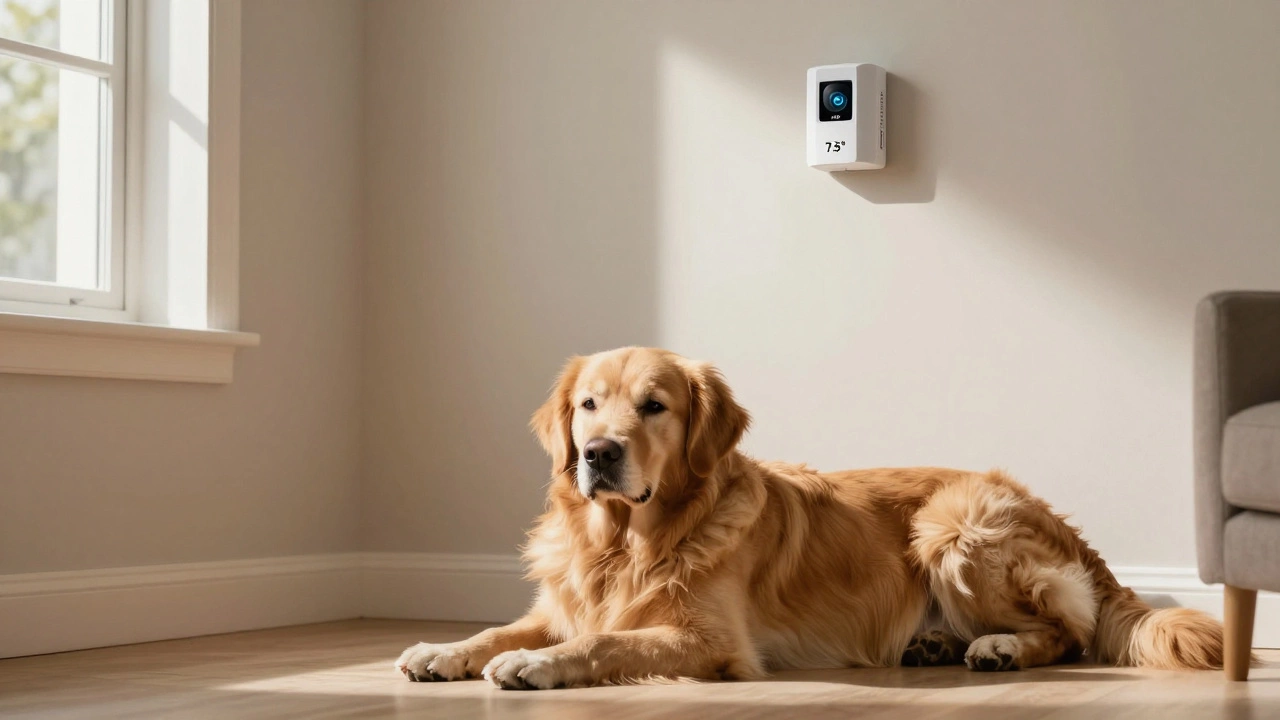
ADT's pet-immune alarms can ignore dogs up to 80 pounds-but only if sensors are installed correctly. Learn how weight, height, and breed affect false alarms-and what to do if your dog still triggers the system.