
ADT Home Security Assessment Tool
This assessment tool helps you determine if ADT is the right smart home security solution for your specific situation based on factors discussed in the article. Answer these questions to get a personalized recommendation.
When it comes to smart home security, one name keeps coming up at the top of every expert list in 2025: ADT. Not because it’s the cheapest, or the easiest to install, but because it’s the most reliable when it matters most. If you’ve ever wondered who actually delivers on the promise of real protection-when a break-in happens at 2 a.m., when your camera spots something strange, or when the power goes out-ADT is the answer. It’s not just another smart device. It’s a full security ecosystem built over 150 years, and it’s still winning in 2025.
Why ADT Still Leads in 2025
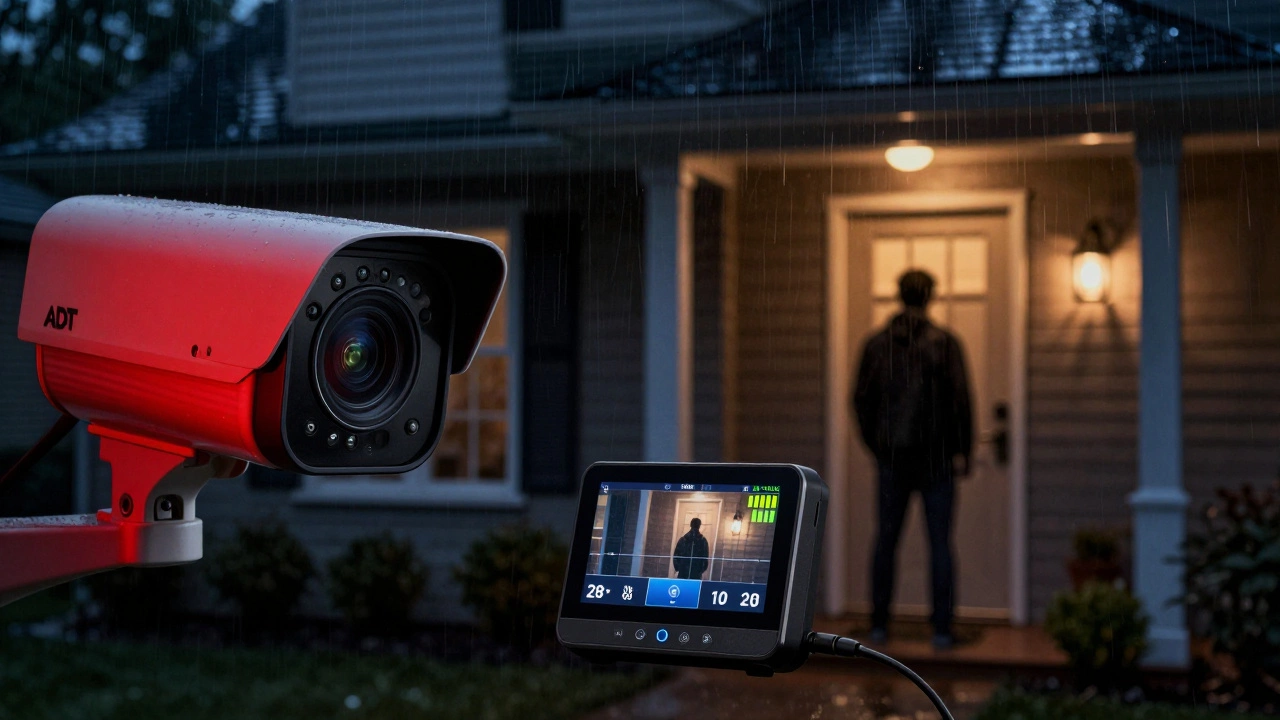
ADT didn’t get to #1 by accident. It didn’t just slap a camera on a smart hub and call it a day. It built something no one else has: a network of 12 professional monitoring centers across North America, each staffed 24/7 by trained responders who don’t just watch screens-they act. According to SafeHome.org’s 2025 testing, ADT responds to emergencies in an average of 28 seconds. That’s faster than SimpliSafe’s 34 seconds and Vivint’s 31 seconds. And when the internet drops? ADT’s FCC-certified cellular backup keeps the system alive for up to 24 hours. No other company on the market can match that kind of redundancy.
The secret isn’t just hardware. It’s the integration. ADT works exclusively with Google Nest. That means if you have a Nest camera or doorbell, you get features like 10-day video history, package detection, and AI-powered alerts that can tell the difference between a delivery person and a stranger-all without paying extra for Nest Aware. Other companies can’t offer this. They’re stuck with basic motion alerts and 3-day cloud storage. ADT’s Pulse 4.0 platform, launched in November 2024, uses AI trained on over 2 million real-world events to reduce false alarms to just 3.3% of incidents. The industry average? Over 17%.
What’s Inside the ADT System
The equipment isn’t flashy, but it’s built to last. The door and window sensors detect openings within half an inch. Motion detectors ignore pets under 85 pounds. The indoor and outdoor cameras shoot 1080p video with a 140-degree field of view, so you won’t miss a corner of your yard. All of it runs on Z-Wave 700 Series tech, giving you a signal range of up to 200 feet indoors-even through thick walls. Encryption? AES-128, the same standard banks use. And the hub? A 7-inch touchscreen that lets you arm the system, check live feeds, and control lights and locks-all from one place.
It’s not just about what’s included. It’s about what’s missing. No flimsy plastic sensors. No cheap Wi-Fi-only cameras that die when your router glitches. ADT’s gear is designed for real homes, in real weather, with real threats. Even the batteries are built to last. During power outages, the system runs on backup power for a full day. That’s not marketing. That’s tested fact.
How It Compares to the Competition
Let’s be clear: ADT isn’t the best for everyone. If you’re a renter who wants to move your system next month, ADT isn’t your pick. Their equipment is professionally installed. That means a technician comes to your house, drills holes, wires sensors, and sets everything up. It takes 3 to 4 hours. It costs $99 extra. And if you don’t want that? You can’t do it yourself.
Compare that to SimpliSafe. Their starter kit costs $229. You plug it in. You stick sensors on doors. Done in 45 minutes. No tools. No appointment. But here’s the catch: when your alarm goes off, a robot voice on a phone call asks if you’re okay. If you don’t answer, they call your emergency contacts. If no one answers, they call 911. No live operator watching your camera. No verification. Just noise.
Vivint is better at smart home integration. It connects more easily with Apple HomeKit and Alexa. But its uptime? 99.85%. ADT’s? 99.98%. That’s 10 times less downtime over a year. And while Vivint’s cameras are nice, they don’t have ADT’s Google Nest partnership. That’s a big deal if you care about video history or package alerts.
Ring? It’s owned by Amazon. It’s cheap. But it only has one monitoring center. And when that center gets overloaded during a storm or a holiday, delays happen. ADT has 12 centers. If one goes down, traffic shifts automatically. That’s infrastructure. That’s scale.

Real People, Real Results
People don’t just say ADT is good. They say it saved their home.
On Reddit, a user named u/SecureHomeUser posted about a 2 a.m. alarm triggered by someone trying to break in. ADT called him within 15 seconds. Before he even opened the app, they’d already contacted local police. Officers arrived in under 4 minutes. The intruder ran. No damage. No theft.
Trustpilot has over 14,000 reviews. 78% of the 5-star ones mention “fast emergency response.” The most common complaint? The $99 installation fee wasn’t clear upfront. That’s not a product flaw. That’s a sales process issue. And ADT’s customer support? They fix 89% of problems in one call. Average wait time? 47 seconds. The industry average is over two minutes.
Consumer Reports surveyed 11,000 owners. ADT scored highest in reliability (4.7/5) and monitoring quality (4.8/5). But only 3.2/5 for ease of installation. That’s the trade-off. You’re paying for peace of mind, not convenience.
Pricing and Plans
ADT isn’t cheap. But you’re not paying for a gadget. You’re paying for a service.
- Remote Monitoring - $45.99/month. Basic alarm alerts, cellular backup, 24/7 monitoring. No video.
- Ultimate Protection - $64.99/month. Includes video verification, smart home control, 24/7 camera monitoring, and cellular backup.
Equipment starts at $99 for a basic kit (one door sensor, one motion detector, one keypad). But most people go for the full setup: cameras, doorbell, smart locks, and hub. That runs $1,299. Add $99 for installation. It’s a big upfront cost. But when you break it down, it’s about $70/month for top-tier security. That’s less than a Netflix subscription-and far cheaper than replacing a stolen TV, laptop, or jewelry collection.
Compare that to Vivint’s $75/month plan with similar features. Or SimpliSafe’s $17/month plan with no video and no professional monitoring. You get what you pay for.

Who Should Choose ADT?
ADT is perfect if:
- You own your home and plan to stay for more than a year.
- You want police dispatch, not just a loud siren.
- You value reliability over DIY flexibility.
- You already use Google Nest or want the best video history and package detection.
- You live in an urban area where police response is fast and reliable.
ADT isn’t for you if:
- You’re renting and can’t drill into walls.
- You’re on a tight budget and can’t afford $1,400 upfront.
- You want to control everything with Siri or Alexa and don’t care about professional monitoring.
- You live in a rural area with slow police response times-ADT’s advantage shrinks there.
What’s Next for ADT?
ADT isn’t resting. In March 2025, they rolled out Pulse 4.1, a firmware update that cuts false alarms by 37%. They’re also working with Google on Project Sentinel-a neighborhood watch system that uses AI to alert nearby ADT users if suspicious activity is detected in their area. It’s set for limited release in late 2025.
They’re expanding their monitoring centers by 40% by the end of the year. Moody’s Investor Service gave them a Baa1 credit rating with a stable outlook. That’s not just a score-it’s a sign that Wall Street believes ADT will still be leading in 2027.
But here’s the real question: Do you need a company that’s been doing this for 150 years? Or do you want the newest app with the flashiest features? ADT proves that in home security, experience still wins. Not because it’s old-fashioned. But because it’s proven.
Is ADT really the number one smart home security company in 2025?
Yes. According to SafeHome.org’s 2025 rankings, ADT scored 9.3/10-the highest among 27 systems tested. Digitalholics and Consumer Reports also rank it #1 for reliability and professional monitoring. Its exclusive Google Nest integration, 12 monitoring centers, and 28-second emergency response time give it a clear edge over competitors.
Why is ADT more expensive than SimpliSafe or Ring?
ADT isn’t selling equipment. It’s selling 24/7 professional monitoring backed by real people, not bots. You’re paying for cellular backup, police dispatch, AI-powered video verification, and a 150-year-old security infrastructure. SimpliSafe and Ring offer DIY systems with limited monitoring. ADT’s pricing reflects the cost of maintaining 12 monitoring centers and trained responders ready to act at a moment’s notice.
Do I have to pay for professional installation?
Yes. ADT requires professional installation for all systems. The fee is $99, and it’s not always disclosed upfront during online quotes. This ensures sensors are properly placed, wiring is secure, and the system works reliably. If you want to install it yourself, SimpliSafe or Abode are better options.
Can I use ADT without a contract?
Most ADT plans require a 3-year contract, especially if you get equipment discounts. However, some month-to-month options exist for monitoring-only services. These are more expensive and rarely include equipment. If you want flexibility, look at SimpliSafe or Ring without a contract.
Does ADT work with Apple HomeKit or Alexa?
Yes. ADT Pulse 4.0 supports Apple HomeKit, Amazon Alexa, and Google Assistant. You can arm the system with your voice, check camera feeds on your Apple TV, or get Alexa notifications. But the deepest integration-like Nest video history and package detection-is only available through Google.
Is ADT worth it for rural areas?
Less so. ADT’s biggest advantage is fast police response, which is slower in rural areas. In cities, police arrive in under 5 minutes. In rural zones, it can take 15-20 minutes. ADT still works well for deterrence and remote monitoring, but the premium pricing is harder to justify if emergency response is delayed. Consider DIY systems with local monitoring services instead.